AI Breakthrough: Sperm Whales Found Using Complex Language Similar to Humans
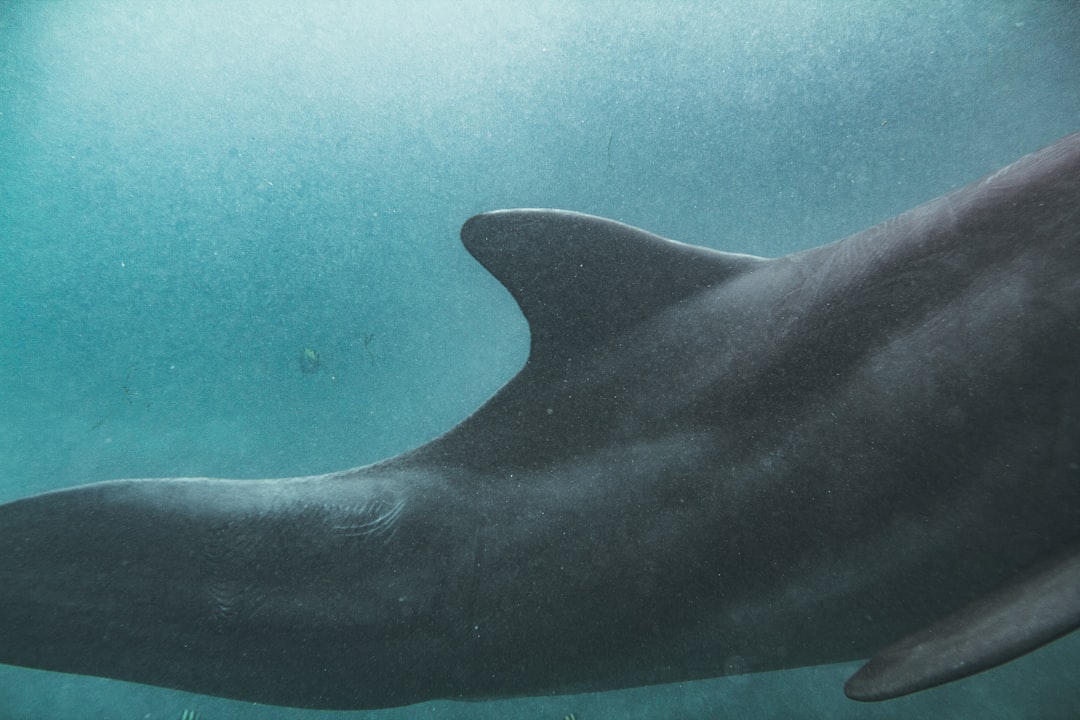
AI algorithms analyzing sperm whale clicks reveal a structured, vowel-like communication system, challenging perceptions of human linguistic uniqueness.
Scientists have made a groundbreaking discovery about sperm whale communication, revealing a complex language system with parallels to human speech. Using artificial intelligence, researchers have decoded thousands of whale vocalizations, discovering a phonetic alphabet that includes vowels and combinatorial patterns, potentially rewriting what we know about language, cognition, and the animal kingdom.
AI Decodes Sperm Whale Communication
The extensive research began with Project CETI (Cetacean Translation Initiative), a collaborative project funded in 2020 by TED's Audacious Project. It involved institutions like MIT, Harvard, and UC Berkeley. Researchers collected over 9,000 sperm whale audio recordings from the Caribbean Sea, focusing on "codas," the sequences of clicks whales use to communicate. While scientists previously believed sperm whale clicks were basic signals, AI technology uncovered 156 distinct codas with internal structures involving tempo, rhythm, and ornamental clicks.
This communication wasn’t just random noise. It mimics linguistic features found in human language, as sperm whale clicks followed structured combinatorial patterns. For example, human languages rely on phonemes, finite building blocks, to generate countless words and ideas. Similarly, the sperm whale language appears to use these structured "phonetic alphabets" to facilitate diverse communication.
Dr. Daniela Rus from MIT summed up the findings: "Our results show there is much more complexity than previously believed. This challenges the state-of-the-art understanding of animal communication."
The Role of AI in Analyzing Whale Sounds
AI tools, similar to those employed in large language models like ChatGPT, played a pivotal role in decoding the whales’ communication. This marked a unique application of machine learning, which excels at recognizing patterns within massive datasets. By analyzing how whales produce different codas under various environmental contexts, AI not only identified the existence of the phonetic alphabet but also mapped out complex variations.
One particularly striking discovery came from linguists at UC Berkeley, who noticed sperm whales producing vowel sounds similar to "a" (as in "father") and "i" (as in "see"). Sperm whales even used diphthongs—combinations of vowels—like "oi" (as in "boy"), something found in human speech but rarely seen in the animal kingdom. This finding undermines long-held beliefs that vowels are unique to humans.
Human Language No Longer Unique?
For decades, researchers touted human language as unique, characterized by its grammar, symbolic thought, and complex phonetic systems. However, sperm whale communication now challenges this idea. The discovery of vowels, phonetic building blocks, and pragmatic context (modifying codas based on the situation and recipient) suggests that some aspects of language may be shared across species.
Observational data supports this. Shane Gero, a biologist studying whale families in Dominica, described exchanges lasting up to an hour. Whales engage in interactive conversations, adjusting their codas based on social scenarios. These patterns resemble turn-taking in dialogue, further blurring the lines between human and animal communication.
Why Whale Communication Matters
Understanding sperm whale language has both scientific and ethical implications. Sperm whales possess the largest brains of any animal on Earth—six times larger than humans—and live in complex social structures. They showcase behavior indicating cultural traditions and coordinated decisions, hinting at advanced intelligence.
Beyond the academic curiosity, these discoveries might influence animal conservation efforts. In the 1960s, understanding humpback whale songs catalyzed the "Save the Whales" movement, leading to protections like the Marine Mammal Protection Act. Similarly, proving sperm whales have a fully-fledged language could increase public support for measures addressing threats like commercial whaling and ocean noise pollution.
The Next Steps: Translating Whale Language
Despite these strides, researchers have yet to decipher the meaning of sperm whale conversations. Context is key to unlocking their language. To bridge this gap, the team is deploying advanced tools such as biologging devices that attach to whales and record synchronized audio, GPS, depth, and temperature data.
These biologgers allow researchers to match specific codas with behaviors observed in the wild, creating a vast dataset of "who said what and when" during different social interactions. Over time, this effort may enable scientists to assign meaning to individual codas, potentially translating whale sentences.
Ethical Questions Arise
As whale language insights deepen, they pose larger ethical dilemmas. If sperm whales possess a language system facilitating cultural exchange, emotional depth, and complex thought, it challenges current notions of how humans treat them. Practices like commercial whaling and ocean noise pollution could face reevaluation as legal scholars discuss whether whales might qualify for "legal personhood" or rights similar to humans.
Dr. David Gruber, a key figure in Project CETI, reflected on these issues, stating, "Little by little, the sperm whales are divulging their secrets of communication to us. If whales have a language similar to ours, what does that say about their intelligence, and how should we treat them?"
Practical Impacts of the Discovery
This breakthrough may:
- Drive stricter whale conservation measures
- Encourage updated maritime industry protocols to reduce ship strikes and noise
- Foster a deeper understanding of non-human intelligence and its parallels to human cognition
Final Thoughts
The discovery that sperm whales possess a structured communication system akin to human language is reshaping our understanding of the natural world. With AI cracking the surface of what could be an expansive whale language, key questions remain unanswered. Are these whales discussing their environment, hunting strategies, or even the impact humans have on their world?
What lies beneath the waves—coded in their clicks—is a narrative millions of years old. As researchers inch closer to a complete translation, what whales ultimately reveal could transform not only how we view them but also our place in the ecosystem altogether.
Staff Writer
Chris covers artificial intelligence, machine learning, and software development trends.
Comments
Loading comments…


