Are low-level programming concepts essential for web developers?
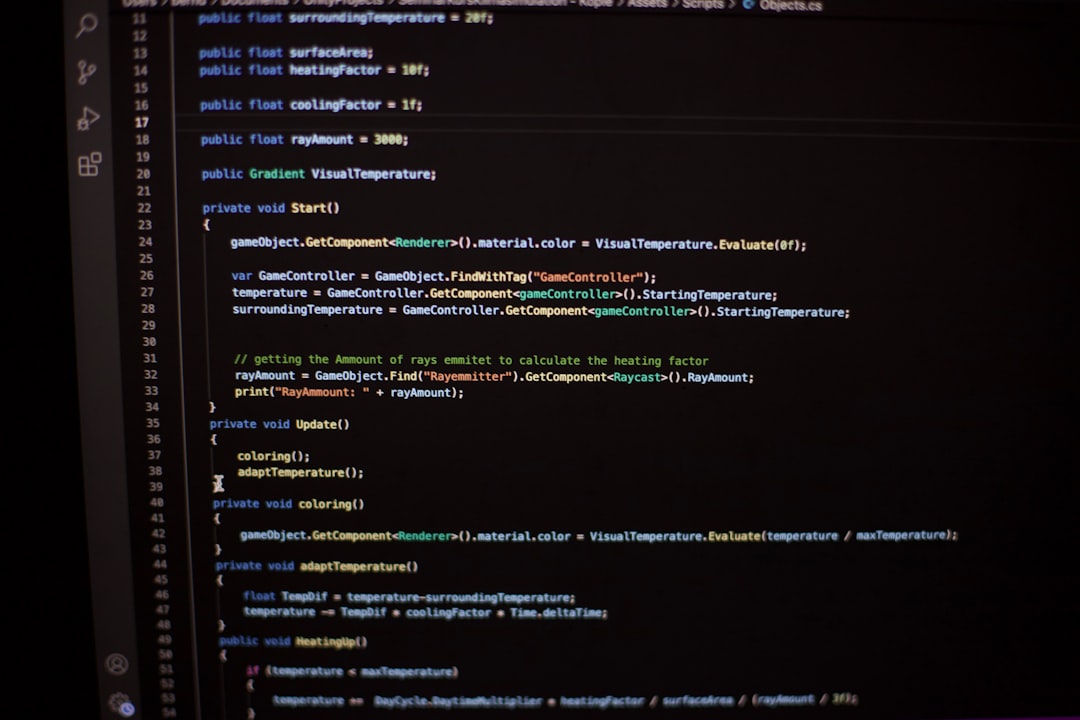
Should web developers focus on low-level programming? Some believe it's unnecessary for the majority of web development tasks.
Programming has always been a vast field, encompassing everything from high-level scripting to low-level CPU interactions. But how much of this spectrum do web developers really need to master? According to some, not much beyond the fundamentals. This view challenges the traditional emphasis that schools and some programming communities place on understanding systems at the lowest possible level.
Should web developers understand CPUs and bit manipulation?
One developer, in a discussion on the evolution and focus of programming education, voiced their perspective on what web developers need to prioritize. They argued that concepts like CPU registers, bit masking, or bit shifting are largely irrelevant to the majority of daily web development tasks. Instead, they advocate for focusing on the skills that directly relate to building functional and efficient websites and applications.
Back when they were learning, university curricula had a tendency to spend a lot of time on low-level programming topics that, while foundational to understanding computer science, didn’t align with their goal to become a web developer. At the time, web development wasn't as prominently taught in academic settings. Today, there may be more programs explicitly addressing modern web technologies, but the historical focus on lower-level theory created a gap between academia and the skills web developers need.
The real priorities for web developers
The speaker highlighted several areas where web developers should place more attention. For example, understanding caching mechanisms is highly relevant. Efficiently storing and retrieving data is critical in website performance optimization—a factor that can significantly impact user experience. On the other hand, deeply understanding how just-in-time (JIT) compilers work in JavaScript may not be as important. Most developers can take it for granted that these tools will do their job adequately.
This doesn’t mean low-level knowledge has no place. For those who are passionate about diving deep into how computers work, exploring those layers can add value to their careers. However, the argument here is that such expertise isn’t a necessity for every web developer, especially those focused more on creating functional, user-facing applications.
"I think that might be another one of my spicy takes," they noted, hinting that this position is not without controversy. There are plenty of developers and educators who believe understanding the machine-level mechanics of computing enhances proficiency or at least provides a stronger foundation.
Why this perspective matters
This perspective challenges the notion that all developers need a computer science degree or a deep understanding of hardware-oriented topics to excel in their work. In reality, the explosion of web technologies over the past two decades has created paths for highly skilled developers to build successful careers without ever touching assembly code.
Web development involves unique challenges, such as user interface (UI) design, client-server communication, and ensuring compatibility across browsers. This requires mastery of front-end frameworks, back-end integration, API design, and various tools. Time invested in deeply technical low-level knowledge could arguably be better spent mastering these domain-specific skills.
A pragmatic approach to learning
The speaker described themselves as an "ideas guy," someone motivated to bring creative visions to life without having the resources to hire developers to execute those ideas early on. This drive led them to learn the skills they needed to get projects off the ground. For many aspiring web developers, this level of pragmatism resonates. While curiosity and a deep passion for computing fundamentals can lead to specialized roles, most web development jobs demand practical knowledge of frameworks, languages, and systems that prioritize results over technical intricacies.
Understandably, this stance does not devalue those passionate about exploring low-level programming. Advanced knowledge can be indispensable in niche roles or contexts that demand ultra-optimized solutions. However, for the majority aiming to rapidly prototype, scale websites, or build enterprise-grade web apps, prioritizing web-related tasks and optimizations makes sense.
The bigger picture in the tech industry
The tech industry itself reflects this divide. Companies often split their engineering teams into those focusing on low-level system performance (e.g., engineers working on operating systems, networks, or hardware-specific tasks) and those building high-level applications. Web developers overwhelmingly fall into the latter category.
This divide raises another question: should computer science education adapt? Modern developers can increasingly access resources tailored to specific career paths. Whether it's specialized bootcamps or focused online platforms, learners gravitate toward material directly relevant to their goals. Universities that still place heavy emphasis on low-level topics may begin to lose relevance for those focused on web and app development.
What this means for aspiring developers
If you're considering or building a career in web development, you might wonder whether you need to dive into low-level programming as part of your learning journey. The simple answer is: probably not, unless it matches your interests or aligns with your specific role.
However, understanding core programming principles, like how data flows within an application, memory management at a high level, and other general concepts, can still give you an edge. Skipping "unnecessary" complexity doesn’t mean ignoring essential discipline required to write efficient and scalable code.
The key takeaway here is to learn with intention. If web development is your focus, prioritize mastering JavaScript frameworks, CSS, HTML, server-side languages, and an understanding of database operations. If you’ve developed a curiosity for exploring deeper layers of systems, those are avenues you can pursue without diluting your immediate goals.
Room for balanced perspectives
Of course, not everyone agrees with dismissing low-level knowledge entirely. Many experienced programmers insist that broader understanding creates better engineers, irrespective of specialization. Debugging issues, optimizing performance, or solving unconventional challenges can all benefit from a wider technical foundation.
At the end of the day, there’s no universal rule dictating how technical expertise should be distributed. Different paths exist for different goals. Whether you're the type to experiment with CPU registers out of curiosity or someone focused on mastering the intricacies of CSS animations, web development accommodates a range of approaches.
Staff Writer
Chris covers artificial intelligence, machine learning, and software development trends.
Comments
Loading comments…


