Bernie Sanders faces backlash over AI talks with Chinese scientists
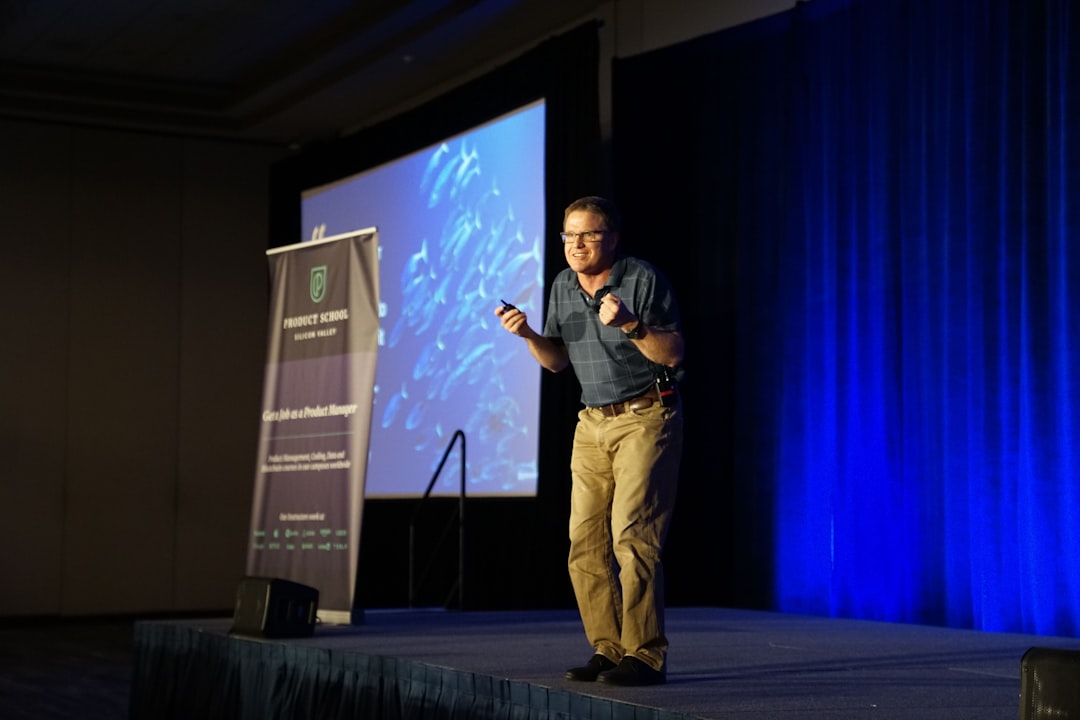
Senator Bernie Sanders faces criticism for proposing international AI cooperation with Chinese scientists, as Fox News hosts call the idea 'absurd' and a national security risk.
Senator Bernie Sanders is facing a storm of criticism after advocating for international cooperation on artificial intelligence with Chinese scientists. The Vermont independent, who chairs the Senate Health, Education, Labor, and Pensions Committee, argued that the United States and China need to work together to prevent what he called a “cataclysmic development” in AI.
During a recent public appearance, Sanders said, “What I believe and suspect most people in the United States, China and around the world believe is that we need international cooperation between the nations of the world to prevent possibility of cataclysmic development.”
The remarks drew an immediate and sharp response on Fox News, where host Todd Piro and commentator Kurt Knutsson — known as “Kurt the Cyber Guy” — rejected the idea outright. Piro compared the proposal to inviting German scientists to discuss submarine-building during World War II, asking, “What could go wrong?”
Knutsson went further, calling the idea “ridiculous” and arguing that sharing AI technology with Chinese representatives on U.S. soil would be like “letting the fox in the hen house.” He warned that the discussions could allow a strategic rival to leak U.S. secrets and undercut America’s position in the global AI race. “This is a risk to our growth of this country. This is a war between our adversaries China and when it comes to AI innovation — bringing them here for discussions is absurd,” Knutsson said.
The core of the debate
The controversy highlights a deep and unresolved tension in U.S. AI policy: how to balance the need for safety-focused international agreements with the reality of geopolitical competition. Sanders’ position reflects a growing view among some academics and policymakers that the most dangerous AI risks — such as the development of autonomous weapons or loss of control over superintelligent systems — cannot be solved by one nation alone. They argue that a global framework for AI safety is as necessary as treaties governing nuclear weapons or bioweapons.
But critics on the right, and some on the left, counter that China has a track record of stealing U.S. technology. The U.S. government has repeatedly accused Chinese state-linked actors of hacking American AI labs and intellectual property. In this context, bringing Chinese scientists into direct talks about U.S. AI strategy is seen not as diplomacy but as an invitation for espionage.
The Fox News segment did not name any specific proposal or event Sanders was referencing. No official Chinese delegation or meeting has been publicly confirmed. The senator’s office did not respond to a request for comment at the time of the broadcast.
A separate but related security scare
The same segment also featured a report on a recent Homeland Security Investigations recovery of 15 agricultural drones stolen from a shipping company in New Jersey. The drones, described as being as large as ATVs and designed to spray chemicals, were found in a warehouse. Knutsson called the incident “a nightmare in the making,” noting that the drones were recovered close to the tri-state area, which includes Manhattan.
He argued that the theft underscored the lack of control over potentially weaponizable technology. “This flirts with weaponized tech — a nightmare in the making,” Knutsson said. “We have not been thinking about who is in control of the drones and how they are allowed to fly wherever they want to fly.”
The drones themselves are agricultural tools, but the case illustrates a broader vulnerability: as AI-enabled hardware becomes cheaper and more capable, the barriers to misuse fall. The same autonomy that makes a drone useful for spraying crops could be repurposed for delivering explosives or conducting surveillance.
Why the Sanders episode matters
The two stories — Sanders’ call for cooperation and the stolen drones — are not directly connected, but they together frame a central challenge for AI governance. On one side, there is a genuine need for international rules of the road to prevent an arms race or a catastrophic accident. On the other, there is a palpable fear that any such cooperation will be exploited by a nation that has not shown restraint in stealing technology or pursuing military applications.
Sanders is not the first prominent figure to call for U.S.-China AI talks. Former Google CEO Eric Schmidt, who chaired the National Security Commission on Artificial Intelligence, has warned that the U.S. and China should agree on “red lines” for AI use, such as a ban on autonomous weapons that can kill without human authorization. But Schmidt has also insisted that such agreements must be verifiable and that the U.S. must maintain its technological edge.
The difference with Sanders is that he is a sitting senator with influence over policy and budget. His willingness to publicly advocate for direct talks puts pressure on the Biden administration, which has taken a more cautious approach, mixing export controls on advanced AI chips with quiet diplomatic channels.
What comes next
No concrete outcomes are expected from Sanders’ statement alone. But the reaction reveals how polarized the AI policy debate has become. For now, the prevailing mood in Washington is hawkish. The CHIPS and Science Act, export controls on Nvidia chips, and the Commerce Department’s recent AI safety framework all lean toward competition rather than cooperation.
If Sanders intends to move toward a formal resolution or hearing on international AI cooperation, he will need to overcome skepticism from both parties. The Fox News segment suggests that the political cost of such a push would be high, especially in an election year where China is a top campaign issue.
Whether the stolen drone incident will factor into that debate is uncertain, but it serves as a vivid reminder that the threat is not only theoretical. As Knutsson put it, “These things are as big as an ATV... imagine what is possible if you took high-powered agricultural drones and misused them against us.”
The question remains whether the U.S. can manage both the promise and the peril of AI without either spilling secrets to rivals or building walls so high that progress stalls. Sanders has picked a side. The country has not yet decided.
Staff Writer
Chris covers artificial intelligence, machine learning, and software development trends.
Comments
Loading comments…


