Debunking Common Myths About Artificial Intelligence
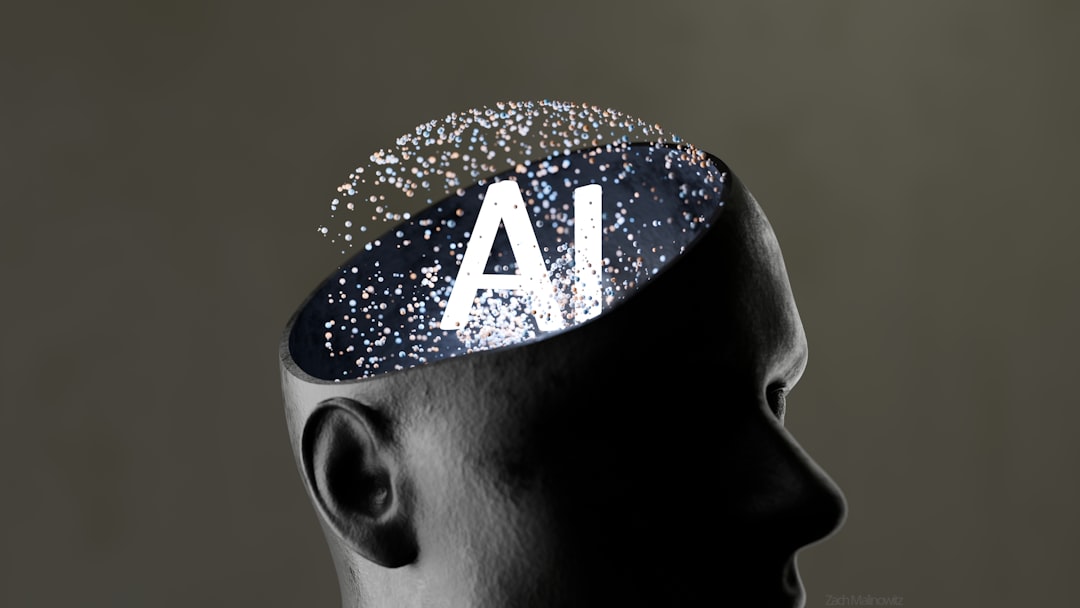
AI is everywhere, but misconceptions persist. From job fears to its role in everyday tools, here's a look at common AI myths and the facts behind them.
Artificial intelligence (AI) is increasingly part of our daily lives, powering everything from smartphones to self-driving cars. Yet, despite its growing prevalence, AI remains shrouded in myths and misconceptions. NBC News Chief Technology Analyst Joanna Stern recently tackled some of the most common myths surrounding AI on a "Today Show" segment, offering clarity on where the technology stands and its implications for the future.
AI Is Part of Everyday Life
One of the most pervasive myths about AI is that it’s a futuristic concept far removed from our daily routines. In reality, Stern confirmed that AI is already embedded in much of the technology we use today. AI powers voice assistants like Alexa and Siri, recommendation algorithms on platforms like Netflix and Instagram, and navigation systems in cars. You’ve likely interacted with AI more times than you realize, even if it’s not the advanced generative AI getting headline attention.
Beyond digital tools, the integration of AI is expanding into physical spaces. Robots, autonomous vehicles, and other innovations are becoming more common, demonstrating that AI is present not just in our devices but in how we engage with the wider world.
Will AI Replace All Jobs?
Another widespread fear is that AI will eliminate all jobs, leaving humans redundant. Stern was quick to call this a myth. While AI has the potential to reshape industries, it doesn’t mean the end of employment. Instead, she highlighted a common industry saying: "AI won’t take your job, but someone using AI might." The key takeaway is that AI is more likely to act as a “coworker” than a replacement.
AI tools are excellent for automating certain tasks, but they still lack the unique human qualities required in many roles. Emotional intelligence, creativity, and complex decision-making are examples of capabilities humans bring to the table. As AI adoption grows, new job categories are emerging. For instance, roles focused on managing AI systems or creating effective prompts for AI tools are increasingly in demand.
For workers, the challenge is to leverage their uniquely human skills while embracing AI as a tool to boost productivity.
Can AI Become Dangerous or Uncontrollable?
Concerns about AI becoming uncontrollable or posing existential risks are not entirely unfounded. Stern confirmed that AI, like any technology, can have dangerous applications if left unregulated. Current debates in Silicon Valley and beyond center on how to develop frameworks for responsible AI innovation.
To illustrate, Stern compared AI to other groundbreaking technologies like social media. Just as platforms like Facebook brought societal benefits while also creating challenges like misinformation, AI carries similar dual risks and rewards. Policymakers and tech companies are actively working to address these concerns by setting regulations to ensure AI evolves safely and ethically.
There’s also the matter of the speed of AI’s development. Critics argue that advancements are happening so quickly that laws and regulations struggle to keep up. This disconnect underscores the importance of ongoing discussions around ethical AI and the need for balanced progress.
Does AI Ever Make Mistakes?
The idea that AI is infallible is another significant misconception. Stern emphasized that AI is far from perfect. Despite its capability to process vast amounts of information quickly, AI-generated outputs are not immune to errors. For example, during the very “Today Show” segment that discussed these myths, part of the content had been generated using AI—only to require human correction afterward due to inaccuracies.
This reliance on human oversight highlights the need to treat AI outputs critically rather than as unchallenged truths. While AI can streamline workflows and assist with tasks, its outputs ultimately require human review to ensure factual accuracy and ethical application.
Key Myths and Facts at a Glance
| AI Myth | Fact |
|---|---|
| AI is a futuristic concept. | AI is already part of daily tools like voice assistants and apps. |
| AI will replace all jobs. | AI complements human work, creating opportunities for collaboration. |
| AI is always accurate. | AI often makes mistakes and requires human oversight. |
| AI is uncontrollable. | Proper regulations can help manage AI’s risks. |
Practical Takeaways for Engaging with AI
- Recognize AI’s omnipresence: From recommendations to navigation, AI already enhances your daily devices and routines.
- Adapt and upskill: Embrace AI as a tool to improve your work output and explore new roles in managing or collaborating with AI.
- Be critical of AI outputs: Don’t trust AI blindly—its conclusions require human judgment and verification.
- Support responsible development: Advocacy for ethical AI and balanced regulations is crucial as the technology evolves.
Conclusion
The myths surrounding AI often stem from misunderstandings about its capabilities and limitations. While AI plays a significant role in shaping the technology of today and tomorrow, it is neither a miraculous solution to all problems nor a harbinger of mass unemployment. Instead, AI is a tool—powerful but imperfect—that requires critical thinking, ethical oversight, and human collaboration to be used effectively. By separating fact from fiction, we can make smarter decisions about how to integrate AI into our lives and workplaces.
Staff Writer
Maya writes about AI research, natural language processing, and the business of machine learning.
Comments
Loading comments…


