How Artificial Intelligence Is Revolutionizing Astronomy and Exoplanet Discovery
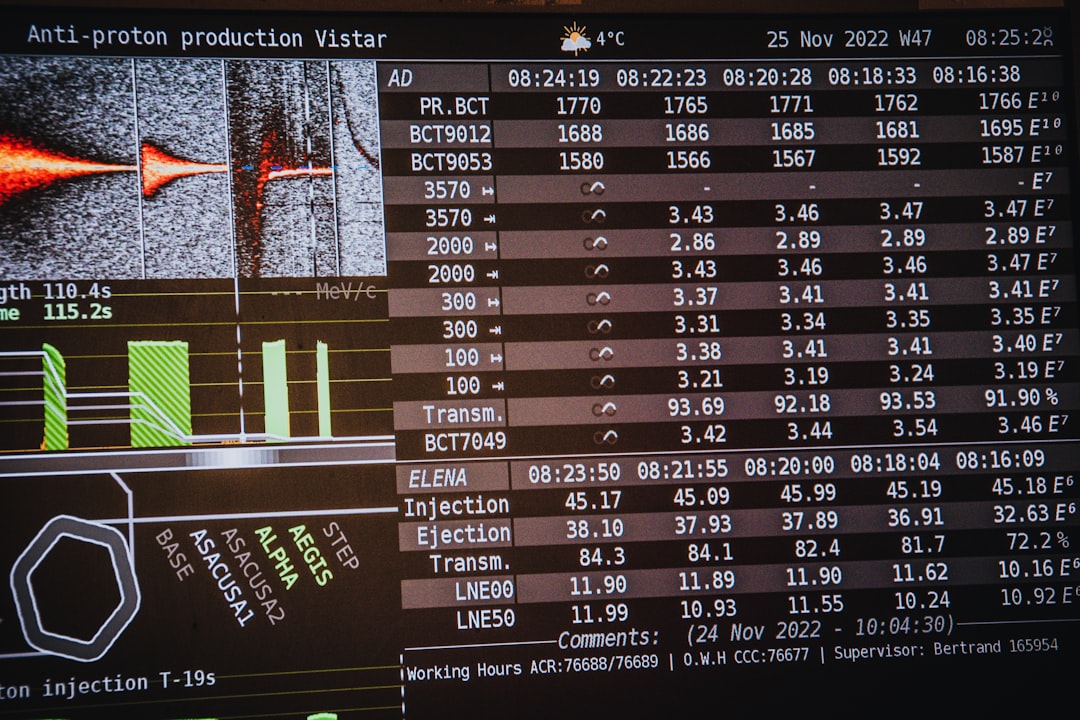
Artificial intelligence is transforming how astronomers analyze vast data from telescopes, uncovering new planets and insights faster than ever before.
Artificial intelligence (AI) isn’t just shaping industries like healthcare and finance—it’s reshaping how we explore the vastness of space. The advent of machine learning algorithms has opened a new era for astronomy, making it possible to sift through immense pools of data from telescopes and uncover celestial phenomena at speeds unthinkable just a few years ago. From identifying exoplanets to discovering galactic anomalies, AI is now at the forefront of astronomical research.
The Data Avalanche in Modern Astronomy
Astronomy has never been short on data. Space telescopes like the Transiting Exoplanet Survey Satellite (TESS) capture massive quantities of observational data while scanning hundreds of thousands of stars. Each star generates immense amounts of information, recording minute changes in brightness and other observables. This abundance of data presents a paradox: while astronomers have more information about the universe than ever before, traditional analysis methods simply can’t keep up.
In earlier years, astronomers manually pored over graphs and datasets, looking for subtle dips in starlight brightness to identify orbiting planets. These processes often took weeks or months to complete. However, as multiple studies, including those cited by The Astrophysical Journal and Universe Today, have pointed out, the scale of modern data exceeds what humans alone can efficiently process. In publications like Nature Astronomy, researchers emphasize that AI has become less of a convenience and more of a necessity in dealing with this data deluge.
How AI is Changing the Game
Machine learning—an aspect of AI that detects patterns in data—has become integral to telescope data analysis. When looking for exoplanets, these algorithms are particularly adept at identifying minuscule, temporary decreases in a star's brightness caused by an orbiting planet passing in front of it. Unlike human-led approaches based on specific search criteria or existing models, AI evaluates the entirety of the data without preconceived biases. This enables it to detect patterns and signals that may otherwise go unnoticed.
According to research published by MIT and various institutions, machine learning can even detect low-level signals that were previously dismissed as noise. This capability has led to groundbreaking discoveries, such as ultra-short-period planets—worlds that orbit their stars in less than a day. For scale, Earth's orbit around the Sun takes 365 days. These extreme exoplanets, with years lasting fewer than 24 hours, frequently experience surface temperatures reaching thousands of degrees and often have partially molten surfaces. While unlikely to support known forms of life, these planets offer unparalleled opportunities to study the physics of planetary formation and extreme conditions.
Discovering the Unexpected
One of AI’s most transformative contributions to astronomy lies in its ability to analyze archival datasets and discover phenomena that defy existing scientific categories. Space telescopes like the Hubble observatory have been collecting images and data for decades, and much of this information remained unanalyzed until recently. Researchers leveraging machine learning algorithms have uncovered unusual galactic structures, irregular formations, and other anomalies that hadn’t been noticed before.
These findings underscore a fundamental issue in traditional scientific methods: humans tend to search for what they expect to find. Scientific inquiry generally begins with hypotheses, followed by data collection to test those assumptions. AI, by contrast, doesn’t operate within predefined theoretical frameworks. This allows it to identify signals and patterns that don’t conform to established categories or expectations, paving the way for unexpected discoveries.
Shifting Paradigms in Science
This AI-driven ability to prioritize discovery over predefined hypotheses represents a paradigm shift in how scientific research is conducted. As noted in Scientific American, the traditional method—a theory first, data second approach—is increasingly giving way to a data-first methodology. Astronomical data is now leading theorists to catch up, often forcing scientists to revisit and rewrite established knowledge.
While this shift accelerates scientific progress, it adds complexity to the process. Discoveries often outpace our ability to understand their implications fully. Researchers now face a pressing question: as our tools let us observe more of the universe, are we prepared to interpret the wealth of information we uncover? For every new exoplanet or galactic anomaly spotted, there may follow years of research dedicated to understanding its importance.
Challenges and Limitations
While AI’s role in astronomy has been transformative, it is not without its limitations. AI algorithms require high-quality training datasets for maximum effectiveness. The reliability of their findings depends on the integrity and comprehensiveness of these underlying datasets. Moreover, AI lacks the contextual understanding that human researchers have; it can identify patterns but doesn’t inherently understand the physics driving those patterns. As a result, its insights often require human validation and interpretation to ensure their scientific significance.
Additionally, the use of AI doesn’t eliminate the need for human oversight. Astronomers still play a critical role in setting research priorities, interpreting results, and connecting new findings to broader theoretical frameworks.
The Future of AI in Astronomy
AI’s role in revolutionizing astronomy is only just beginning. As telescopes become more advanced and generate even greater quantities of data, the collaboration between human researchers and machine learning systems will become increasingly important. Future research may rely heavily on AI to identify patterns in unexplored areas of the universe, including phenomena we haven’t yet conceptualized.
From the identification of mysterious new objects to refining our understanding of planetary systems, AI continues to challenge the boundaries of what’s possible in space exploration. Its ability to uncover signals buried in archives or previously dismissed anomalies makes it one of the most powerful tools at scientists’ disposal. With such technologies, the mysteries of the universe may become just a little less enigmatic, one dataset at a time.
Staff Writer
Chris covers artificial intelligence, machine learning, and software development trends.
Comments
Loading comments…


