Researchers use AI to virtually unroll and interpret ancient scrolls
AI is transforming historical research by helping scholars virtually unroll and read ancient scrolls, many of which are thousands of years old.
Artificial intelligence is no longer confined to modern tasks like automating industries, enhancing customer service, or generating digital art. It is now unearthing the ancient past in ways that were once unimaginable. Across the United States, researchers are applying AI tools to decode some of the most fragile artifacts in human history: ancient scrolls. Many of these texts are nearly 2000 years old, with some written on materials as delicate as pure charcoal.
The preservation of these scrolls poses a paradoxical challenge. While the carbonized material has helped safeguard their content through centuries of decay, the brittleness of the pages makes traditional methods of unrolling or handling nearly impossible. Scholars working with these artifacts have historically been limited by techniques that required physical interaction, often risking irreversible damage. Enter artificial intelligence, combined with state-of-the-art medical imaging technologies.
The AI technique saving history
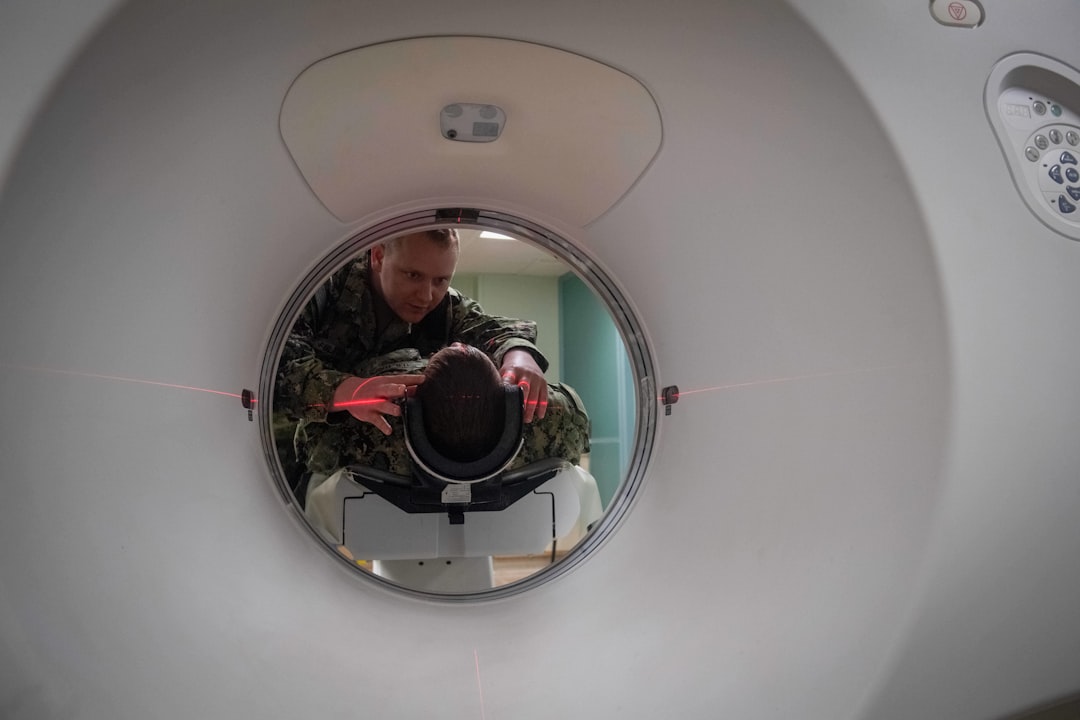
Researchers have devised a non-invasive approach to recovering the content of these ancient scrolls. The process begins with a CT scan, or computed tomography, of the scrolls. This technology, commonly used in medical diagnostics, generates detailed images of the internal structure of the scrolls. Each layer and wrap is visualized and captured digitally without needing to physically open the artifact.
Once the internal anatomy of the scroll is mapped out, the data is handed off to custom software that relies on machine learning algorithms. This software is capable of virtually “unwrapping” the scroll, digitally unfolding each layer to reveal the writing inside. What results is a visualization of the text as it might have looked when the scroll was new, all while leaving the physical scroll untouched.
The integration of these techniques has transformed the field of historical preservation. Texts that were previously unreadable due to their fragile condition are now accessible to researchers, unlocking secrets about ancient societies, languages, and beliefs.
Breaking barriers in textual recovery
The implications of this technology extend far beyond any single artifact. In many cases, these scrolls are the last surviving records from civilizations that have long passed. For example, artifacts preserved in the ash at sites like Pompeii and Herculaneum have historically been impossible to unroll because of their charred and brittle nature. With AI, researchers are finally decoding texts that may have been written during pivotal historical periods—potentially rewriting our understanding of those cultures.
The application of CT scanning and AI-generated models is not limited to scrolls made of charcoal. Papyri and other ancient manuscripts, often kept in conditions that make physical handling risky, can also benefit from these advancements. The same fundamental principle applies: minimize human contact, maximize the fidelity of data recovery.
A collaboration of disciplines
This breakthrough represents the intersection of numerous fields—archaeology, computer science, and materials science among them. While archaeologists and historians provide context and prioritize preservation, computer scientists develop the machine learning software required to interpret the intricate visual data. The success of these projects depends on this multidisciplinary collaboration.
Limitations and room for refinement
However, the technology is not without its challenges. The legibility of the recovered text often depends on the condition of the scroll’s ink and the resolution of the CT scan. Ancient inks were not always applied uniformly, and the faintest inscriptions may be harder to reconstruct. For now, this means that the most degraded texts remain only partially deciphered.
Another issue is scalability. Custom algorithms must often be fine-tuned for each unique scroll, a process that takes time and specialized expertise. Developing software that can autonomously adapt to different types of scrolls or manuscripts remains a future goal.
While the technique excels at preserving content, it does not render physical preservation obsolete. Experts emphasize that protecting these irreplaceable items and maintaining ethical practices around digital simulations are equally critical.
A broader cultural impact
In the broader picture, these developments signify a step toward making rare historical knowledge more accessible. Already, several institutions are exploring how virtual scroll models can be shared in open-access databases, allowing scholars worldwide to study these texts.
AI’s role in the humanities is often met with skepticism, particularly regarding fears of eroding the human touch in interpretation. But here, its value is clear: enabling discoveries that were previously impossible. For readers invested in history or technology, this is a glimpse of AI’s transformational potential beyond the confines of contemporary applications.
The combination of CT scanning and AI continues to inch us closer to understanding the lives, beliefs, and narratives of those who came millennia before us. And these stories, once thought lost, are finally coming to light.
Staff Writer
Maya writes about AI research, natural language processing, and the business of machine learning.
Comments
Loading comments…


