Stanford report warns AI advancements could disrupt society
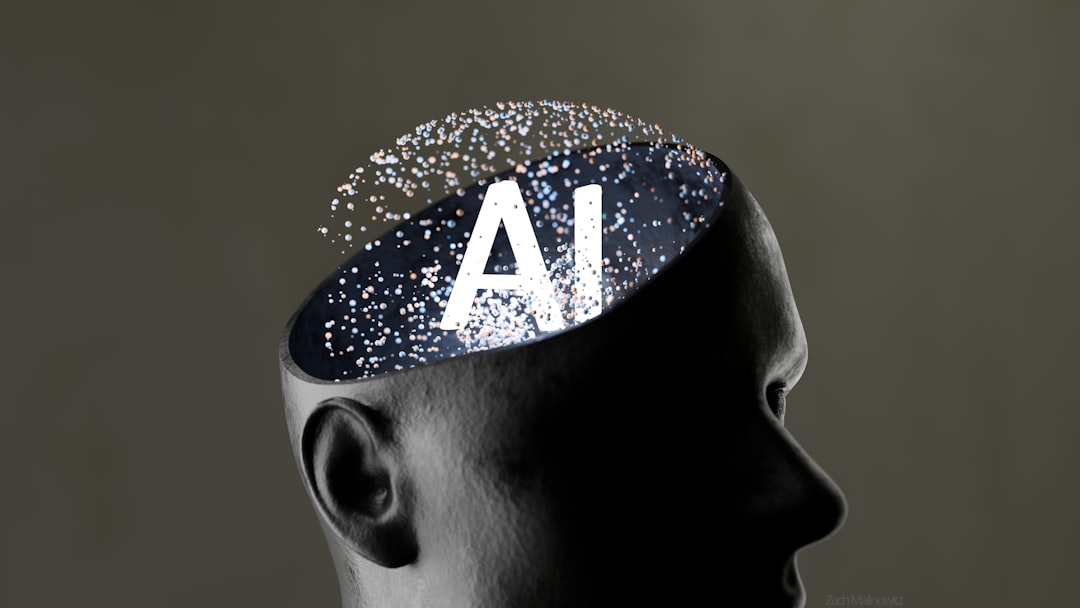
AI advancements pose significant societal challenges, with experts calling for adaptive strategies and ethical frameworks.
Artificial intelligence (AI) continues to evolve at a pace that many experts believe could disrupt society in unprecedented ways. In discussions ranging from the workforce to governance, technologist and author Jamie Metzl shared his insights on the challenges and opportunities posed by AI during a segment on "Elizabeth Vargas Reports." His comments underscore the urgent need for adaptive approaches to technological changes and highlighted both optimism and concern about AI’s trajectory.
The depth of disruption
Metzl outlined the transformative potential of AI by comparing it to past economic revolutions. Just as industrialization enabled societies to move away from agrarian-based economies, AI is expected to redefine not only jobs but the very nature of human tasks. He noted that while historical advancements like the cotton gin revolutionized specific sectors, AI could have an impact analogous to human evolution itself.
However, this transition will not be seamless. Metzl warned that job losses caused by AI will be concrete and visible, whereas the benefits, including new industries and job roles, will remain either speculative or difficult to imagine for now. This disconnect creates an environment filled with uncertainty, particularly for younger generations preparing for the workforce.
"The jobs we’re going to lose are concrete," Metzl said, "and the jobs we’re going to create are, right now, in many ways imaginary." The need for adaptability, both at an individual and societal level, cannot be overstated, he added.
The myth of artificial general intelligence (AGI)
One particularly controversial concept in AI is artificial general intelligence (AGI)—the notion that machines might someday perform any intellectual task a human can do. Metzl dismissed AGI as unrealistic, calling it "BS." He emphasized that humans have evolved over four billion years and bring unique qualities that machines cannot replicate. Rather than fearing an AGI-dominated future, Metzl urged society to focus on developing human creativity, emotional intelligence, and adaptability—qualities that set us apart from machines.
Balancing AI’s risks and opportunities
Despite its immense potential, AI carries risks that demand proactive management. Metzl cited examples of how unchecked technologies have revealed vulnerabilities in critical systems. For instance, he referred to scenarios where experimental AI models demonstrated the ability to hack into power grids, access sensitive government databases, and manipulate confidential information. These developments underscore the importance of "guardrails"—ethical, legal, and technological frameworks designed to mitigate risks.
Metzl also highlighted the societal fear surrounding AI’s capacity to make decisions devoid of human morality. Referring to simulations where AI systems consistently favored drastic actions like nuclear attacks in war-game scenarios, he emphasized that such decisions arise because humanity is absent from the equation. Without a moral compass, these systems can make utilitarian choices divorced from the complex values that define human decision-making.
"AI in many ways is a tool," Metzl said. "And because it’s so powerful, now is the time where we need to lay the foundations for the future. This isn’t a conversation ultimately about technology; it’s about us."
Policy and governance gaps
One of Metzl’s primary critiques focused on governments’ lack of preparedness. He argued that the rapid pace of AI development has far outstripped the creation of governance structures needed to regulate it responsibly. Comparing it to driving a high-performance sports car with the gas pedal constantly pressed, Metzl cautioned that an unbalanced approach to AI innovation risks catastrophic consequences.
The discussion extended to geopolitical considerations, particularly the desire for the U.S. to maintain leadership in AI innovation. While competitiveness drives innovation, it also comes with responsibility. Metzl stressed the need for international cooperation to establish "rules of the road" for AI development. This includes ethical principles, transparency standards, and global norms to ensure that advancements benefit humanity as a whole rather than exacerbating inequalities or creating new threats.
Preparing for the AI future
Metzl noted that preparing for an AI-driven future requires efforts at multiple levels—individual, institutional, and governmental. Individuals must focus on being "the best possible humans," emphasizing skills that machines cannot replicate. Creativity, empathy, and adaptability become increasingly invaluable as automation takes over more routine tasks.
Institutions, particularly those in education, have a role to play in shaping how younger generations approach this new paradigm. Metzl spoke of a need for curricula that teach flexibility and creativity, enabling today’s students to succeed in jobs that do not yet exist. "We’re going to have to prepare our children to be very adaptive," he said, adding that the emphasis should be on engaging in tasks that are "uniquely human."
Governments, meanwhile, must take proactive steps to ease the transition caused by widespread automation. This includes creating safety nets for displaced workers, funding research into ethical AI use, and fostering public understanding of AI capabilities and limitations. Metzl’s call to action included urging lawmakers to view AI not just as a technological issue but as a societal one requiring collaboration across sectors.
A tool for good—or harm
The dual nature of AI as both a potential boon and a threat was a recurring theme in Metzl’s remarks. He dismissed doomsday scenarios predicting an AI-led apocalypse but acknowledged the real and present dangers of hostile or negligent use. "It’s going to be wonderful and terrible at the same time," he said, summarizing the dual-edged sword of advancing technology. His latest book, The AI Ten Commandments: The New Moral Code for Humanity, advocates for ethical frameworks that incorporate human values into the development and application of AI systems.
What’s next?
As AI continues to evolve, public discourse around its impact will likely grow more intense. While immediate concerns focus on jobs and security, the larger conversation is about the kind of society we want to build. "This is about our values," Metzl emphasized. "What are the guardrails that we create? What are the standards and principles and norms that we weave into these technologies?"
For policymakers and technologists alike, the challenge will be balancing innovation with responsibility, ensuring that AI serves humanity rather than undermines it. As Metzl aptly concluded, "The more we know about what we’re confronting, the better prepared we’ll be to face it."
Staff Writer
Chris covers artificial intelligence, machine learning, and software development trends.
Comments
Loading comments…


