Why AI’s Dominance in Chess Goes Beyond Winning
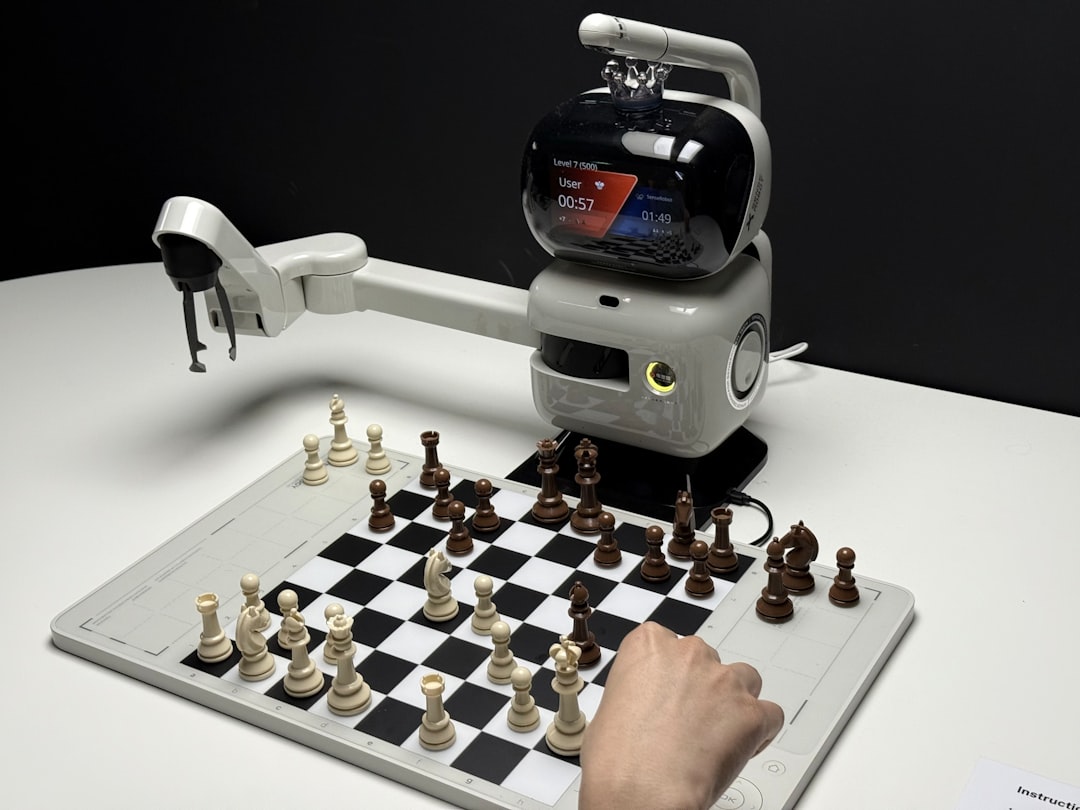
AI outperforms grandmasters in chess, but its value as a training partner is reshaping human strategy. Here's what it means for the game.
Artificial intelligence’s chess dominance is an old story that’s still evolving in fascinating ways. In 2025, the gap between machine and human players has grown so wide that the question of whether AI can beat a chess grandmaster barely even feels relevant anymore. Modern chess engines, powered by deep learning and immense computational capacity, have surpassed even the most skilled humans in ways that are reshaping how the game is played, taught, and understood.
The Raw Power of Modern Chess AI
Today’s top chess AI platforms, like Stockfish, AlphaZero, and others, operate on an entirely different level than even the most brilliant human players. These programs can calculate millions of possible moves per second, simulating entire games within fractions of a second. This level of computational ability allows AI to detect patterns, strategies, and long-term advantages that no human, regardless of skill, could consistently identify.
This isn’t simply about raw calculation or memorization. Modern AI engines utilize machine learning to assess positions in ways that feel profoundly intuitive. Programs like AlphaZero, for instance, developed their expertise by playing millions of games against themselves, “teaching” themselves to prioritize creativity and adaptability over brute-force computation. The result is a style of play that’s not just strong—it’s novel and unpredictable.
Even grandmasters, the elite of human chess, have described facing AI as less of a competition and more like encountering an overwhelming force of nature. The best human players train their entire lives to master the game, reaching the top 1% of an already exclusive group. Yet when matched against a top-tier AI, victory isn’t just unlikely—it’s nearly impossible.
Creativity, Not Just Calculation
One misconception about AI in chess is that its dominance is purely mechanical, driven by relentless number-crunching. In reality, the creativity of modern chess engines has become a key factor behind their success. Rather than sticking to formulaic or well-established rules of thumb, these systems often propose moves and strategies that would never occur to a human player. Some of these moves initially seem illogical or weak, but the AI’s ability to evaluate their potential over hundreds of future moves reveals their brilliance.
Interestingly, facing an AI opponent sometimes inspires awe rather than frustration. Grandmasters have noted that playing against AI can feel like experiencing the game in its purest, most unfiltered form. It’s as though the machine has tapped into the “soul” of chess—a poetic, but poignant way of describing the creative instincts it demonstrates.
Humans and AI: Better Together
While the machines have clearly taken the crown in open competition, their role in human chess continues to evolve. Instead of rendering human players obsolete, AI is now a critical tool for improving human performance. Grandmasters use AI as a training partner, analyzing its games to uncover new strategies and positions that would otherwise remain hidden. These systems allow players to simulate games, experiment with unconventional approaches, and test their limits in ways that were inconceivable before.
The symbiotic relationship between human players and AI has already pushed competitive chess to unprecedented heights. By leveraging AI insights, humans are innovating their openings, middle-game strategies, and endgame techniques. In effect, AI is making humans better at the game, even while remaining far superior in direct competition.
The Emotional and Philosophical Layer
Watching AI dominate chess so convincingly is a humbling experience, not just for players, but for fans of the game as well. What happens to a sport when humans are no longer the protagonists in its highest tiers? For some, this shift feels disconcerting—chess as an epic mental battle between two individuals now feels less relevant when a machine can outperform the world’s best by an enormous margin.
But others see AI’s rise not as a threat, but as a new chapter. These systems invite a different kind of appreciation for the game, highlighting the depth and complexity that still captivates players of all skill levels. By encouraging humans to play better—not simply against machines, but against one another—AI has arguably enriched the game rather than diminished it.
A Broader Trend in AI and Human Skill
Chess isn’t the only arena in which AI has demonstrated its superiority. Similar stories are occurring in fields like Go, StarCraft II, and even creative pursuits such as music composition and art. What these examples reveal is that artificial intelligence excels not just by replicating human ability, but by transcending it, often redefining what “mastery” looks like.
However, chess offers a valuable case study in how humans can coexist with superior machines. While the machines rule in direct competition, humans have found ways to collaborate with AI to push the boundaries of their own abilities. This pattern raises intriguing questions about the roles AI will play in other pursuits, from medicine to engineering to education.
Looking Ahead
By 2025, it’s clear that no grandmaster is going to “beat” AI in the traditional sense. But it may also be the wrong question to ask. AI and humans are locked in a different kind of relationship—one that’s less about rivalry and more about mutual growth. The next generation of chess players may see their human mentors and AI tools as equally indispensable resources.
The game itself is evolving, elevating both its depth and its accessibility as these tools become more widespread. For chess enthusiasts, the story isn’t one of defeat but of transformation—proof that even in a world of machines, there’s still infinite room for human creativity and passion.
Staff Writer
Maya writes about AI research, natural language processing, and the business of machine learning.
Comments
Loading comments…


