Elon Musk Unveils Terafab: Tesla's Bold Step Towards a Galactic Future
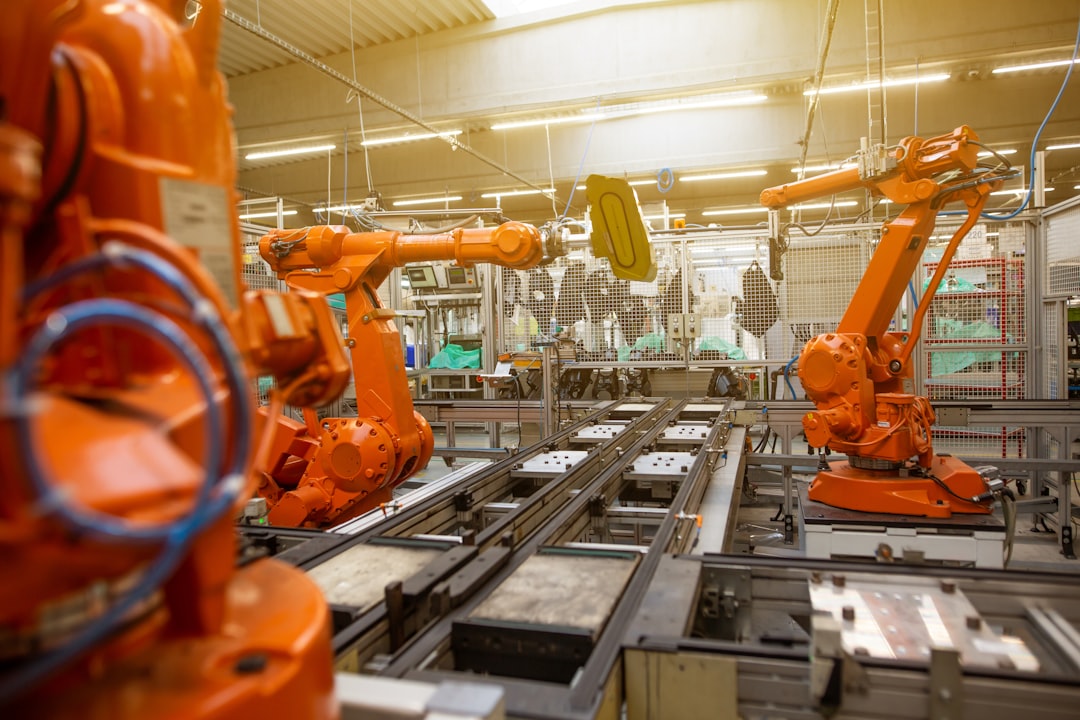
Tesla's new Terafab initiative aims to revolutionize AI chip production, paving the way for interplanetary exploration and advanced computing.
Elon Musk, a name often associated with groundbreaking technology, unveiled a new ambitious project during a live presentation at the now-defunct City of Austin power plant. Dubbed "Terafab," this initiative represents what he called the "most epic chip-building exercise in history." The vision? To power a galactic civilization capable of reaching interstellar heights. Here’s everything you need to know about Terafab and the bold future Musk envisions.
The Grand Vision: From Earth to the Stars
Elon Musk began his presentation by framing humanity’s potential to scale its civilization beyond the boundaries of Earth. Drawing from the Kardashev Scale, which measures a civilization's energy-harnessing capabilities, Musk described the need for humanity to reach Type II (harnessing the energy of the entire sun) and eventually Type III (utilizing energy across the galaxy). This progression, he argued, is vital to enabling human life on other planets, setting up sustainable lunar and Martian colonies, and powering interstellar travel.
The goal of Terafab is not just about advancing chip-making technology; it’s about enabling the next era of human potential. Musk summed it up succinctly: “Turning science fiction into science fact.”
What Exactly Is Terafab?
At its core, a "Terafab" is a cutting-edge manufacturing facility designed to produce AI chips at an unprecedented scale of one terawatt of computational capacity per year. To put things into perspective, one terawatt equals 1,000 gigawatts — a staggering leap in computing power.
According to Musk, the missing ingredient in realizing his ambitious goals of interplanetary travel and advanced robotics is sufficient computational power. Terafab will be built in Austin, Texas, right next to Tesla's Giga Texas. The facility is set to be the first of its kind, featuring all the necessary equipment to design, manufacture, test, and improve chips in a single location.
Innovations at the Terafab Facility
- Comprehensive Chip Production: Terafab will be equipped to handle every stage of chip development, from lithography mask creation to chip fabrication and testing.
- Rapid Iterative Development: The facility will create a “fast recursive loop” for chip design improvements, enabling rapid innovation unmatched anywhere else in the world.
- Advanced Physics: Musk previewed that the facility will also push boundaries by experimenting with new physics concepts. Though details remain scarce, Musk expressed confidence that these novel approaches will ultimately work.
AI Chips and Their Purpose
Elon Musk revealed two types of AI chips planned for production at Terafab:
- Terrestrial Chips: These chips, optimized for edge inference, will power Tesla’s Optimus robots and vehicles. Musk anticipates the production of 1 to 10 billion humanoid robots per year, requiring 100 to 200 gigawatts of compute per year.
- Space AI Chips (D3): Designed for use in space applications, the high-powered D3 chips aim to deliver one terawatt of computing capacity per year. These chips will support Tesla’s vision of using AI satellites for interplanetary missions and solar power collection in space.
Compute in Space: A Game-Changer?
One of the most intriguing points of the presentation was Musk’s assertion that it will soon be cheaper to perform compute in space than on Earth. This cost efficiency could become viable within the next two to three years, further unlocking possibilities for space-based industries.
The Role of AI Satellites
Musk showcased the AI Sat Mini, an early prototype designed to collect solar power and facilitate compute tasks in orbit. While this initial model generates 100 kilowatts, future iterations could deliver output in the megawatt range. This scalable model will bring us closer to the dream of harnessing immense solar power for interstellar activities.
The Future: From Terawatts to Petawatts
What comes after Terafab? Musk hinted at the next step, scaling up to petawatt levels of compute (1,000 terawatts). He proposed an electromagnetic mass driver (or rail gun) on the Moon to propel resources into space without the need for rockets. The Moon’s lack of atmosphere and lower gravity make it an ideal location for such a project.
This setup, Musk suggested, would dramatically reduce costs and allow for the creation of terawatt-scale infrastructures capable of supporting a galactic civilization.
Implications for Tesla, SpaceX, and XAI
The Terafab initiative relies heavily on collaboration between Musk’s companies, including Tesla, SpaceX, and his AI venture, XAI. Tesla’s Optimus robots will play a significant role in automating manufacturing processes, while SpaceX will oversee the development of space infrastructure and power systems. XAI will contribute to the AI models required to manage these complex systems.
Key Takeaways
- Interplanetary Travel: Musk envisions a future where space travel is as accessible as boarding a plane, facilitating the colonization of the Moon, Mars, and beyond.
- AI Chips at Scale: Terafab’s chips will unlock new possibilities in robotics, solar energy collection, and interstellar missions.
- A Galactic Future: The scaling of computing power to petawatt levels could empower humanity to harness the energy of stars and galaxies, fulfilling Musk’s vision of a Type III civilization.
When Can We Expect to See Results?
While some aspects of Musk's presentation remain conceptual, others are well underway. The construction of the Terafab facility in Austin is expected to proceed swiftly, with the first chips potentially rolling out within a few years. As always, Musk’s ambitious timelines are met with skepticism, but his track record of achieving what once seemed impossible cannot be ignored.
Conclusion
Elon Musk’s announcement of the Terafab marks another bold chapter in his quest to push the boundaries of human potential. With plans to produce AI chips on an unprecedented scale and leverage space-based compute, Musk continues to demonstrate an unrelenting commitment to advancing technology for the betterment of humanity. While the challenges are immense, the rewards — including interplanetary travel and galactic civilizations — are too tantalizing to dismiss.
If successful, Terafab could transform not just Tesla, SpaceX, and XAI, but the world as we know it.
Comments
Loading comments…


