SpaceX and Tesla Collaborate on Terafab Project: A Vision for Orbital AI Data Centers
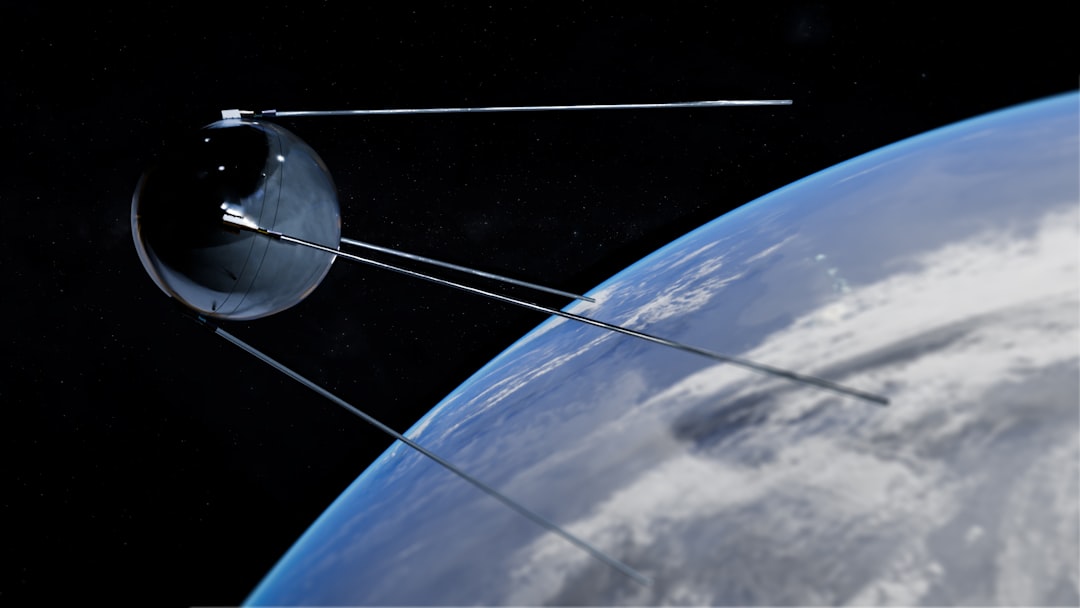
SpaceX and Tesla's Terafab project aims to revolutionize AI with orbital data centers, addressing Earth-based constraints and leveraging reusable launch costs.
SpaceX and Tesla Innovate With the Terafab Project
Elon Musk’s SpaceX and Tesla have joined forces on an ambitious new project known as Terafab, aiming to build a new generation of orbital AI data centers. This collaboration, which also involves Musk’s AI venture XAI, reflects the growing need for innovative solutions to meet increasing demand for AI computing while addressing Earth's infrastructural limitations.
The Terafab initiative, explained in detail during a recent discussion with SpaceX investors, seeks to leverage Musk’s extensive ecosystem of companies to establish cost-efficient and environmentally sustainable data centers in space. This effort comes amid mounting challenges on Earth, including land shortages, power availability, and the soaring costs of skilled labor for AI infrastructure development.
Why Orbital Data Centers Make Sense
As the demand for AI computation intensifies, traditional Earth-based data centers are facing serious roadblocks. Experts like Karen from Fidelity Investments, who was featured in the investor discussion, pointed out key challenges:
- Land and Power Limitations: Countries are struggling to allocate sufficient land for sprawling data centers, particularly in urban regions. Acquiring the necessary energy permits also introduces delays.
- Rising Labor Costs: Electricians required for high-capacity data center installations can command salaries exceeding $500,000 annually due to a shortage of specialized skills.
- Environmental Constraints: Earth-based AI operations can strain local ecosystems through high energy consumption, particularly important when considering the broader push for sustainability.
In contrast, space offers near-unlimited expansion potential without these terrestrial barriers. Space-based data centers could also leverage solar energy in sun-synchronous orbits, reducing reliance on Earth’s limited energy infrastructure.
The Economics of Orbital AI Data Centers
The key to making orbital computing viable lies in reducing launch costs. SpaceX’s Starship rocket, critical to this initiative, promises to dramatically lower the dollar-per-kilogram expense of deploying payloads into orbit thanks to its fully reusable design.
Karen highlighted SpaceX’s advancements as markers of progress:
- Starship’s Gen 3 design, with a payload capacity of up to 100 tons, is slated for launch in the coming months.
- Recently successful booster tower catches demonstrate strides in improving reusability.
- Testing of payload deployment mechanisms like the “PEZ door” represents significant early steps toward operational readiness.
These developments suggest that, once key milestones are reached, launching and maintaining AI infrastructure in orbit could become not only feasible but economically favorable compared to construction on Earth.
Synergy Among Musk’s Companies
One of the most striking aspects of Terafab is how naturally it integrates the strengths of each of Elon Musk’s major ventures:
-
SpaceX's Expertise: With regular launches (every other day, handling 80–90% of global payloads), SpaceX dominates aerospace logistics, providing the backbone for deploying AI-enabled satellites and infrastructure.
-
Tesla’s Innovation: Tesla has already developed cutting-edge data centers, such as Colossus 1 and Colossus 2, used for its AI and self-driving car technologies. This experience in building large-scale GPU clusters can be applied to orbital setups.
-
XAI's Role: Musk’s AI firm could supply key machine learning algorithms and architectures to fully leverage the orbital compute resources for real-world applications, from language processing to image and video generation.
The official Terafab project branding, featuring the logos of Tesla, SpaceX, and XAI, underscores this collaboration and hints at the long-term convergence of these companies’ goals.
Wider Implications: Potential Mergers
Speculation about a merger between Tesla and SpaceX has increased following the announcement of Terafab. Analysts cited Musk’s track record of vertically integrating his companies as a sign that combining Tesla’s terrestrial expertise with SpaceX’s aerospace capabilities is only a matter of time.
Currently, Tesla’s valuation hovers around $1.2 trillion, while SpaceX could surpass $2 trillion following a potential IPO. To minimize dilution for Tesla shareholders, many believe such a merger would ideally take place after Tesla’s market cap grows to an even higher valuation, potentially in the trillions, as its autonomous vehicle and AI initiatives scale further.
While no official timeline has been confirmed, industry watchers view the Terafab collaboration as the clearest indication yet that Musk envisions a unified mega-entity uniting Tesla, SpaceX, and potentially XAI for unprecedented technological synergy.
Comparing Space-Based and Earth-Based Data Centers
| Criterion | Earth-Based Data Centers | Space-Based Data Centers |
|---|---|---|
| Land Use | Limited, costly in urban regions | Virtually unlimited |
| Electrical Costs | Dependent on terrestrial energy sources | Solar energy in orbit |
| Construction Time | Lengthy, involving permits and labor | Faster as reusability improves |
| Operational Costs | Increasing due to wages and resources | Declining as launch costs decline |
| Environmental Impact | Significant | Minimal |
Practical Takeaways
- Economic Viability Is Close but Not Immediate: While still in the conceptual phase, experts agree that space-based data centers anchored by reusable rockets are not far off. Starship’s reusability milestones are pivotal to lowering costs further.
- Multi-Trillion-Dollar Sectors Collide: From AI to aerospace, Musk’s companies are pioneering overlapping industries whose combined market caps could significantly surpass current valuations.
- Real Estate Relief for Earth: By focusing on orbital infrastructure, terrestrial regions can conserve space and reduce ecological damage caused by AI center expansions.
Conclusion
Elon Musk’s Terafab project highlights the strategic advantages of combining SpaceX’s expertise in aerospace, Tesla’s engineering prowess, and XAI’s AI capabilities. While the project's realization hinges on advancing reusable rocket technology and fine-tuning space-based operations, it demonstrates Musk’s commitment to leveraging technological synergies across his ventures. If successful, Terafab could not only overhaul AI infrastructure but also redefine human engagement with space and Earth’s ecosystems.
FAQ
What is the Terafab project? The Terafab project is a collaboration between Tesla, SpaceX, and XAI to build AI data centers in orbit, addressing Earth’s infrastructure and cost limitations for AI computations.
Why are orbit-based data centers advantageous? Orbital centers avoid land and power restrictions on Earth. They can also utilize solar energy, reducing operational costs and minimizing environmental impact.
When will this concept become viable? While the concept is years away from implementation, progress on SpaceX’s Starship technology suggests significant advancements in launch costs and payload capabilities within the decade.
Could SpaceX and Tesla merge? Many analysts view a merger as likely in the future, contingent on higher valuations for Tesla to ensure minimal shareholder dilution.
What role does XAI play in the project? XAI could provide critical AI algorithms to maximize the utility of the orbital compute resources.
Staff Writer
Mike covers electric vehicles, autonomous driving, and the automotive industry.
Comments
Loading comments…


