Arm Launches AI-Specific Chip With Meta as First Customer
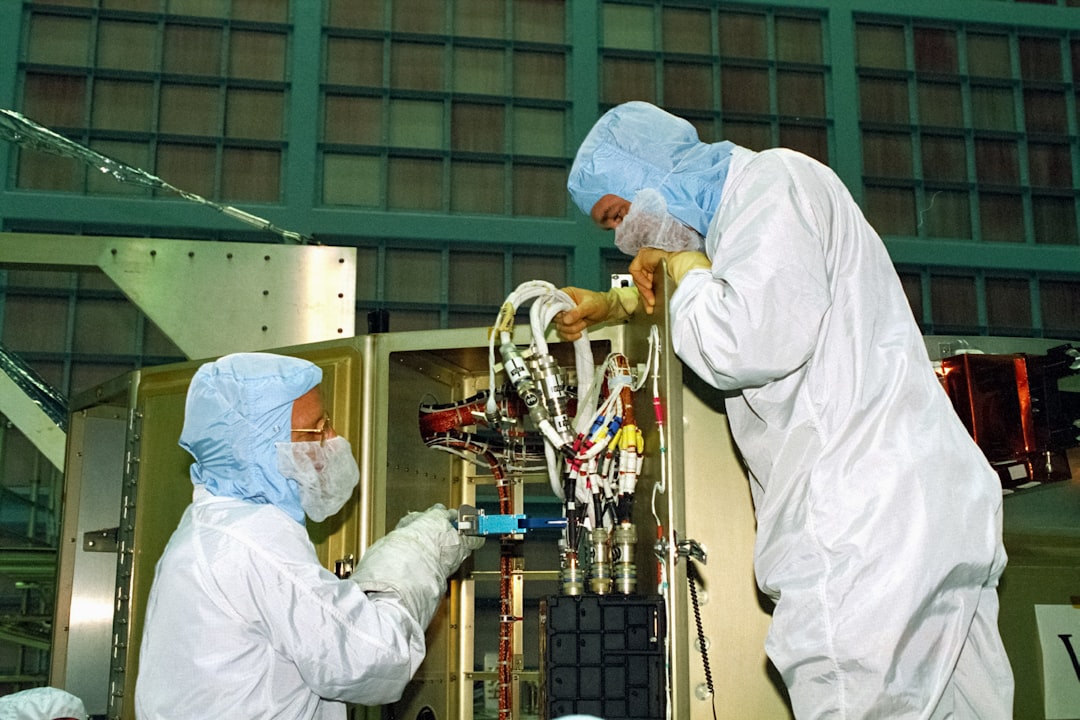
Arm enters the chip manufacturing race with its first AI-focused CPU, targeting data center efficiency. Meta is the inaugural customer.
Arm's First In-House AI Chip Debuts
Arm, the British chip design giant known for powering nearly every smartphone, has made a significant leap: it has developed its first-ever AI-specific chip. Transitioning from its traditional role of licensing architectures to manufacturing physical silicon, Arm has entered the competitive world of producing central processing units (CPUs). Designed for artificial general intelligence (AGI) applications, this chip focuses on power efficiency and high performance. Meta stands as the debut customer, marking a pivotal moment for both companies.
Why Arm Entered the AI Chip Market
Arm has long been a major player in chip architecture, licensing its designs to tech giants like Apple, Amazon, Nvidia, Google, and Microsoft. Its processors have been prized for their low-power alternatives to x86 architecture, which is dominant in PCs and data centers. Entering the AI chip market aligns with the growing demand for CPUs, driven by advancements in generative AI. CPUs, essential for executing complex AI tasks, are experiencing a renaissance as data centers expand operations worldwide.
Arm’s journey to this point included the launch of its Neoverse platform in 2018, which gained traction among hyperscalers like Amazon, who used it to develop custom processors. Since then, over 1.25 billion chips based on Neoverse have shipped to data centers.
The increasing demand for CPUs in an AI-driven world, paired with constraints on energy consumption, made now the right time for Arm to debut its in-house CPU. The company revealed its new chip at an event attended by major customers like Nvidia, AWS, Google, Samsung, and Microsoft.
Features of Arm’s AGI Chip
Arm has dubbed its AI-focused chip the “AGI,” short for artificial general intelligence. The chip is described as "ruthlessly optimized" to deliver power efficiency and exceptional performance. By excluding support for legacy applications, Arm reduced overhead in terms of silicon complexity, power use, and performance.
Here are the key highlights of the AGI chip:
| Feature | Details |
|---|---|
| Power Efficiency | 2x the performance per watt compared to x86 chips |
| Manufacturing Technology | Built on TSMC’s 3-nanometer node |
| Use Case | AI inference and database workloads |
| Scalability | Hundreds of cores per chip; up to 8,700 cores in a full rack |
| Infrastructure | Designed for high-density configurations |
These features make the AGI chip particularly suited for data centers experiencing power constraints while demanding high computational output.
Why Meta Is the Ideal Launch Partner
Meta’s increasing investments in AI infrastructure make it an ideal inaugural customer for Arm’s AGI chip. With 30 data centers planned or operational, and annual AI investments projected to fall between $115 billion and $135 billion by 2026, Meta's need for efficient compute power is growing exponentially.
Paul Saab, Meta’s lead engineer for ensuring software compatibility with Arm, emphasized that the AGI chip allows for a drop-in replacement of existing CPUs. This seamless integration minimizes disruptions for developers while enhancing energy efficiency in Meta’s facilities.
Meta’s 18-year history with open hardware projects also aligns well with Arm’s goals. The partnership allows Meta to diversify its supply chain, adding another player to a field previously dominated by Intel and AMD. Despite Meta’s current reliance on GPUs from Nvidia and AMD, the company’s adoption of Arm CPUs represents a significant diversification in compute hardware.
How AGI Compares to Competition
The landscape of AI-focused chips is crowded with competitors like Nvidia, AMD, Intel, and even Meta itself, which has developed its own accelerators since 2023. However, Arm differentiates itself through its singular focus on power efficiency and streamlined design for AI workloads.
| Company | Product Focus | Strengths |
|---|---|---|
| Arm | Power-efficient CPUs | Twice the performance per watt |
| Nvidia | GPUs and accelerators | Industry leader in AI training |
| AMD | GPUs and CPUs | Proven x86 architecture |
| Intel | x86 CPUs and foundries | Established manufacturing ecosystem |
| Meta | In-house AI hardware (MTIA) | Vertical integration for AI |
Arm’s new in-house silicon offers twice the performance per watt compared to x86 servers, giving it a strong edge in power-constrained environments like data centers. Furthermore, the company has leveraged its deep relationships with TSMC for manufacturing, ensuring access to the advanced 3-nanometer node.
Challenges and Customer Responses
Despite the general support from industry heavyweights such as Nvidia, AWS, and Google, not all of Arm's partners are thrilled with its entry into silicon manufacturing. Qualcomm’s absence at the launch event hinted at tension, as Qualcomm has been developing its own Arm-based server CPUs, leading to legal disputes between the companies.
AMD and Intel, Arm’s long-standing competitors in the x86 space, are also likely to view this move as a direct challenge. Nevertheless, Arm maintains partnerships with both companies in other areas, such as AMD’s FPGA platforms and Intel’s networking products.
For now, the chip is not restricted by U.S. export controls, enabling Arm to sell it globally, including in China, which accounted for 19% of its revenue in 2025. However, Arm must navigate supply chain bottlenecks, particularly in securing wafer capacity from Taiwan’s TSMC, as global demand for 3-nanometer chips continues to outpace supply.
Arm's Growing U.S. Presence
Central to this new venture is Arm’s $71 million lab in Austin, Texas, where the AGI chip is being developed and tested. The facility, expanded over two years, includes validation boards, server racks, and automated testing equipment. The lab employs over 1,000 people, marking a significant investment in U.S. operations.
Production volumes of the AGI chip are expected to ramp up later this year, with early versions already undergoing testing in customer labs.
Takeaways for the Data Center Industry
- Efficiency Wins: Arm’s AGI chip offers significant power savings compared to x86 CPUs, addressing one of the biggest resource constraints in AI-enabled data centers.
- Diverse Supply Chains: Meta’s adoption of the AGI chip highlights the industry’s need for alternatives in core compute technologies to mitigate supply risks.
- Custom Silicon Accessibility: By producing its own CPUs, Arm lowers barriers for companies that lack the resources to develop custom chips.
- Scalability in AI Workloads: With hundreds of cores per CPU and connectivity options for scaling, the AGI chip is poised to support the next generation of AI infrastructure.
Conclusion
Arm’s foray into in-house chip manufacturing marks a turning point for the company and the broader market. By leveraging its expertise in power efficiency and optimizing its AGI chip for AI workloads, Arm is well-positioned to compete against established players like Intel, AMD, and Nvidia. Meta, as the inaugural customer, validates the chip’s potential in high-demand environments. While challenges like wafer supply and industry competition remain, the data center market stands to benefit from Arm’s innovation.
Staff Writer
James covers financial markets, cryptocurrency, and economic policy.
Comments
Loading comments…


