Bitcoin hard fork 2026: why eCash plans to touch Satoshi’s dormant coins
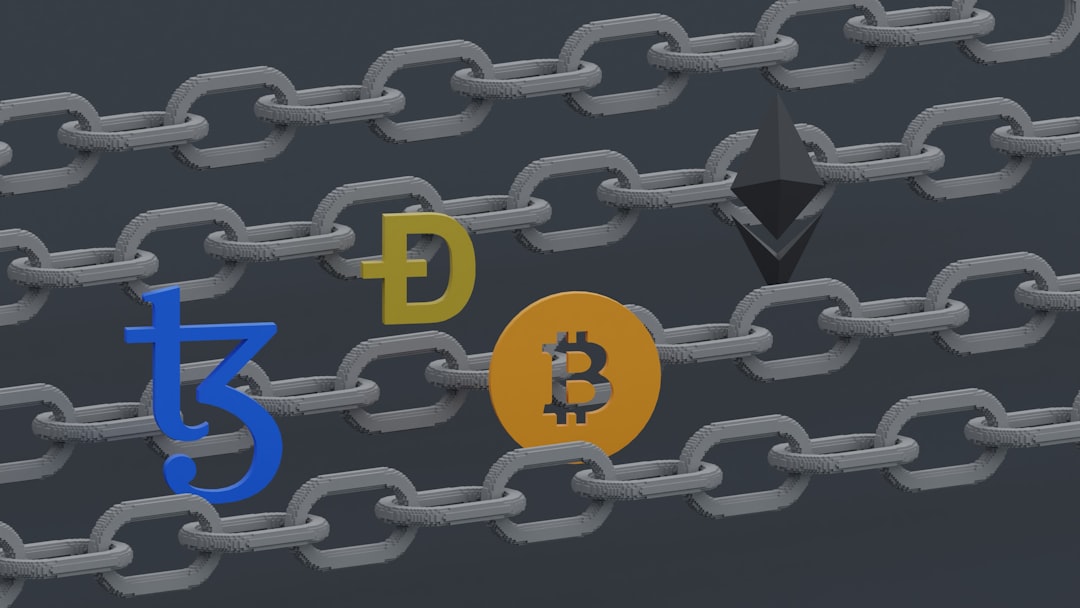
A controversial Bitcoin hard fork called eCash, planned for August 2026, would reassign up to half of Satoshi Nakamoto’s 1.1 million BTC to fund development. Here’s what you need to know.
In four months, a longtime Bitcoin developer plans to do something no fork has ever dared: reassign a portion of Satoshi Nakamoto’s legendary 1.1 million BTC to a new chain’s development fund. The proposal, called eCash, is already splitting the crypto community. Some see it as the only way to finally fix Bitcoin’s scaling and utility problems. Others call it a heist that destroys the very immutability that gives Bitcoin its value.
The fork is the work of Paul Stork, a developer who has been fighting Bitcoin Core’s direction for over a decade. Stork is best known for proposing drivechains — a layer-2 scaling solution outlined in BIP300 and BIP301 back in 2017 and 2019. Bitcoin Core developers have repeatedly rejected drivechains, citing security risks and added complexity. Stork has argued that the main chain is stuck, unable to deliver the kind of smart contract functionality that Ethereum and Solana offer natively. Now he’s through asking. He’s forking.
What eCash actually is
According to Stork’s announcement on X, the eCash hard fork will launch around block 964,000 in August 2026. Code freeze happens in 30 days. The new chain will be an almost identical copy of Bitcoin Core at launch, using the same SHA-256 mining algorithm. Every BTC holder at the moment of snapshot will receive a 1-to-1 airdrop of eCash. If you control your keys, the coins appear in your wallet automatically.
The critical difference: eCash will ship with seven built-in drivechains from day one. These are sidechains that let developers build smart-contract-like applications, decentralized finance, and privacy features — including one chain modeled after Zcash for optional onchain privacy. The chain will also start with a lower mining difficulty to help it bootstrap and attract miners quickly.
Then there is the part that has everybody arguing. Stork plans to manually reassign up to 550,000 BTC from the wallets known as the “Patoshi pattern” — the early-miner wallets everyone believes belong to Satoshi Nakamoto — to high-quality accredited investors. Stork says the reassignment is necessary to fund early development and attract serious capital. In effect, he is selling pre-mined eCash from those coins to bootstrap the project.
Why this fork is different from every other Bitcoin fork
Bitcoin has survived dozens of forks. Bitcoin Cash, Bitcoin SV, Bitcoin Gold, and others all left Satoshi’s coins untouched out of respect for immutability. The principle is that on a blockchain, ownership is defined by who holds the private keys. If a fork moves coins without the keys, it breaks the fundamental property right that makes a blockchain trustless.
Stork acknowledges the controversy. In his announcement, he called the manual reassignment “controversial but necessary and in fact ideal.” Critics are not buying it. Many replies on X called the plan a heist, a scam, and a betrayal. The core objection is simple: if you can touch Satoshi’s coins today, whose coins are safe tomorrow?
The technical pitch: drivechains after a decade of rejection
Stork’s history with Bitcoin goes back to at least 2015. He created Truthcoin, worked on prediction markets on Bitcoin, and has spent years arguing that the main chain’s scaling problems require a layer-2 solution that doesn’t compromise the base layer. Drivechains are his answer. They let developers build separate chains that peg into Bitcoin, enabling smart contracts, DeFi, and private transactions without modifying the main chain.
Bitcoin Core developers have repeatedly rejected the proposal. They worry that drivechains introduce new attack surfaces and make the base layer more complex. Stork has argued that without drivechains, Bitcoin will never compete with Ethereum or Solana for utility. The eCash fork is his attempt to prove the concept works.
Community reaction: innovation versus the origin story
The community is split. Some see the free airdrop as a no-lose speculative opportunity. Even if eCash never gains traction, BTC holders get free tokens they can sell or ignore. The drivechain technology, if it works, could finally give Bitcoin a real layer-2 ecosystem.
But the philosophical cost is enormous. Bitcoin’s value proposition rests partly on the idea that the rules are immutable and property rights are absolute. Reassigning Satoshi’s coins sets a precedent that a majority could take anyone’s coins on a fork. Even if the original chain remains untouched, the existence of a fork that rewrites ownership could erode trust in the broader Bitcoin idea.
Timeline and practical risks
The fork is moving fast. Code freeze in 30 days, launch in August 2026 at block 964,000. The snapshot happens automatically. You can sell, hold, or ignore your eCash. Your original BTC stays exactly the same on the main chain.
Several risks are worth noting. If eCash gains traction, it could pull hash rate and liquidity away from Bitcoin. There is confusion with an existing eCash — the old Bitcoin Cash fork that has been around since 2021. Stork secured eCash.com to avoid mix-ups, but the name overlap could cause problems. Regulatory questions around reassigning coins are unresolved: moving coins without private keys could attract legal scrutiny in some jurisdictions. Finally, it is too early to say whether miners and exchanges will support the fork. Most forks die quietly, though a few, like Bitcoin Cash, still live on.
What it means for Bitcoin holders
If you hold Bitcoin, you will likely receive an airdrop of eCash in August 2026 — assuming the fork actually launches and exchanges or wallets support it. The coins will appear in any wallet where you control the private keys. Exchanges and custodial services may or may not support the airdrop. As with previous forks, the safest bet is to hold your BTC in a wallet where you control the keys until after the snapshot.
The bigger question is what the fork means for Bitcoin’s future. Even if eCash dies, the fact that a credible developer proposed reassigning Satoshi’s coins changes the conversation. It forces Bitcoin holders to ask: is immutability absolute, or can it be compromised for the sake of progress?
Stork’s argument is that Bitcoin’s current path leads to irrelevance for everything except store-of-value. He wants a chain that can do more. The question is whether the ends justify the means.
The philosophical fork
This is not a technical upgrade. It is a philosophical fork. The original Bitcoin white paper and the 2017 block size wars were about scaling and governance, but they never questioned who owns the coins. The eCash proposal does. It argues that the network can rewrite ownership on a new chain if the community decides it is for the greater good.
That is a dangerous precedent. It is also a realistic one: if 51% of miners and nodes choose to reassign coins, they can. Blockchains are not laws of physics; they are social agreements. Stork is testing how far that agreement can stretch.
Will eCash succeed?
Too early to tell. The success of a fork depends on hash rate support, exchange listings, and actual user adoption. Drivechains may work well in practice. The Satoshi coin reassignment may attract the kind of capital Stork needs. But it may also repel the very people who believe in Bitcoin’s original vision.
What is certain is that this story will develop fast. The code freeze in 30 days will show how much technical work has actually been done. The August 2026 launch will reveal whether miners and exchanges are willing to participate. SysCall News will track hash rate support, exchange listings, and community reaction as the fork evolves.
For now, Bitcoin holders have four months to decide whether they want free eCash tokens and what to do with them. The bigger decision — whether immutability is absolute or negotiable — is not up to any one holder. It is up to the market.
Staff Writer
James covers financial markets, cryptocurrency, and economic policy.
Comments
Loading comments…


