Bitcoin Surpasses Gold Amid Crisis, but Faces Stagflation Risks
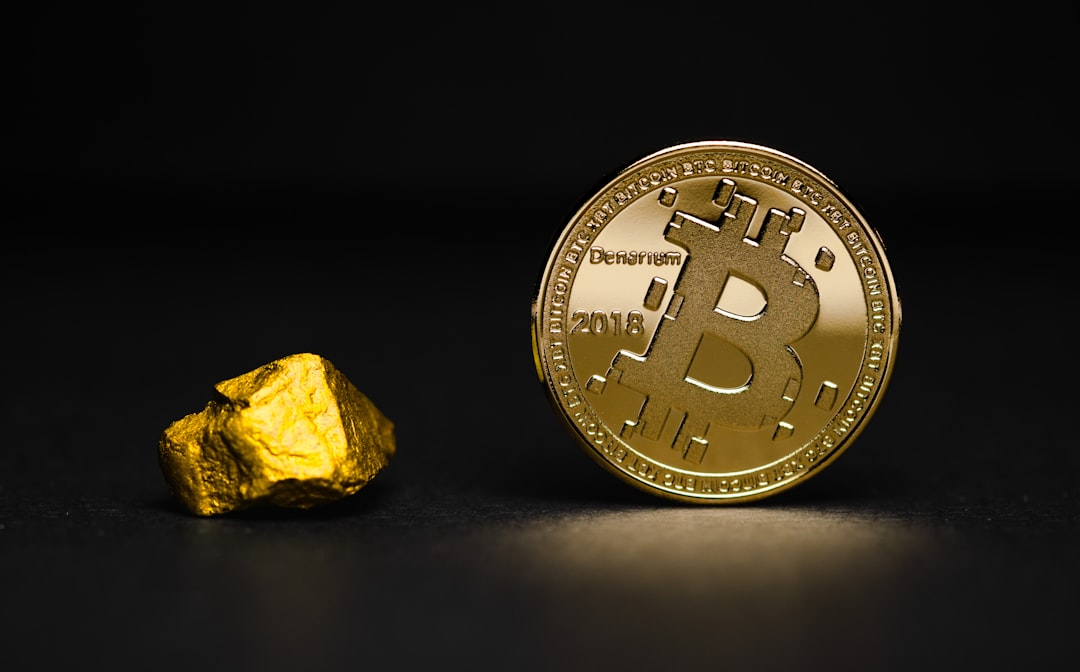
Bitcoin outperforms gold during geopolitical crises, attracting institutional investments, but looming stagflation threatens its long-term rally.
Over the past several weeks, Bitcoin has defied critics and emerged as a preferred safe haven during geopolitical turmoil. As tensions escalate in the Middle East due to military action by the United States and Israel, Bitcoin's price has surged by 11.6%, reaching $73,500. Traditionally, gold and silver have occupied the role of crisis hedges, but both have seen sharp declines in the same period. Gold dropped 4.7% to $4,999 per ounce, while silver plummeted 15.7%, its worst single-day decline in over two years. However, this performance, while validating Bitcoin's status as 'digital gold,' masks deeper challenges ahead for the cryptocurrency market.
Bitcoin Surges During Crisis
Historically, financial markets react predictably to crises. Investors typically flee from volatile assets like cryptocurrencies and move toward traditional safe havens such as gold. However, the recent conflict reveals a reversal in this behavior. Institutional capital is flocking to Bitcoin as a censorship-resistant, decentralized asset. Exchange-traded funds (ETFs) have recorded over $521 million in inflows, with BlackRock’s iShares Bitcoin Trust leading the charge with $263 million in a single day.
On-chain data supports this shift, as large Bitcoin investors, often referred to as “whales,” are accumulating heavily. In a single day—March 6—wallets holding between 1,000 and 10,000 BTC collectively added 66,940 BTC. This level of institutional and high-net-worth activity underscores Bitcoin’s newfound appeal as a safe haven.
Meanwhile, gold ETFs like GLD have experienced significant outflows, shedding $3 billion in assets on March 6 alone. This migration of capital represents a broader trend where investors are losing confidence in traditional commodities and embracing Bitcoin as a store of value.
Key Geopolitical Drivers
The geopolitical backdrop is driving this unusual price movement. The closure of the Strait of Hormuz by Iran's Islamic Revolutionary Guard Corps has created an unprecedented energy crisis. This chokepoint ordinarily facilitates 20% of the world’s seaborne oil trade, but disruptions have led to a dramatic spike in energy prices. Brent crude oil saw a 41% increase, climbing to $115.89 per barrel, while liquefied natural gas (LNG) prices also surged by 30%. The resulting jump in diesel fuel prices and other energy costs directly fuels inflation across various economic sectors.
From raw materials to shipping, the cascading effects of this energy crisis have seeded inflation concerns. Fertilizer prices, for instance, have jumped 43%, pointing toward potential food price hikes in the near future. Historically, a $10 increase in oil prices results in a 20-basis-point jump in headline inflation within months. With the cost of oil up by 40%, analysts predict rising inflation that could complicate Federal Reserve policy significantly.
Federal Reserve Constraints and Bitcoin’s Tightrope
The Federal Reserve operates under a dual mandate: maintaining price stability while maximizing employment. Before the current crisis, markets were optimistic about interest rate cuts in 2026 to stimulate the economy. However, revised economic data has painted a grim picture. Fourth-quarter GDP growth for 2025 has been revised to 0.7%, and February 2026 saw the U.S. economy shedding 92,000 jobs. At the same time, the energy crisis is fueling inflation, which could surpass the Federal Reserve’s 3.5% threshold.
This scenario, known as stagflation—a combination of inflation and stagnant growth—poses a severe challenge for cryptocurrencies like Bitcoin. During stagflation, central banks are often forced to adopt restrictive monetary policies, such as maintaining or raising interest rates. The longer these high-interest rates persist, the stronger the U.S. dollar becomes, as seen by the U.S. Dollar Index (DXY) rising above 100 recently.
Historically, Bitcoin’s price has shown a strong inverse relationship with the strength of the dollar. For example, during the Federal Reserve’s aggressive rate hikes in 2022, Bitcoin’s value collapsed from $47,000 to $16,000. A renewed era of “higher for longer” interest rates could significantly tighten liquidity, draining capital from high-risk assets like Bitcoin.
Oil Prices, Tariffs, and Inflation
The inflation outlook is further compounded by political and economic policies. The U.S. recently introduced a 15% global tariff under Section 122 of the Trade Act of 1974, the highest effective tariff rate since 1943. This policy has forced price increases across numerous consumer goods, including apparel, beef, coffee, and more. Combined with elevated oil prices, this double-barreled inflation threatens to push consumer inflation higher than anticipated.
According to Capital Economics, the combination of $100 oil and trade tariffs could raise CPI inflation to 3.5% by the end of 2026. In such an environment, the Federal Reserve’s ability to cut rates diminishes, further tightening the liquidity conditions that are crucial for Bitcoin’s price stability.
Comparison: Bitcoin vs Gold
| Factor | Bitcoin | Gold |
|---|---|---|
| Year-to-Date Return | +11.6% | -4.7% |
| Crisis Performance | Outperformed | Declined |
| Institutional Inflows | ETFs: $521M inflows | ETFs: $3B outflows |
| Liquidity Dependence | Highly sensitive to interest rates | Lower sensitivity |
Practical Takeaways
- Bitcoin’s Short-Term Success: Bitcoin has demonstrated resilience and outperformed traditional safe havens like gold during the Middle Eastern crisis. Institutional interest highlights its growing acceptance.
- Long-Term Risks: A prolonged era of high interest rates, driven by stagflation, could drain liquidity from the market and undermine Bitcoin’s momentum.
- Inflation Concerns: Rising energy costs and global tariffs threaten to increase inflation, forcing central banks to remain hawkish, limiting Bitcoin’s upside potential.
Conclusion
While Bitcoin’s recent performance validates its status as a viable alternative to gold, the macroeconomic environment presents significant challenges. The resurgence of inflation, driven by energy and tariff shocks, risks eroding the financial conditions necessary for sustained crypto growth. Central banks trapped by stagflation will likely favor higher interest rates, tightening global liquidity. For Bitcoin to thrive in the long term, it must navigate these macroeconomic hurdles without losing its appeal to institutional and retail investors alike.
Staff Writer
Priya writes about blockchain technology, DeFi, and digital currency regulation.
Comments
Loading comments…


