Market sell-offs across Bitcoin, gold, and stocks accelerate as correction looms
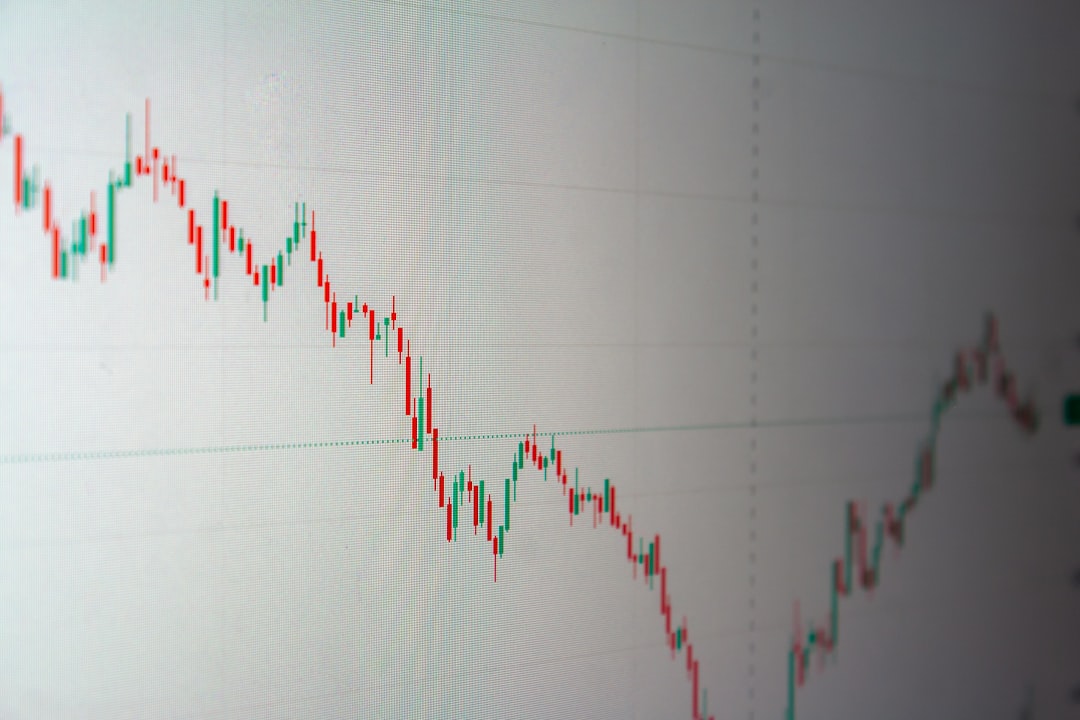
Global markets, including Bitcoin, gold, and stocks, face synchronized sell-offs as analysts predict further downturns. Here's what investors need to know.
Bitcoin, gold, and stocks show synchronized sell-offs
The financial markets are seeing a synchronized decline across major sectors, with Bitcoin, gold, and traditional stocks experiencing sell-offs. Analysts point out that this downturn is far from a short-lived event, making it critical for investors to understand the long- and short-term outlooks for these key asset classes.
Bitcoin stuck within its range but under pressure
Bitcoin, the flagship cryptocurrency, has remained rangebound since early February. Despite minimal price changes during this period, Bitcoin traders are becoming increasingly bearish as the asset continues to fail at key technical levels. Analysts indicate that repeated failures at these levels suggest more downside is likely within the coming weeks.
Recent pivots in Bitcoin’s price point include the $7,010 level, which has been revised downward several times—first to $6,985, then to $6,909, and most recently to $6,814. These levels have served as benchmarks for bearish sentiment, and as long as Bitcoin remains below these points, analysts recommend expecting continuation of the downtrend.
In the short term, a minor bounce around the $6,500 level may occur if selling pressure eases slightly. However, the primary areas of interest for a major move remain near $6,200, which could present an opportunity for long-term investors willing to be patient. Until momentum shifts, Bitcoin’s current range does not inspire confidence for significant investor activity outside short-term traders.
Gold hits a macroeconomic high, decline expected
Gold, long regarded as a safe haven, has also shown signs of a major high in recent months. The precious metal reached significant levels earlier in 2026, suggesting its macroeconomic cycle hit a peak, according to analysts. They cite the ten-year gold market cycles, which historically span a predictable pattern of lows and highs, as context for their outlook.
Price action for gold currently reflects strong bearish signals such as continued bearish divergences. For instance, gold is losing ground against the 21 EMA (Exponential Moving Average) on the monthly timeframe—a critical indicator for long-term trend analysis. Analysts forecast that gold prices could ultimately decline toward $4,000 per ounce within the next few months. Though smaller bounces are expected in the interim, such as at $4,600, the overall direction indicates more losses on the horizon.
Historical trends back this perspective. Over the past 70 years, gold has followed a repeating low-to-high cycle every decade. The most recent low occurred in December 2015, and this year’s high aligns with the length of prior cycles. Volatility spiking on gold’s downturn adds weight to the idea that $4,000—or even lower—is a likely target before the market stabilizes.
The stock market tracks broader bearish trends
Stock indices have not been immune to the sell-off either. Analysts observe that the SPY (SPDR S&P 500 ETF), a widely followed measure of U.S. equities, is trading precariously close to its 55 EMA level on the weekly timeframe. A break below this level raises concerns of a larger slide in the market.
The SPY witnessed a steady failure at various pivot points from $6,985 to $6,814, forming a rounding top—a classic technical signal of bearish bias. In the short term, the 6,500 level serves as a potential bounce zone if buyers intervene. Nonetheless, failure at this level would likely pave the way for a much sharper decline to approximately $6,200. This would mirror broader moves across global markets.
These patterns align with the idea that investor sentiment has flipped to near-term bearishness. Continued sell-offs in the stock market might cascade across other sectors, exacerbating losses.
Comparative Analysis of Market Declines
| Asset | Current Resistance | Short-Term Target | Long-Term Outlook |
|---|---|---|---|
| Bitcoin | $6,814 | $6,500 | $6,200 likely |
| Gold | $4,600 | $4,000 | Long-term bear cycle |
| SPY (stocks) | $6,814 | $6,500 | $6,200 probable |
Practical takeaways for investors
- Avoid impulsive trades: The synchronized sell-offs indicate higher market volatility across the board. Investing without a well-thought-out plan could lead to losses.
- Monitor key levels: For Bitcoin, keep an eye on the $6,814 resistance. Should the price fall below $6,200, a long-term buying opportunity might arise. For gold, wait to see if $4,000 provides a stronger support zone.
- Consider diversification: While markets show a weak outlook, not all assets decline in unison during bearish environments. Alternative investments may offer some resilience as corrections deepen.
Conclusion: Prepare for long-term opportunities amid declines
This phase of bear markets spanning Bitcoin, gold, and stocks signals a needed correction across the board. Though the immediate future looks turbulent, long-term investors can use potential downturns as opportunities to accumulate assets at lower valuations. Traders, however, should remain cautious, as short-term rebounds could be misleading under current conditions. Expect more clarity around the monthly close as markets prepare for their next significant moves.
Comments
Loading comments…


