The Costly Metric vs Imperial Error: NASA’s Mars Climate Orbiter Disaster
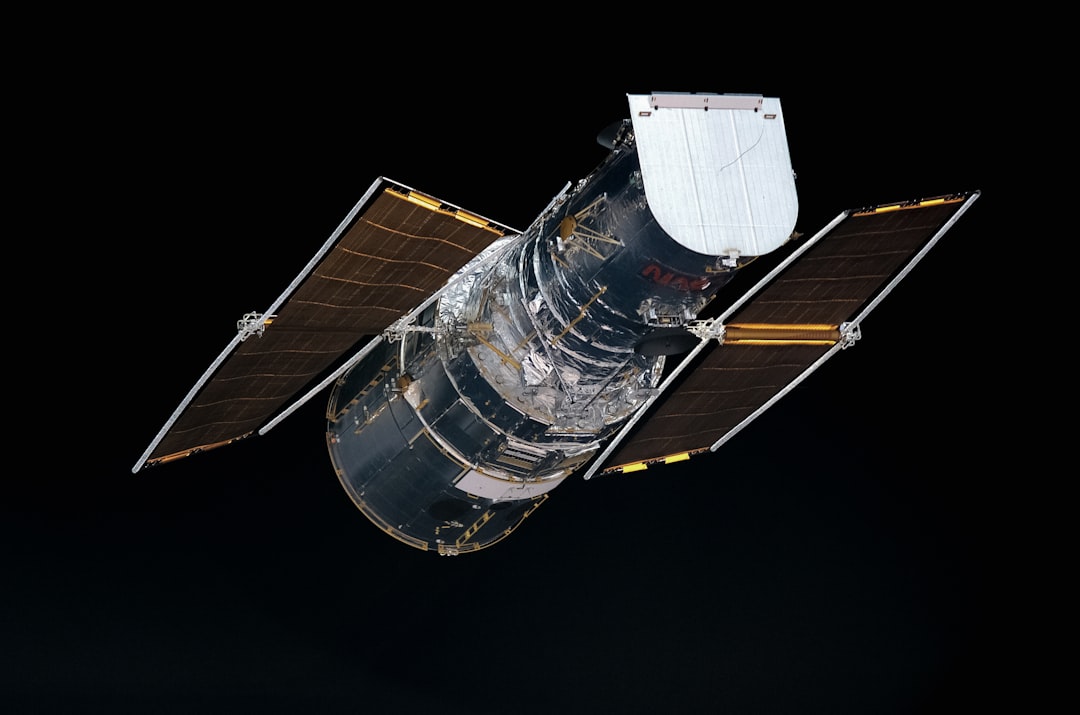
NASA's Mars Climate Orbiter was lost in 1999 due to a metric vs imperial unit mix-up, resulting in a $327.6 million error.
In the world of space exploration, where precision is vital, even the smallest errors can result in catastrophic outcomes. One of the most infamous examples of this occurred in 1999 with NASA’s Mars Climate Orbiter. Dubbed as one of the most expensive mistakes in history, this failure serves as a painful reminder of what can go wrong when communication lapses—quite literally—by failing to convert units of measurement.
What Was the Mars Climate Orbiter?
The Mars Climate Orbiter was an ambitious $327.6 million satellite mission developed by NASA to study the Martian atmosphere. The goal of the spacecraft was to gather data on Mars' weather and climate, enhancing our understanding of its atmospheric processes. Its findings were expected to provide insights for future human exploration and planetary science as a whole. The orbiter's instruments were designed to measure dust levels, atmospheric temperatures, and water distribution in the Martian atmosphere.
The spacecraft launched successfully aboard a Delta II rocket on December 11, 1998, and completed its nearly nine-month journey to Mars. All systems appeared flawlessly functional, offering hope for groundbreaking discoveries ahead. However, as it approached Mars, a series of errors quickly unraveled the mission.
The Error That Ended the Mission
On September 23, 1999, nine months after its launch, the Mars Climate Orbiter was supposed to enter a stable orbit around the Red Planet. Instead, mission control quickly realized the spacecraft had come dangerously close to the Martian atmosphere. It approached Mars at an altitude of 57 kilometers, much lower than the intended entry point of 140 kilometers. Due to the severe miscalculation, it burned up in the Martian atmosphere and was lost completely.
So, what went wrong? The disaster was caused by a simple but shockingly consequential error: two teams used different measurement systems. One group of engineers working on the mission used the metric system, while the other group used the imperial system. Specifically, a contractor used imperial units (pounds of force) to calculate a crucial piece of spacecraft data, while NASA planners expected data to be delivered in metric units (newtons). This miscommunication meant that the spacecraft’s trajectory and braking maneuvers were wildly inaccurate—ultimately dooming the mission.
Why Was This Mistake So Costly?
The cost of the Mars Climate Orbiter mission was $327.6 million, a staggering sum that evaporated because of an oversight that could have been prevented with better communication and standardization. However, the actual cost of the mistake goes beyond the dollar amount.
-
Lost Opportunities for Science: The spacecraft would have provided critical data on Mars’ climate and environment, insights that could have been foundational for future missions. Its loss delayed the progress of research for years.
-
Impact on NASA’s Reputation: NASA faced serious public scrutiny and criticism in what was widely seen as a preventable failure. As an agency funded by taxpayers, such expensive errors fueled skepticism about NASA's management protocols.
-
Lessons on Standardization: The incident highlighted a glaring weakness in NASA’s quality assurance systems. Though NASA had previously implemented rigorous checks on its systems, this human oversight revealed vulnerabilities in multi-team operations and reliance on disparate systems.
What Lessons Were Learned?
The Mars Climate Orbiter disaster led to significant changes in how NASA managed its missions, ensuring that such mistakes would not occur again. Some of the key lessons and changes included:
1. Consistent Standards Across Teams
NASA enforced stricter standardization in unit measurements across all vendors, contractors, and internal teams. This included mandatory alignment on metrics and a requirement for increased documentation to account for critical processes.
2. Comprehensive Oversight
The agency introduced more rigorous checks and verification processes at every stage of mission development. This included greater emphasis on integrating contractor and NASA data to prevent misalignments.
3. Improved Communication
Cross-team communication became a focal point of project management. The Mars Climate Orbiter case underscored that even highly skilled professionals could make errors if assumptions about standards aren’t explicitly clarified.
4. Training Programs
Enhanced training was introduced to educate engineers and mission planners on both systems of measurement to minimize errors in understanding between diverse teams.
Why Does This Mistake Still Matter?
Though the Mars Climate Orbiter debacle occurred more than two decades ago, its significance resonates strongly today. It is often cited in engineering courses, project management workshops, and risk analysis studies as a prime example of the ripple effect of small mistakes in complex systems. In industries ranging from space exploration to healthcare and automobile manufacturing, the need for alignment, verification, and redundancy is vital—even more so when billions of dollars and lives are at stake.
The story also highlights the challenge of global collaboration in high-stakes environments. For a field as international as science, standardizing units, methodologies, and expectations is an ongoing effort. With more international teams working together on missions like the James Webb Space Telescope and future Mars colonization projects, lessons from the Mars Climate Orbiter still play a critical role.
Conclusion
The loss of NASA’s Mars Climate Orbiter due to a metric versus imperial unit mix-up stands as one of history’s most costly errors, both financially and scientifically. The $327.6 million spacecraft perished in Mars' atmosphere because of what could have been a simple conversion check. However, this mistake transformed into a powerful lesson in teamwork, communication, and the importance of standardization in complex, multi-team projects. While the financial loss cannot be undone, the insights gained have undoubtedly improved the safety and reliability of missions that followed. NASA's ongoing success in space exploration is a testament to how the agency learned to address the vulnerabilities exposed by this failure.
Staff Writer
James covers financial markets, cryptocurrency, and economic policy.
Comments
Loading comments…


