Why the Global Helium Shortage Could Derail AI and Crypto Tech Ambitions
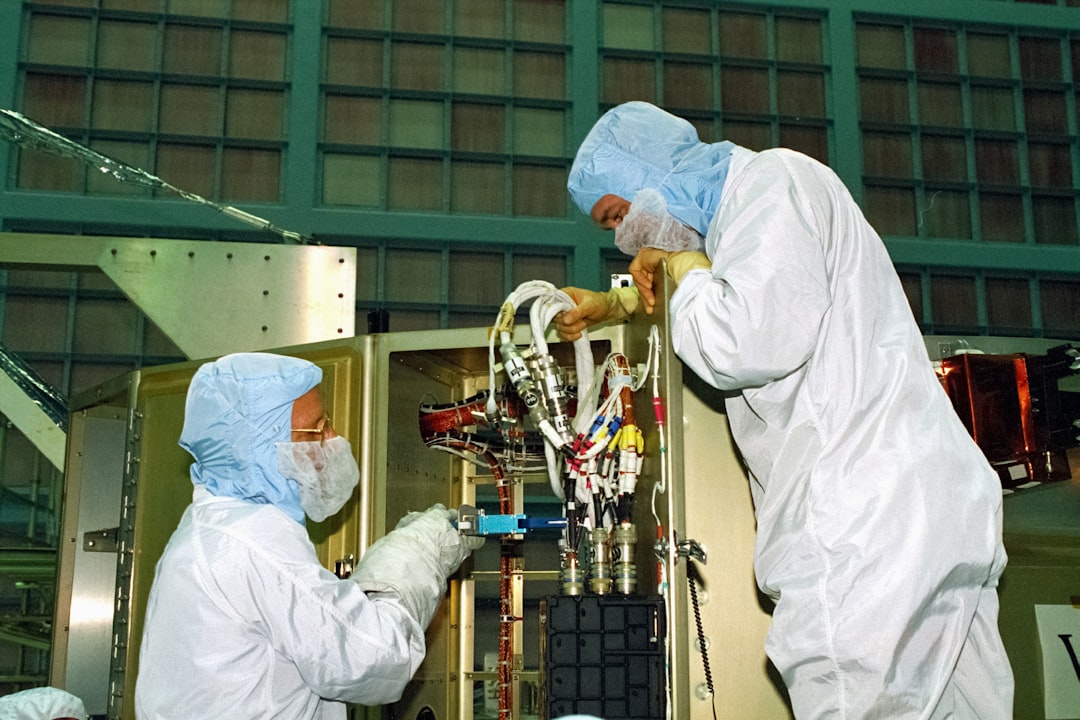
The helium shortage threatens global semiconductor production, crucial for AI and crypto hardware. Here's what you need to know.
The modern technology industry seems boundless, with artificial intelligence (AI) leading the charge in reshaping the global economy. But behind the enthralling narratives of exponential growth lies a physical reality: advanced technology depends on access to specific raw materials, and one of the most pivotal among them—helium—is in critically short supply. Without this irreplaceable gas, the hardware underpinning AI and cryptocurrency faces perilous vulnerability. Helium’s Role in Modern Technology Helium is essential to cutting-edge semiconductor manufacturing, which produces the chips powering everything from AI accelerators to blockchain infrastructures. Semiconductor fabrication plants (fabs) rely on helium for its unmatched qualities: it remains chemically inert and achieves cryogenic temperatures near absolute zero (-269°C). These properties are deployed at multiple stages of chip production. For example, helium is crucial in extreme ultraviolet (EUV) lithography machines, which create sub-7 nanometer chips used in modern computing technologies. The mirrors in these machines are kept thermally stable using liquid helium to ensure ultra-precise light focusing. Without helium, these superconducting systems would quench—suddenly losing functionality and potentially damaging costly equipment. The significance of helium extends beyond cooling systems. It also maintains pristine vacuum environments critical for etching silicon wafers. The gas is further used to stabilize high-precision chip stacking processes, such as the production of high-bandwidth memory (HBM), an essential component for GPUs like Nvidia’s AI hardware. Simply put: if there’s no helium, there’s no advanced semiconductor production. The Helium Supply Crisis Helium might be the second-most abundant element in the universe, but on Earth, it’s a scarce resource. That’s because helium on our planet forms through the radioactive decay of uranium and thorium, becoming trapped in natural gas fields over millions of years. It is extracted as a byproduct during the production of liquefied natural gas (LNG). Without LNG production, helium extraction stops entirely—there's no standalone helium mining. Historically, the global helium market was stabilized by the U.S. Federal Helium Reserve in Texas, which acted as a strategic buffer. However, the sale of the reserve to a private corporation in 2024 left the market exposed to geopolitical and supply chain disruptions. This vulnerability became evident after devastating attacks on Qatar’s Ras Laffan industrial facilities in March 2026. Qatar is responsible for one-third of the world’s helium exports, and the damage reduced its supply capacity by 14%. With repairs expected to take 3–5 years, the loss of Qatar’s helium has tightened an already fragile market. The situation is exacerbated by regional instability in the Strait of Hormuz, where specialized cryogenic containers used for transporting liquid helium are stranded. These containers have limited hold times—approximately 35 to 48 days—before their contents begin to evaporate. As helium escapes into the atmosphere, it leaves Earth's gravitational pull permanently, rendering it non-renewable within any human timeframe. Impact on Semiconductor Manufacturing Taiwan and South Korea, the epicenters of global semiconductor manufacturing, are among the hardest hit by the crisis. South Korea sourced 64.7% of its helium imports from Qatar in 2025, while Taiwan’s reliance stood at approximately 30%. South Korean companies like SK Hynix, which dominates the production of high-bandwidth memory chips, and Taiwan Semiconductor Manufacturing Company (TSMC), which produces 90% of the world’s advanced logic chips, depend on uninterrupted helium supplies. Without helium, their operations face inevitable shutdowns. While these firms have built emergency reserves, estimates suggest these buffers could last only 4–6 months. Restarting production after a shutdown involves weeks of equipment certification and vacuum restoration, costing billions in lost output. Even if Qatar resumes helium exports tomorrow, reestablishing logistics and supply chains is expected to take another six months. Broader Economic Ripple Effects The helium shortage not only disrupts chip production but also threatens the broader technology sector and the speculative financial markets that have bet heavily on its continued growth. Hyperscaler cloud providers, some of the largest buyers of AI hardware, are poised to spend $700 billion on AI infrastructure in 2026 alone. Market valuations for AI-focused companies like Nvidia exceed $4 trillion, predicated on the assumption of infinite hardware scaling. However, the bottleneck in helium supply could force semiconductor fabs to declare force majeure, halting deliveries to companies like Nvidia. This, in turn, would cascade down to hyperscalers who require these components for their data centers. A slowdown in hardware production would expose vulnerabilities in these companies’ optimistic growth projections, potentially leading to financial turmoil. The S&P 500’s cyclically adjusted price-to-earnings (CAPE) ratio has already exceeded 40—a level historically associated with speculative bubbles. The current crisis could lead to a realignment of valuations, particularly in sectors reliant on uninterrupted semiconductor production. Lessons from History This isn’t the first time commodity shortages have rattled high-tech industries. During the 2021 neon gas shortage—caused by the conflict in Ukraine—prices soared by 600% in just three months. Similarly, the 2011 rare earth crisis, triggered by geopolitical export restrictions, saw prices spike by up to 2,000%. The helium shortage, however, occurs at a time of unprecedented capital expenditure, making global industries even more sensitive to supply chain disruptions. A Hard Reality Check for AI Ambitions The helium shortage serves as a stark reminder that technological growth remains tethered to physical constraints. While the financial markets continue to price AI companies for perfection, the reality on the ground suggests otherwise. Material dependencies, such as helium for chip production, highlight the fragility of the infrastructure powering the next phase of the digital economy. Moving forward, governments and industries will need to prioritize helium recycling infrastructure and secure diversified supply chains. Without these measures, the promise of AI and other cutting-edge technologies may grind to a halt—not because of a lack of innovation but due to a shortage of gas. The tech world is overdue for a sobering realization: even the most intangible innovations rely on finite, tangible resources.
Staff Writer
James covers financial markets, cryptocurrency, and economic policy.
Comments
Loading comments…


