Is the $500 Gaming PC Dead in 2026? A Look at the Challenges of Budget Builds
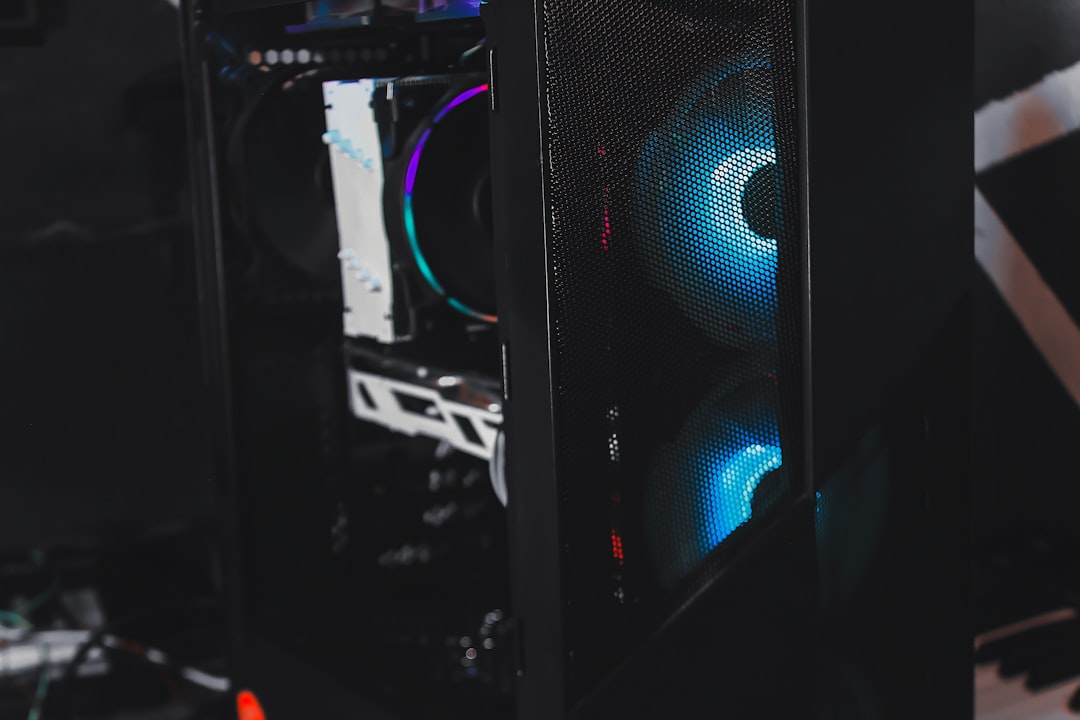
Building a gaming PC under $500 in 2026 is harder than ever, driven by rising RAM costs and shrinking GPU options. Can the challenge still be met?
In 2026, assembling a budget gaming PC has become an increasingly uphill battle. For years, the $500 price point stood as the achievable baseline for gamers on a budget. But with the ongoing RAM shortage and the shifting dynamics in GPU production, is this still possible? A recent video attempted to answer this question, documenting an effort to build a respectable gaming rig for $500.
The $500 Benchmark: Is It Even Feasible?
The challenge of building a sub-$500 gaming PC in 2026 starts with the steep price increases in critical components. Rising costs in RAM due to an AI-driven data center demand, paired with the phase-out of older, cheaper GPUs, has made this category particularly difficult.
The builder in this experiment chose to take on this challenge at a Micro Center location—known for its PC component discounts and bundles. The goal was clear: create a gaming PC capable of playing modern games on at least low settings, capped strictly at $500.
Choice of Components: Strategic Compromises
CPU and Motherboard
The hunt for a budget-friendly yet capable CPU led to the Ryzen 5 4500—the most affordable option at $60, bundled with a stock cooler. However, later in the search, a hidden gem surfaced: a $200 Micro Center bundle featuring the Ryzen 5 5500, a Gigabyte B550M motherboard, and 16GB of DDR4 RAM in dual-channel configuration. This combination represented undeniable value, even in 2026 when budget bundles have become increasingly rare.
Graphics Card
The GPU remains the cornerstone of any gaming PC build. Unfortunately, affordable options are limited. While the Intel Arc A310 was briefly considered, it was ruled out for its lackluster performance, leaving the Intel Arc A380 at $170 as the reluctant choice. Though far from cutting-edge, the A380 was deemed sufficient to handle eSports titles and older AAA games when paired with reduced settings.
RAM
RAM pricing proved to be one of the largest hurdles. With DDR4 becoming a costlier commodity—thanks to the aforementioned demand for AI systems—builders must stretch their dollar. The Micro Center bundle’s inclusion of 16GB of DDR4 RAM was a significant win, given that standalone RAM kits easily push budgets skyward.
Additional Costs and the Budget Error
The remaining budget of $130 had to cover the case, power supply, and storage. Here's how the breakdown looked:
- Case: A Cooler Master Q300L was chosen for its price and simplicity, costing $40.
- Storage: A modest SSD was picked to balance speed and affordability, but exact details on cost or capacity weren't specified within the remaining budget.
- Power Supply: The build settled on a low-end PSU to meet budget constraints.
Despite meticulous planning, the final build overshot the $500 mark, landing at $530. The oversight? The cost of the case was left out during planning. While the $30 overage does not seem massive at face value, it technically disqualifies the attempt to meet the $500 constraint.
Real-World Performance: Can it Game?
Testing the final build with modern and popular games provided illuminating insights:
- Baldur’s Gate 3: At 1080p medium settings, the build achieved a consistent and playable experience, reminiscent of performance similar to a Steam Deck.
- Fortnite: Optimized for budget systems, it performed impressively at 1440p (upscaled from 1080p), maintaining smooth visuals and a stable frame rate.
- Indiana Jones Game: Pushed this system to its limits, requiring drastic downgrades to 720p low settings. Even with these sacrifices, significant latency was evident.
- Cyberpunk 2077: Played reasonably well at 1080p low settings with Intel's XeSS enabled. Frame rates averaged around 60 FPS, similar to last-gen console performance.
Verdict: A Qualified Success
The attempt to hit a $500 price target shows that assembling a gaming PC modestly capable of modern gaming is still possible, though major sacrifices are necessary. Older components and strategic bundles are essential to achieving affordability. However, playing the latest games with sustainable framerates and visual quality remains a challenge.
The Role of Retailers like Micro Center
Micro Center’s discounted bundles arguably made this build possible. The combination of a Ryzen 5 5500 CPU, motherboard, and RAM for $200 was pivotal to getting this build as close to the $500 target as it was. It underscores the importance of physical retailers in providing value that online marketplaces increasingly struggle to match.
Broader Trends for Gaming PCs
The experiment highlights broader industry challenges. The rising cost of RAM, the limited availability of older GPUs, and the lack of true "budget builds" mean 2026 might be the end of the $500 gaming PC as we once knew it. For consumers unwilling to stretch their budget, compromises—in settings, resolutions, or outright expectations—are now the norm rather than the exception.
Conclusion
While this build technically missed its $500 goal, it stands as proof that gamers on a budget can still scrape together a respectable system in 2026. However, they will need to embrace both sacrifice and creativity to make it work. For those looking to enter the world of PC gaming for the first time, it raises an important question: Is saving a bit more and targeting a $600-$700 price range the smarter strategy for lasting performance? For now, the $500 gaming PC is alive, albeit on life support.
Staff Writer
Marcus covers video games, esports, and gaming hardware. Two decades of industry experience.
Comments
Loading comments…


