Orbitals gameplay reveal highlights co-op innovation and teamwork
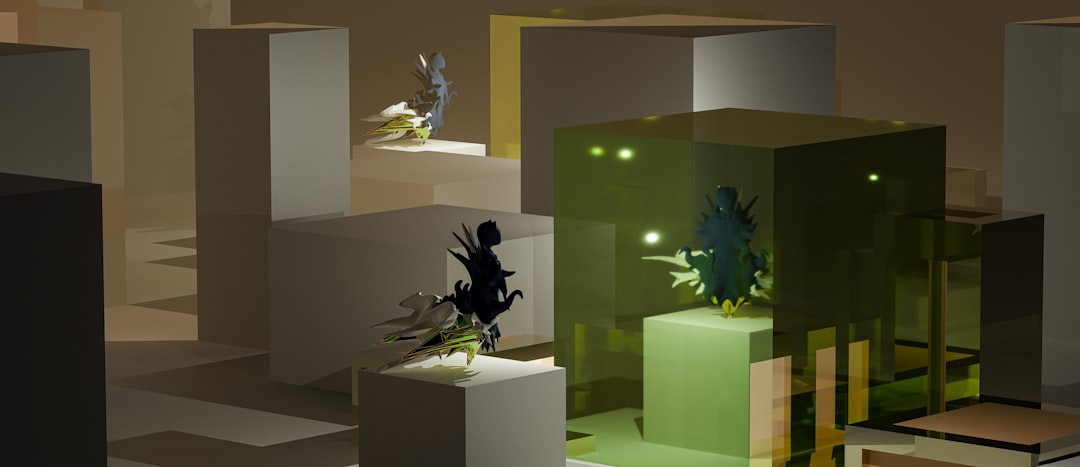
Orbitals unveils its asymmetrical co-op gameplay, emphasizing communication and unique tool use between players. Here's what we learned.
In an official gameplay reveal, the team behind Orbitals showcased the intricate design and player-focused mechanics that define their upcoming game. Jacob, the game director, and Marcos, the creative director, walked viewers through select gameplay sections, highlighting the collaborative aspects that make Orbitals stand out in the crowded space of co-op games. Designed from the ground up as an asymmetrical co-op experience, the game gives each player distinct tools, emphasizing teamwork and precise communication.
Asymmetrical co-op: The heart of Orbitals
Unlike traditional co-op games where players often wield similar abilities or roles, Orbitals puts a unique spin on the mechanic by assigning each player different tools required to complete interconnected tasks. In the demo, example characters Maki and Omra were seen using the “scrap hook” and the “beam cannon.” Their tools weren’t just optional enhancements—they were critical for advancing through the mission. For instance, Omra's beam cannon had to charge a drone while Maki worked to clear a path ahead. The sequence demonstrated how the absence of precise coordination could lead to mission failure, with scenarios escalating in complexity as the demo progressed.
“We designed Orbitals to demand true partnership,” Jacob explained in the presentation. Every challenge not only tested reflexes but relied on the duo’s ability to sync their actions, making communication just as important as tool mastery.
Varied gameplay ensures every scenario feels fresh
The developers took extra steps to avoid repetitive mission structures, crafting each segment to introduce entirely new challenges. One standout sequence involved piloting a hoverboard through the interior of an asteroid. Here, the players needed to steer the board together, reacting to tight spaces and sudden obstacles. The frantic exchanges between the developers highlighted this sequence’s reliance on split-second decisions. As one player overcompensated to veer left during an intense moment, the tension underscored the stakes.
The gameplay isn’t limited to physical movement challenges. Another section played with gravity mechanics, requiring trust between players as one manipulated pathways that affected the movement of the other. This emphasis on trust and teamwork reinforces the game’s commitment to collaborative problem-solving. “Every aspect of the game has been designed to promote communication between the players,” Marcos noted.
The stress and humor of co-op gaming
One of the most endearing aspects of the demo was the natural dynamic between Jacob and Marcos as they navigated the game. Their exchanges—marked by moments of triumph, frustration, and unintentional humor—felt universal to anyone who’s partnered up in a high-stakes co-op experience. Phrases like “You stressed me out!” and “Don’t go—wait, go!” added to the authenticity of the presentation, mirroring the organic chaos that multiplayer gaming often evokes.
This tone, infused with lighthearted camaraderie, suggests that Orbitals not only challenges players but also understands the fun that arises from unexpected mishaps.
Innovation through design
What makes Orbitals particularly intriguing is its focus on asymmetry in co-op dynamics. While many games offer multiplayer modes where players simply band together with identical or similar abilities, this deliberate separation of roles deepens the strategy. Each tool has a purpose, and players must learn to use their gear both individually and in tandem.
The level design itself reflects this as well, forcing players to think critically about timing and sequence. Whether it’s navigating gravity-defying spaces or coordinating movements on the shared hoverboard, each mechanic thoughtfully integrates both players into the action. The game is clearly engineered to make unilateral approaches impossible, ensuring that success can’t be achieved by one player “carrying” the other.
Challenges and considerations
While the gameplay premise is promising, asymmetrical co-op inherently comes with certain risks. For players unaccustomed to deep communication during gaming, the mechanics might present a steep learning curve. Furthermore, when pairing with strangers online who might not share the same level of skill or commitment, challenges could arise in maintaining consistent teamwork. The developers will need to ensure that the game provides sufficient tutorials and balancing measures for all players.
The focus on teamwork and communication also means that success heavily depends on pairing with partners who mesh well. Without synergy, even the most well-thought-out mechanics could lead to frustration for players. The demo, however, suggests that the team has anticipated such concerns and designed levels to be engaging without crossing into unfair frustration.
What’s next
The demo wrapped up with the developers reminding players that this showcase represented only a slice of what Orbitals has to offer. With its slated release coming later this year, fans of co-op games have a lot to look forward to. While the trailer left some questions unanswered—such as specifics about other tools, the broader storyline, or the extent of replayability—the preview offered a compelling look at a game that could redefine how we view co-op gaming.
As Orbitals heads closer to release, its unique structure of asymmetrical gameplay, reliance on teamwork, and variety of scenarios position it to stand out in a market filled with co-op offerings. Whether you’re a fan of classic couch co-op chaos or online teamwork, the gameplay reveal hints at an experience carefully designed to challenge and entertain.
Staff Writer
Zoe writes about game releases, indie titles, and gaming culture.
Comments
Loading comments…


