Artemis II Launch Takes Humans One Step Closer to the Moon
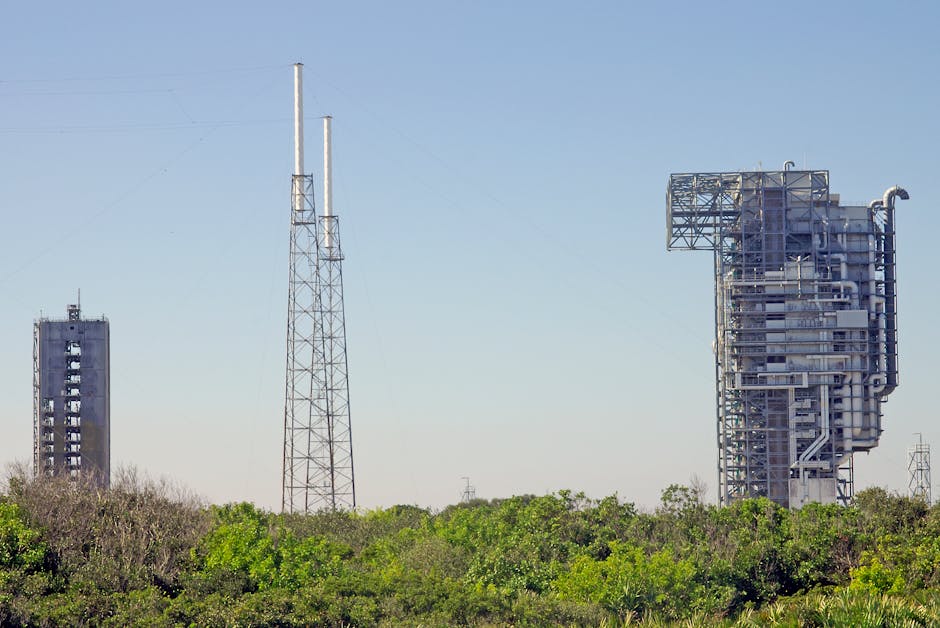
NASA's Artemis II, carrying three Americans and one Canadian, successfully launched, marking a critical step toward humanity's return to lunar exploration.
NASA’s Artemis II mission—marking the first crewed spacecraft journey beyond low Earth orbit in over 50 years—successfully launched from Kennedy Space Center in Florida. This historic event is a pivotal chapter in NASA's ambitious Artemis program, designed to return humans to the Moon's surface by 2028. Aboard the Space Launch System (SLS), the most powerful rocket ever built, three American astronauts and one Canadian blasted off en route to the Moon, setting a course for a 10-day mission around Earth’s natural satellite.
A Mission Decades in the Making
Artemis II is the first crewed flight of NASA’s Space Launch System and Orion spacecraft. Its objective is to thoroughly test the systems and spacecraft that will eventually play a pivotal role in returning humans to the lunar surface for the first time since the Apollo era in the 1970s. The launch represents a “dress rehearsal” for operational moon landings planned later this decade.
SLS, developed by Boeing, delivered an unparalleled 8.8 million pounds of thrust during liftoff, establishing itself as the most powerful human-rated rocket in operation today. Mounting atop the SLS, the Orion spacecraft—built by Lockheed Martin—was supported by a service module provided by the European Space Agency. Northrop Grumman’s Launch Abort System, designed to ensure crew safety during an emergency, was jettisoned approximately three minutes into the flight.
The journey will include two days in low Earth orbit to assess Orion’s systems before executing a key milestone known as the trans-lunar injection (TLI). This maneuver uses Earth’s gravity in combination with Orion’s engines to propel the crew toward the Moon in a slingshot trajectory. Approaching as close as 4,000 miles to the lunar surface, the astronauts will help establish benchmarks for deep-space human exploration, gathering data critical for sustaining life in such extreme conditions.
The Crew: Breaking Records and Boundaries
The Artemis II crew includes Commander Reid Wiseman, pilot Victor Glover, mission specialist Christina Koch, and Canadian Space Agency astronaut Jeremy Hansen. Collectively, this team represents the face of modern space exploration. Glover will be the first Black astronaut to journey to the Moon's vicinity, while Koch is set to become the first woman to achieve such a milestone. Hansen’s inclusion marks the first Canadian astronaut assigned to a lunar mission, underscoring international collaboration as a core value of the Artemis program.
These noteworthy achievements do not overshadow the hosts of other firsts. The Artemis II crew is poised to break the Apollo 13 mission’s record for the furthest distance humans have traveled into space. This symbolic milestone reinforces NASA’s message of renewed commitment to extraterrestrial human exploration.
Safety and System Testing: The Roadmap Ahead
Unlike the Apollo missions, Artemis II is not meant to culminate in a lunar landing. Instead, its primary goal is to validate the safety and functionality of the SLS rocket and Orion spacecraft during manned deep-space operations. Once in lunar orbit, the spacecraft will test its manual controls and docking functionalities to ensure readiness for subsequent missions. The Orion capsule’s complex elliptical orbit and later reentry will stress-test its heat shield, life support, and communication systems.
Future missions, such as Artemis III (planned for 2027), will focus on integrating work with lunar landers, a critical step before achieving a sustained human presence on the Moon. NASA has partnered with private industries, including SpaceX and Blue Origin, which are developing competing lunar landers to meet the ambitious timeline. According to NASA, whichever lander demonstrates readiness first will be selected for Artemis III’s landing mission. Currently, SpaceX’s Starship and Blue Origin’s Blue Moon are leading candidates.
A Pricey Step Forward
While the successful liftoff of Artemis II drew cheers from the Space Coast to mission control rooms, the program remains a costly endeavor. Documents from NASA estimate the Artemis budget at $93 billion, with each SLS launch running approximately $4 billion. The program has faced criticism for delays and ballooning costs during its long development path. Originally conceived as part of the Constellation program under President George W. Bush in 2005, Artemis II was initially planned for an uncrewed launch in 2017. By the time the Moon became the centerpiece of the Artemis agenda under the Trump administration, the project was already years behind schedule.
However, NASA officials and lawmakers stress the importance of leading the next era of Moon exploration. The Artemis program has long been framed as a precursor to sending humans to Mars, making the heavy investment a necessary cost in the agency’s broader vision.
The Larger Context: America’s Lunar Race
NASA’s return to the Moon is not occurring in isolation. While the United States remains a leader in human space exploration, China’s rapidly advancing space program introduces a sense of competition not seen since the original Moon race with the Soviet Union. China is aiming to land humans on the lunar surface by the end of the 2020s. Some U.S. officials have publicly expressed concerns that if China returns first, geopolitical stakes on the lunar surface could arise, including territorial or resource disputes.
President Biden’s administration has prioritized Artemis as a piece of broader international collaboration in space exploration. Agreements like the Artemis Accords formalize global partnerships surrounding lunar exploration, pushing high-stakes missions like Artemis II against this backdrop of both cooperation and competition.
Why Artemis Matters
Artemis II isn’t just about sending humans around the Moon; it’s about testing technology, building trust in new systems, and rekindling public enthusiasm for space exploration. This ambitious program signals a new era of international collaboration, private-public partnership, and a long-term vision for humanity’s presence in space. A successful Artemis II mission will bring NASA one step closer to achieving its ultimate goal—sustainable human operations on the Moon as a launchpad for Mars exploration.
For now, all eyes are on Orion as the spacecraft heads farther into deep space than any previous manned mission. The next ten days will provide the data needed to unlock the lunar frontier, laying the foundations not just for scientific discovery, but for the dreams of a generation eager for humanity’s next great voyage.
Staff Writer
Emily covers space exploration, physics, and scientific research. Holds a degree in astrophysics.
Comments
Loading comments…


