Artemis II: NASA's Lunar Mission to Redefine Human Space Exploration
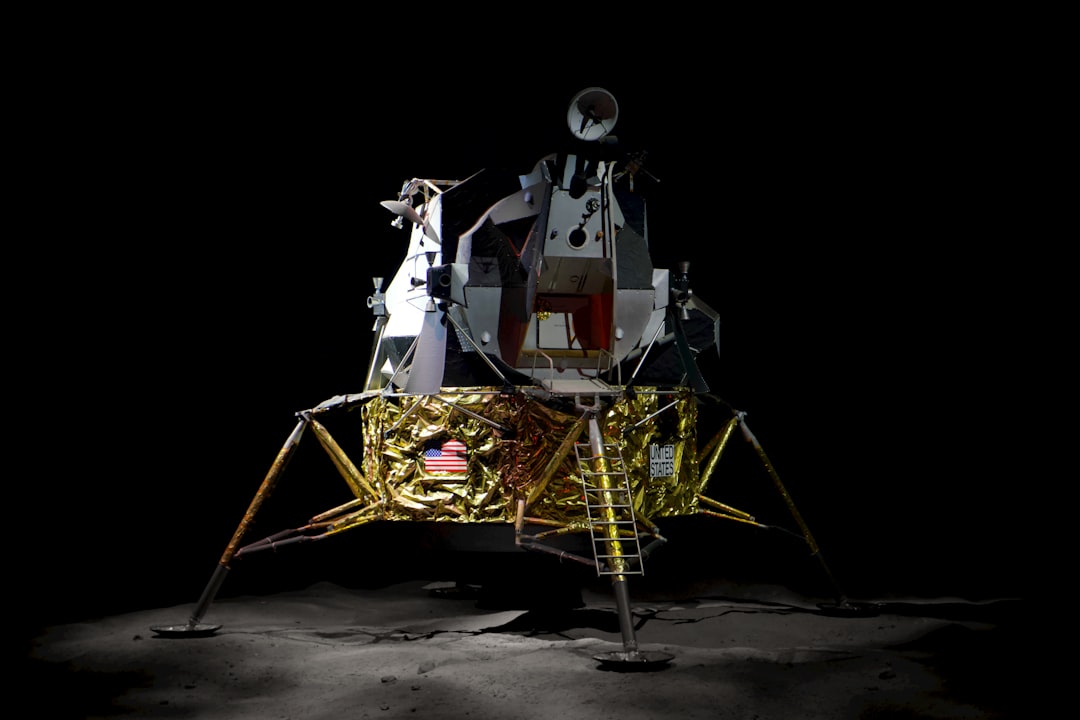
Artemis II will send a human crew further than any spacecraft has traveled, testing the limits of technology and biology for future lunar exploration.
Fifty years have passed since a human last ventured beyond low Earth orbit, but that changes with the launch of Artemis II in 2026. As the most advanced lunar mission to date, Artemis II promises to push the boundaries of space travel, biology, and engineering. This ambitious 10-day mission is a critical step in NASA's Artemis program, which aims to establish a permanent human presence on the moon and prepare for future exploration of Mars.
Crew and Objectives
Artemis II will mark the first crewed flight of the Orion spacecraft, powered by NASA’s Space Launch System (SLS), the most powerful rocket ever built. The crew includes Commander Reed Weisman, pilot Victor Glover, and mission specialists Christina Koch and Jeremy Hansen. Their combined expertise spans naval aviation, long-duration space missions, and groundbreaking technical research. Notably, Hansen becomes the first non-American astronaut to journey to the moon, symbolizing international cooperation in space exploration.
The mission's primary objective is to test deep space systems required for Artemis III, which aims to land astronauts on the lunar surface. While Artemis I proved the mechanical resilience of the Orion spacecraft, Artemis II will assess its ability to sustain human life in the harsh conditions of deep space. Every system onboard, from environmental controls to navigation, faces the unprecedented challenge of keeping four astronauts alive and productive over a million-mile journey.
Launch and the Journey to the Moon
The Artemis II mission begins with raw, sustained power. The SLS rocket delivers nearly 9 million pounds of thrust, catapulting the Orion capsule out of Earth’s atmosphere. The core stage separates, and the upper stage initiates a delicate maneuver called the trans-lunar injection. This precise engine burn accelerates the spacecraft to over 24,000 mph, achieving the velocity needed to escape Earth’s gravitational pull.
The spacecraft’s trajectory includes a “free return” path, a critical safety measure. If the engine were to fail, the moon’s gravity would naturally loop the Orion capsule back toward Earth. This backup ensures the crew remains on a viable return route without requiring any additional propulsion, a safeguard that underlines the mission's high-risk profile.
Deep Space Testing
Artemis II’s four-day journey to the moon transforms the Orion spacecraft into an orbiting laboratory. Among the key experiments is the use of human stem cells to study radiation exposure in deep space. By analyzing the impact of solar particles on living cells, NASA can better understand the long-term health risks astronauts could face during extended missions beyond Earth’s protective magnetic field.
To maintain real-time communication and mission-critical data, Artemis II introduces technology breakthroughs. Traditional radio waves are replaced with optical laser communications, enabling high-speed data transfers at 260 megabits per second. This innovative system provides NASA mission control and the public with unprecedented 4K live video from deep space. For onboard technical support, the crew relies on Kalisto, a localized database serving as a smart assistant capable of responding instantly to queries when Earth is too distant for immediate communication.
Swinging Past the Moon
On the sixth day, Artemis II executes its most dramatic maneuver: a flyby of the moon. The spacecraft passes behind the lunar far side, a region shielded from all Earth-based communication. For 48 minutes, the crew will be completely isolated, unable to communicate with mission control. During this blackout, the Orion capsule reaches a record-breaking 252,000 miles from Earth—the furthest distance humans have ever traveled.
This lunar swing also acts as a proving ground for Orion’s navigational capabilities and mechanical integrity. The absence of external support during this phase tests the spacecraft’s readiness for future missions deeper into the solar system.
Re-entry: The Ultimate Test
Returning to Earth is the Artemis II mission’s most critical phase. The Orion capsule will re-enter the atmosphere at a blistering 25,000 mph, generating temperatures of up to 5,000°F. To handle these extreme conditions, the capsule employs a “skip” re-entry. This two-step maneuver allows Orion to skim Earth’s atmosphere, bounce back into space, and then re-enter at a reduced speed. By spreading the thermal load over two stages, this technique minimizes stress on the spacecraft’s heat shield while ensuring the crew's safety.
Finally, parachutes deploy, slowing the capsule for a controlled splashdown in the Pacific Ocean. This 1.4-million-mile journey ends with detailed post-mission analysis, including assessments of the heat shield’s resilience and biological data from onboard experiments. These findings will be critical for shaping the Artemis III mission, which aims to achieve the first moon landing since Apollo 17 in 1972.
The Bigger Picture
Artemis II is more than a test flight; it is a validation of humanity’s potential to explore and eventually inhabit other worlds. Unlike the Apollo program, which focused on proving that humans could reach the moon, the Artemis program aims to transform the lunar surface into a sustainable outpost for scientific research and future exploration.
This mission signals a new era of space exploration. With its focus on technological advancements, international collaboration, and the integration of human biology into exploration planning, Artemis II sets the groundwork for permanent off-world habitation. It also prepares humanity for the next logical step in space exploration—the eventual human journey to Mars.
As we await the next chapter in the Artemis program, Artemis II reminds us of the challenges and rewards of pushing further into the unknown. For the first time in decades, humanity will see the Earth shrink in the distance, rekindling a spirit of discovery that has been dormant for far too long.
Staff Writer
Emily covers space exploration, physics, and scientific research. Holds a degree in astrophysics.
Comments
Loading comments…


