Can a Generation Ship Sustain Life for Centuries in Deep Space?
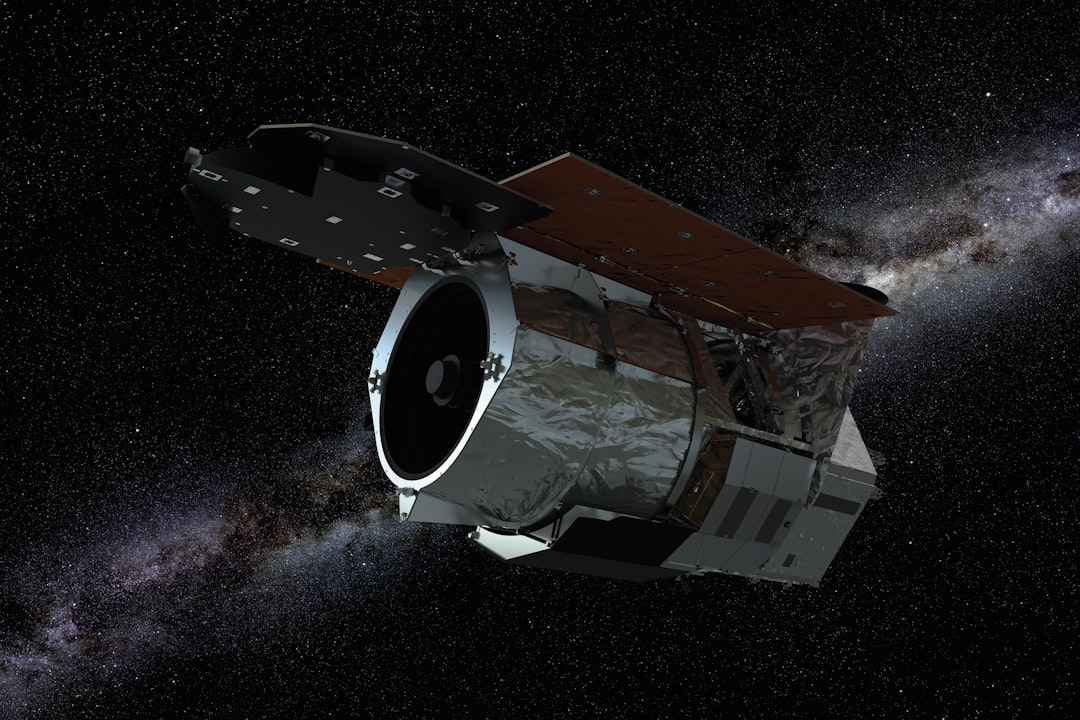
Exploring the scientific challenges of building a generation ship capable of sustaining human life across centuries-long interstellar journeys.
The Stark Reality of Generation Ships
The concept of a generation ship represents one of humanity’s most ambitious ideas for interstellar travel: a fully self-sustaining habitat capable of supporting human life for hundreds or even thousands of years. Unlike current spacecraft, which are designed to last a few decades at most, a generation ship would need to operate endlessly without external resupply. It would carry entire generations of people who would live, die, and reproduce on board, with no one aboard the original mission living to see the destination.
But while science fiction has romanticized this idea, the reality of building and maintaining such a vessel stretches the limits of current technology—and physics itself. Let’s examine the often-overlooked challenges of creating a generation ship.
The Time Factor: Why Speed Matters
Interstellar travel is constrained by a fundamental law of physics: the speed of light. At approximately 186,000 miles per second, it marks the absolute upper limit any object with mass can theoretically approach. Currently, no human-made spacecraft comes anywhere close—nor are there any practical shortcuts, despite Hollywood depictions of warp drives and hyperspace.
Distance to Neighboring Stars
To understand the time involved, consider the scale of typical interstellar distances. The closest star system, Alpha Centauri, is about 4.37 light-years away—roughly 25.6 trillion miles. Using the Parker Solar Probe, the fastest spacecraft ever built, it would still take around 6,800 years to reach it. More scientifically interesting systems, like Trappist-1, which is 39.5 light-years away, would require about 63,000 years at current speeds.
Even if theoretical propulsion systems capable of reaching 1% of light speed (~3,000 km/s) were developed, the journey to Alpha Centauri would still take approximately 437 years. Trips to planets located farther, such as Tau Ceti (11.9 light-years away), would stretch into multiple millennia.
The Technology: Propulsion Systems for Generational Missions
With chemical rockets—today’s standard propulsion technology—off the table due to their extremely low exhaust velocities, scientists have explored alternatives. Each option, however, presents its own significant barriers.
Nuclear Thermal Propulsion
Nuclear thermal rockets, which heat hydrogen or another propellant through a nuclear reactor, offer twice the exhaust velocity of chemical rockets. However, they still fall woefully short of reaching speeds necessary for interstellar travel, topping out at around 50–100 km/s.
Nuclear Pulse Propulsion
Proposed during the Project Orion study in the 1950s, nuclear pulse propulsion involves detonating nuclear explosions to propel a spacecraft. This method could theoretically achieve speeds of 3–5% light speed, contracting travel to Alpha Centauri to about 87 years. However, multiple fundamental challenges remain, including scaling up the technology to support human passengers and the immense radiation involved with the process.
Fusion and Beamed Propulsion
• Fusion Propulsion: Powered by nuclear fusion, such systems could theoretically boost speeds tenfold compared to nuclear thermal propulsion. However, sustained nuclear fusion for engines remains an unsolved scientific challenge.
• Beamed Propulsion: Concepts like the Breakthrough Starshot Initiative envision laser arrays accelerating small probes to 20% of light speed. For a generation ship carrying humans, though, scaling the propulsion system to accommodate enormous mass (hundreds of thousands of tons) would require energy outputs orders of magnitude beyond what is achievable today.
Life on a Generation Ship: Ecological and Structural Challenges
Once a generation ship departs Earth, it would exist in complete isolation for the entirety of its journey. It would lose access to Earth’s vast industrial base, supply infrastructure, and raw materials, making self-sufficiency non-negotiable. The ship must not only maintain human life but also sustain entire ecosystems, manufacturing systems, and social stability.
Structural Durability
No human-made system has ever had to function for as long as even 500 years continuously. Ancient structures like the Egyptian pyramids last because they are static. A generation ship, by contrast, requires complex, moving systems such as power generation, water recycling, and life-support systems to function flawlessly. These systems must resist entropy, material fatigue, and damage from cosmic radiation.
Population and Social Stability
To maintain genetic diversity and avoid inbreeding, studies suggest a minimum population of several hundred to several thousand individuals would be required. Society within the ship would need to adapt to confinement and develop methods of transferring knowledge and skills through countless generations. Challenges range from educational systems preserving technical expertise to maintaining mental health in a confined and artificial environment where Earth exists only as history.
Engineering Feasibility: Understanding the Scale
Constructing a generation ship would dwarf every engineering project humanity has ever undertaken. For perspective:
- The International Space Station (ISS), the largest structure humans have assembled in orbit, has a mass of approximately 420 tons.
- A basic generation ship, accounting for life-support systems, radiation shielding, and logistical needs, would require at least 500,000 tons—and potentially as much as 10 million tons.
This discrepancy highlights the industrial challenge. Building the ISS cost over $100 billion; a generational vessel would likely need comparable investments sustained for decades, if not centuries.
Success Hinges on Fragile Interdependencies
Once operational, a generation ship would face the daunting task of maintaining its highly interdependent systems. Every subsystem, from air purification to food production, relies on continuous efficiency:
- Atmospheric Management: Power loss would halt oxygen generation, leading to rapid toxicity.
- Food Systems: Failures in water recycling could jeopardize agriculture, which depends on precise atmospheric and soil conditions.
- Energy: Reliable energy generation would be critical, whether through nuclear reactors or renewable systems.
Every hiccup in one system would cascade into others, potentially causing ecological or societal collapse. There is no opportunity for rescue or external repair.
What a Generation Ship Reflects About Human Potential
The theoretical exploration of generation ships highlights tremendous scientific ambition but also sharpens awareness of humanity’s limitations. Technological advancements in propulsion, life support, and closed-loop systems would be essential milestones if interstellar travel is ever to become a reality. The true takeaway might not be whether we can build such vessels soon, but how efforts to overcome these barriers shape future progress in addressing our survival in increasingly complex environments.
Comments
Loading comments…


