NASA and Scientists Discuss the Possibility of Planet 9 in Our Solar System
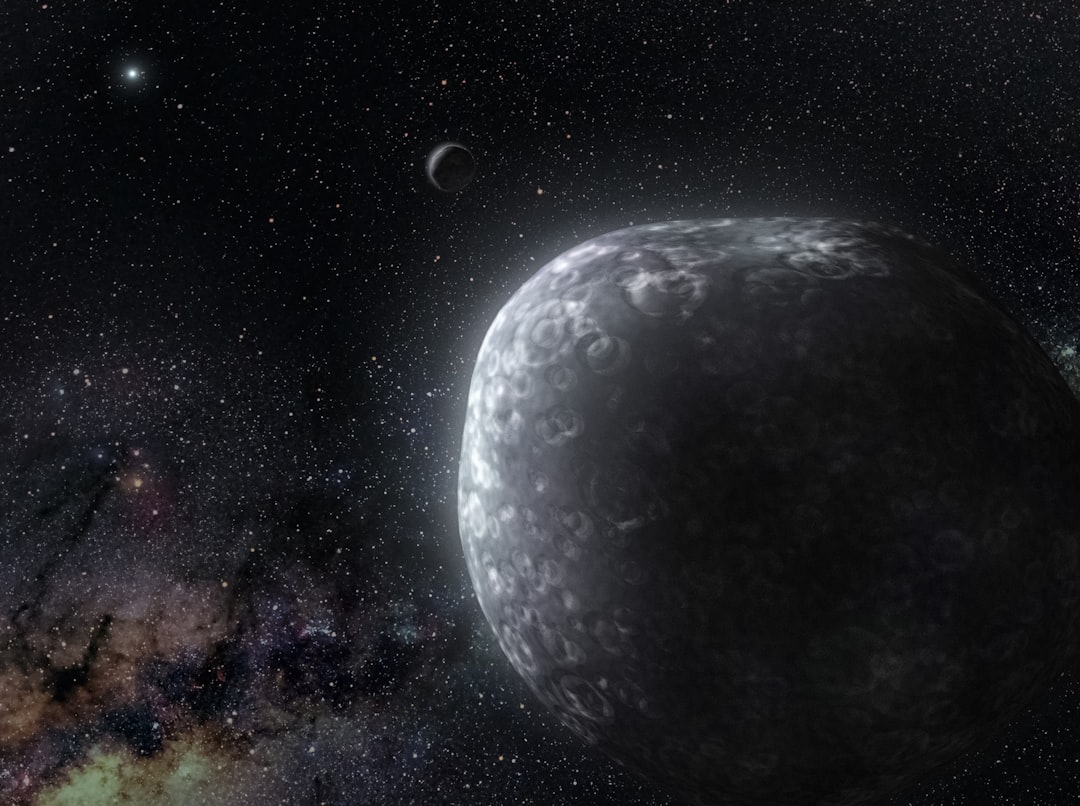
Astronomers may be closer than ever to discovering Planet 9, a mysterious object believed to explain anomalies in the far reaches of our solar system.
The Search for Planet 9: A Hypothetical Solar System Giant
For decades, astronomers have been captivated by the mystery of a massive, unobserved planet lurking on the fringes of our solar system. Often referred to as Planet 9, this celestial object is theorized to explain unusual orbital behaviors in distant bodies beyond Neptune, yet has evaded direct detection. Recent scientific studies might bring researchers closer to uncovering its truth.
What Is Planet 9?
Planet 9 is a hypothesized planetary body thought to exist far past Neptune. Early attention to its possibility arose from the strange orbits of objects in the Kuiper Belt, a distant region of icy debris beyond Neptune’s orbit. Unlike the eight known planets, these trans-Neptunian objects (TNOs) appeared to cluster and tilt unexpectedly. For astronomers, such anomalies usually point to gravitational influences from a larger body.
Predictions place Planet 9’s mass at somewhere between 5 to 10 times that of Earth. This would make it smaller than gas giants like Saturn or Jupiter but significantly more massive than Earth. Its orbit is estimated to be highly elongated, taking the hypothetical planet 20,000 Earth years to complete one trip around the sun. If true, it could be orbiting at a distance up to 20-30 times farther than Neptune’s distance from the sun.
Why Haven’t We Found Planet 9 Yet?
One of the primary challenges in finding Planet 9 is its sheer distance from Earth. At such an extreme range, sunlight reflecting off the planet would make it thousands of times fainter than anything normally visible to telescopes. Scientists believe traditional methods of detecting reflected sunlight may be insufficient for locating such a dim object.
Newer efforts have turned to space-based infrared telescopes. Unlike visible light, a planet’s thermal radiation only requires a one-way journey to reach observation stations. Planet 9 might be 100 times fainter in infrared light than in visible light, offering astronomers a more feasible detection method.
Recent Developments in the Search
The renewed interest in Planet 9 took a significant step forward when researchers analyzed past infrared sky survey data. Teams focused on archival observations made by the IRAS satellite (operating in the 1980s) and Japan’s AKARI observatory (2006–2011). By comparing data from the two missions, they identified a small object that appeared to move slightly over 23 years — a potential hallmark of a planet caught in its orbit around the sun.
However, the complications of parallax, a visual effect where distant objects appear to “shift” location due to Earth’s movement, meant researchers had to scrutinize their findings closely. By isolating positions over years on the same orbital date, they minimized false readings and pinpointed a possible candidate. Even so, astronomers emphasize that, while this discovery strengthens the case for Planet 9, it remains unconfirmed.
Could Planet 9 Be a Mini-Neptune?
Some researchers hypothesize that Planet 9 could resemble a smaller version of Neptune. This would mean it has a gaseous atmosphere surrounding a rocky or icy core. Others think it might be an icy world veiled in a thick layer of hydrogen and helium gas. There's even speculation that Planet 9 could be a rogue planet captured by the Sun’s gravity or a fragment from the Kuiper Belt itself.
Other far-out ideas suggest that Planet 9 might not even be a standard planet at all. Some theories propose it could be a primordial black hole, an exotic remnant formed during the early universe. Another hypothesis considers dark matter contributing to the gravitational effects seen in the outer solar system.
| Factors | Hypothesized Features of Planet 9 |
|---|---|
| Mass | ~5 to 10 Earth masses |
| Orbit type | Highly elliptical |
| Distance from Sun | 20–30 times farther than Neptune |
| Orbital period | 20,000 Earth years |
The Role of TNOs and Kuiper Belt Objects
Key evidence pointing to the existence of Planet 9 comes from Kuiper Belt Objects (KBOs) and trans-Neptunian objects (TNOs). Many of these small, icy bodies follow orbits that group together in an unusual way. They appear to be “herded” into position by some invisible gravitational shepherd, potentially Planet 9.
Without an explanation for these orbital oddities, astronomers remain skeptical about dismissing Planet 9's potential presence altogether. Past research ruled out the existence of a body as large as Jupiter or Saturn in the Kuiper Belt. But evidence for an intermediate-sized ice giant has continued to build.
Next Steps in the Hunt for Planet 9
Even with promising new leads, confirming Planet 9’s existence isn’t easy. Since the object seems to move slowly through space, tracking its current position requires intense observation campaigns. Ground-based and aerospace technologies, including the upcoming Nancy Grace Roman Space Telescope, hold promise to finally narrow down its location.
Meanwhile, theories continue to evolve. Some suggest the presence of moons around Planet 9 could provide indirect evidence of its existence. The constant gravitational pull from any orbiting moons might generate heat through a process called tidal heating, which might be detectable as faint infrared emissions from such distant objects.
What Makes This Discovery Significant?
Detecting Planet 9 would constitute one of the most critical breakthroughs in modern planetary science. It could completely reshape our understanding of the solar system's outer structure. Explaining the peculiar orbits of TNOs, redefining solar system formation theories, and solidifying new techniques in celestial observation would represent decades of progress toward significant discoveries.
FAQ
What is Planet 9 and how is it different from Pluto?
Planet 9 is a hypothetical massive body far from the sun, thought to influence distant celestial objects' orbits. Pluto, reclassified as a dwarf planet, is smaller and closer to the sun than the hypothesized Planet 9.
How was Planet 9 predicted?
Strange alignments in the orbits of TNOs and Kuiper Belt objects led researchers to theorize that a large, unseen planet could be responsible for their behavior.
Why is Planet 9 hard to find?
Its immense distance makes it faint and far beyond traditional optical telescopes’ capabilities. Improved detection methods using infrared observations offer better chances of locating it.
When will scientists confirm Planet 9?
Researchers anticipate that future telescopes, such as the Nancy Grace Roman Space Telescope, could provide stronger evidence. However, confirmation depends on time-intensive observations and data collection.
What could Planet 9 be made of?
Theoretical models suggest Planet 9 might have a gaseous atmosphere (like Neptune) or be an icy body with rocky elements. There is also speculative interest in exotic theories like dark matter or a primordial black hole.
The Path Ahead
The search for Planet 9 encapsulates the essence of astronomical discovery: piecing together traces of evidence, leveraging cutting-edge technology, and reshaping centuries-old understandings of the universe. Still a hypothesis, the hope of confirming this mysterious body continues to drive scientists toward deeper exploration of our cosmic neighborhood.
Staff Writer
Emily covers space exploration, physics, and scientific research. Holds a degree in astrophysics.
Comments
Loading comments…


