NASA reveals interstellar comet 3I/ATLAS images and key findings
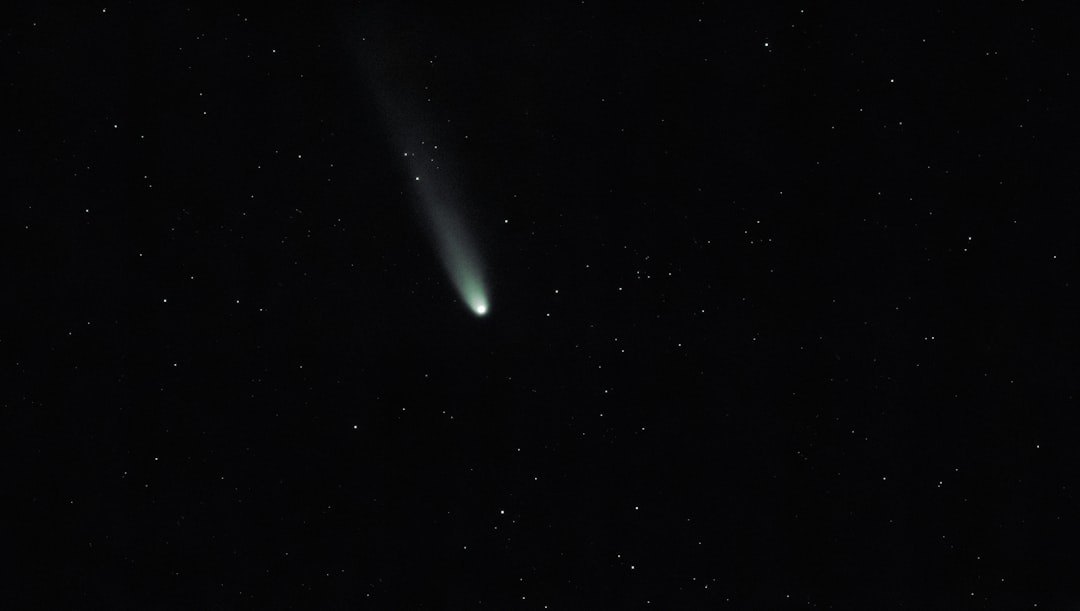
NASA shares stunning images and detailed insights about interstellar comet 3I/ATLAS, the third known object to enter our solar system from beyond.
NASA has unveiled an extraordinary set of images and findings tied to an interstellar comet named 3I/ATLAS. This remarkable cosmic visitor, only the third known object from outside our solar system to pass through, offers scientists a rare opportunity to study the makeup of distant star systems. Scientists have been rigorously tracking 3I/ATLAS since its discovery, leveraging state-of-the-art equipment and decades of experience in space exploration to unravel the mysteries of this interstellar traveler.
An interstellar visitor: 3I/ATLAS explained
Comet 3I/ATLAS was first detected on July 1, 2025, by the ATLAS Survey Telescope located in Chile. Named after the telescope, this is the third interstellar object detected, following the discovery of the first in 2017. What sets 3I/ATLAS apart is its origin beyond our solar system, making it a unique subject for scientific inquiry.
At its core, a comet is a combination of rocky and icy material. As it warms near the Sun, the ice and volatile gases vaporize, creating a visible "coma"—a luminous cloud of gas and dust that surrounds the comet's nucleus. What is captivating about 3I/ATLAS, however, is not just its appearance but the fact that it originated from a region far beyond the Sun’s influence, likely tied to distant star systems.
The discovery process
The NASA-funded ATLAS Survey Telescope made its initial observations of 3I/ATLAS during routine operations as part of NASA's Planetary Defense Network. While designed to identify objects that could pose a potential threat to Earth, this program occasionally identifies objects of immense scientific value, like 3I/ATLAS. By July and August, NASA’s astrophysics missions, including both ground- and space-based instruments, began systematically observing and studying the comet in detail.
Key findings reveal that 3I/ATLAS likely began its journey into our solar system some time ago, allowing astronomers to refine its trajectory and gather information about its structure and composition. Images provided by NASA's Mars Reconnaissance Orbiter (captured in October) show the comet as a fuzzy white ball, a textbook example of a coma cloaking the comet’s icy, rocky nucleus.
Insights from NASA’s flagship instruments
NASA employs a "scientific fleet"—a series of spacecraft and telescopes positioned across the solar system—to gather detailed information about celestial objects. For 3I/ATLAS, this fleet has proven essential. Here's what each major instrument has contributed to the findings thus far.
Hubble Space Telescope
Hubble began observing 3I/ATLAS shortly after its discovery. Data from Hubble revealed critical features of the comet:
- Shape and size: Its nucleus ranges from approximately 1,400 feet to 3.5 miles in diameter.
- Activity levels: Dust is being shed from its surface, consistent with behavior observed in solar-system based comets.
- Refined orbit calculations: By analyzing its trajectory, NASA determined that 3I/ATLAS poses no risk to Earth.
James Webb Space Telescope and Spherex
The addition of advanced infrared astrophysics instruments like the James Webb Space Telescope has marked an evolution in the study of interstellar objects. Observations focused on the chemical composition of 3I/ATLAS.
- Carbon dioxide and water ice presence: These trace elements were identified in the coma, offering insights into its formation.
- Distinct ratios: The ratio of carbon dioxide to water in 3I/ATLAS differs from ratios seen in comets of our solar system, potentially pointing to environmental differences in its star system of origin.
Mars-focused assets
Since the comet’s trajectory brought it closest to the Sun while inside Mars’s orbit, NASA leveraged assets like the Mars Reconnaissance Orbiter and the Perseverance rover for additional observations. Mars's advantage lies in its current proximity to the comet’s path, making it an ideal platform for data collection.
New challenges, new methods
The challenge with 3I/ATLAS lies in its trajectory—it entered our solar system along a path that places it at an inconvenient angle for Earth-based observation. However, NASA's network of telescopes and spacecraft have compensated by employing coordinated observations. In total, over 20 NASA missions have contributed to data on the comet, with new observations expected as the comet continues past Jupiter's orbit in 2026.
Among these instruments, even older crafts like the Parker Solar Probe have played a role, stretching their instruments’ existing capabilities to help analyze 3I/ATLAS. This kind of coordinated effort showcases NASA's comprehensive approach to modern space exploration.
What makes 3I/ATLAS special?
Scientists are particularly focused on what 3I/ATLAS can tell us about the formation of planets and solar systems. Variances in the carbon dioxide and water levels indicate that this comet likely originated in an environment unlike Earth’s, providing a rare chance to glimpse chemical signatures from regions millions of light-years away.
The bigger picture: Why interstellar objects matter
Interstellar objects like 3I/ATLAS are rare but invaluable. Their study helps bridge the understanding between our solar system and the wider universe. For instance, the way 3I/ATLAS behaves under solar-system conditions can reveal how universal certain cosmic phenomena are or help pin down differences among star systems.
Moreover, the data gathered contributes to NASA’s ongoing search for signs of life elsewhere in the universe. Even if 3I/ATLAS doesn’t yield direct evidence of life, its chemical makeup could provide clues about the elements available in far-off regions of the universe.
What’s next for 3I/ATLAS?
As the comet journeys past Jupiter’s orbit and beyond, NASA’s instruments will continue to collect data. By 2026, 3I/ATLAS is expected to leave the influence of our Sun entirely, offering one final chance for observation.
Armed with the data gathered, NASA will make all information on 3I/ATLAS publicly available for scientists worldwide to review. What’s clear from this discovery is that interstellar objects are not beyond reach, and advances in observation technology are making their detection increasingly possible. Indeed, the universe is a treasure trove of scientific discovery waiting to be explored.
Staff Writer
Daniel reports on biology, climate science, and medical research.
Comments
Loading comments…


