NASA’s Artemis II prepares for historic lunar flyby
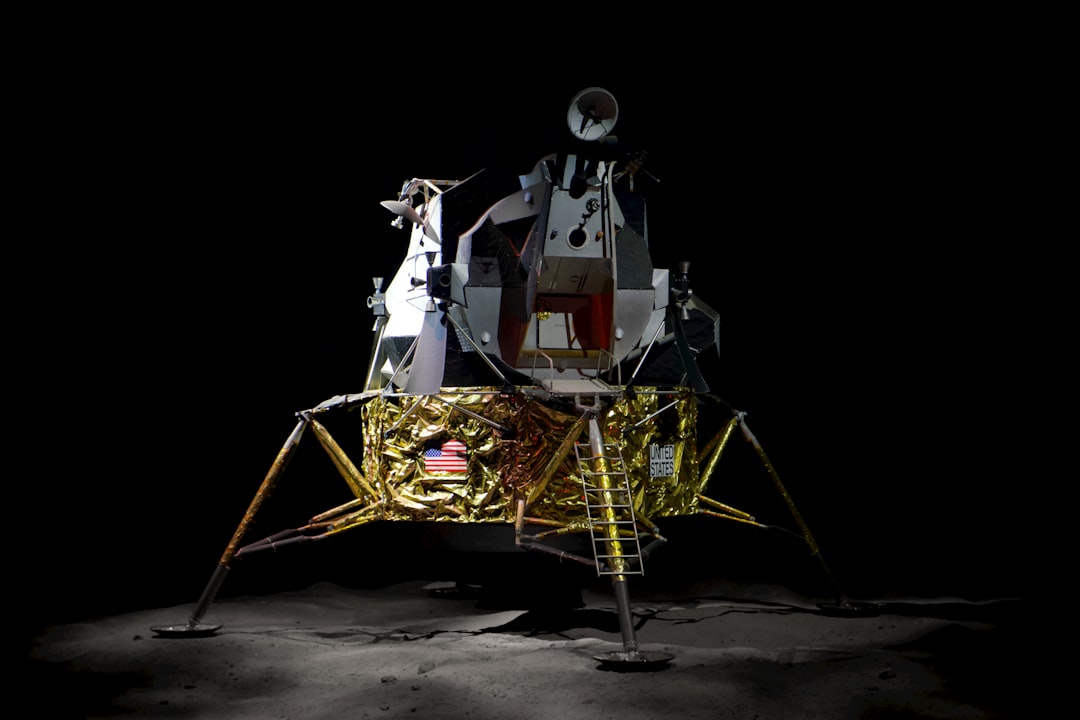
The Artemis II crew gears up for a groundbreaking lunar flyby tomorrow, marking a new chapter in human exploration of the moon.
NASA’s Artemis II mission is entering an exciting chapter, as the crew prepares for a historic lunar flyby tomorrow. This milestone marks humanity’s return to the moon’s vicinity, over five decades after the Apollo program, and promises groundbreaking advancements in both science and interplanetary exploration.
The Mission and Its Significance
The Artemis II mission, spearheaded by NASA, represents a vital step in America’s goal to establish a sustainable human presence on the moon. Flying aboard the Orion spacecraft, aptly named Integrity by the crew, the astronauts will circumnavigate the moon, gathering valuable scientific observations while serving as a precursor to future missions that aim to land humans on the lunar surface.
Dr. Lori Glaze, one of the mission leaders, explained the importance of this endeavor, noting, “Although Earth has gone through significant changes due to tectonics and weathering, the moon has remained a preserved witness plate. Its history offers unparalleled insights into the evolution of our planetary system.”
Unlike its Apollo predecessors, Artemis II blends human exploration with ongoing robotic research, creating a comprehensive approach to understanding the moon. Additionally, this mission serves as a testing ground for maintaining astronaut health on prolonged spaceflights—a key preparatory step for missions to Mars.
Key Developments and Highlights
The Artemis II crew has spent their recent days preparing rigorously for the lunar flyby, focusing on operational exercises, scientific duties, and critical technical tests.
Lunar Observation Training
The crew has undergone extensive training to perfect their observational skills and adapt to the challenges of capturing lunar data while aboard Orion. Using advanced cameras like Nikon models outfitted with an 80–400mm zoom lens, they have practiced imaging the moon and providing detailed descriptions of its surface. NASA intricately simulated this exercise by placing mockups of the moon at appropriate distances, allowing the astronauts to simulate the experience they will face during their flyby. According to Kelsey Young, lead science officer, this hands-on training has prepared the crew to make significant scientific contributions: “We’ve even built in optional targets specifically for crew choice, giving astronauts the flexibility to prioritize what strikes them as most scientifically valuable.”
The Power of Stereo Vision
One striking element of the mission, highlighted during the conference, was the astronauts’ descriptions of seeing celestial features in three-dimensional stereo vision. Astronauts were particularly awestruck when observing craters like Tycho and Copernicus, which came to life in vivid detail.
Christina Koch, one of the crew members, described her experience as "seeing the moon and its craters in three dimensions—it’s everything we trained for, but it’s absolutely unbelievable in real life.” This kind of human observation provides nuances that no robotic landing or satellite imagery can replicate.
Message From Apollo Astronauts
Adding to the historical resonance, Apollo 16 astronaut Charlie Duke shared an inspirational message with the Artemis II team. Duke remarked, “I’m glad to see Orion helping return humans to the moon. As America charts the course to the lunar surface, remember that we’re cheering you on.” As a veteran of lunar exploration, Duke’s words served as a unifying thread between the Apollo and Artemis generations.
Science and Engineering Objectives
The Artemis II mission combines lunar observations with technological advancements. Key elements of the mission include:
- Human Health Studies: Experiments onboard, such as the "Avatar" experiment, aim to assess astronaut health during extended deep-space missions, focusing on long-term spaceflight viability as humanity eyes Mars missions in the coming decades.
- Flight Operations Testing: Over the past days, the crew conducted manual piloting activities, including simulating six and three degrees of freedom with some thrusters intentionally disabled. These tests gathered vital data on Orion’s performance in various contingency scenarios.
- CO2 Removal Efficiency: NASA’s science teams performed back-to-back exercise sessions to measure the carbon dioxide removal system’s effectiveness—a critical factor for maintaining life support during prolonged space missions.
- Trajectory Corrections: The meticulous planning of Orion’s flight path eliminates the need for frequent course adjustments. Only one correction—a 9.9 ft/sec maneuver—is scheduled during this phase, marking a triumph in spacecraft precision engineering.
Lunar Flyby Tomorrow
The upcoming lunar flyby, occurring within a five-hour observation window, highlights key objectives blending geography with real-time data imaging. The team will focus on 10 lunar science objectives pre-identified by NASA. These include detailed studies of illuminated lunar regions, crater analysis, and Earthshine effects. Remarkably, the crew will also pass by two Apollo landing sites—those of Apollo 12 and Apollo 14—adding historical context to their discoveries.
Significant moments include Orion entering the lunar sphere of influence tonight, when the moon’s gravity takes greater precedence than Earth’s. This milestone underscores how far humanity’s reach into space has grown.
A Vision Beyond the Moon
Floating halfway between two worlds, Orion captures not just the moon’s striking landscapes but also a vision of Earth as a fragile, shared home. Astronaut Victor Glover movingly reflected on this perspective: “In all this emptiness, there’s this oasis... this beautiful place that we get to exist together. This reminds us of our shared humanity.”
Tomorrow’s flyby and the observations gathered promise to further cement the Artemis program’s role as the next great chapter of human discovery. Beyond science, Artemis II emphasizes collaboration, not only between crew and control teams but between the legacy of Apollo and the ambitions of a new era focused on the moon—and beyond.
Staff Writer
Emily covers space exploration, physics, and scientific research. Holds a degree in astrophysics.
Comments
Loading comments…


