What is Artemis? NASA’s Return to the Moon Explained
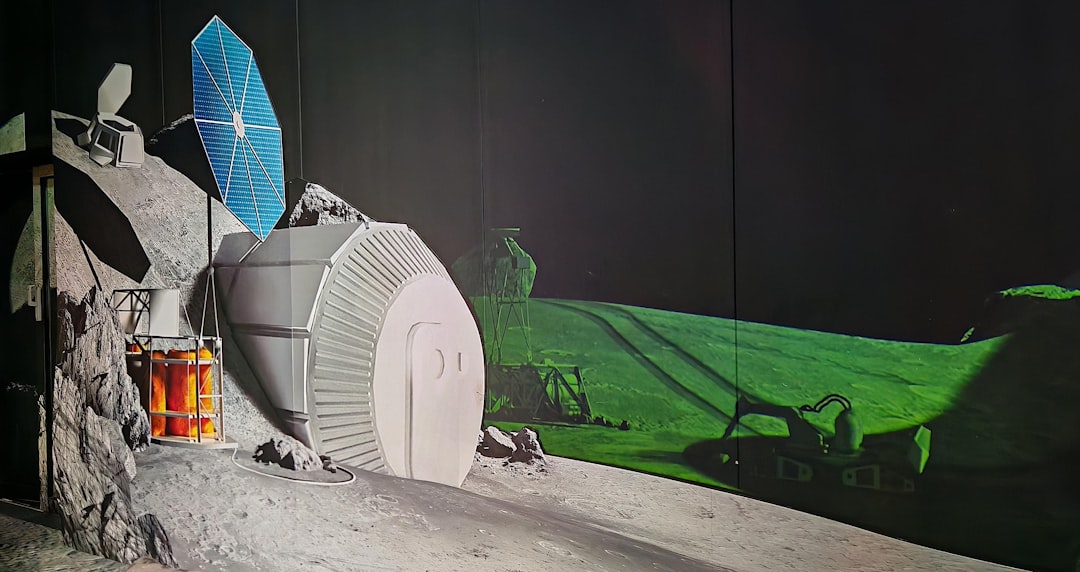
NASA's Artemis program marks humanity's return to the Moon, with bold plans for long-term exploration and future missions to Mars.
More than fifty years after the Apollo program captivated the world, humanity is finally heading back to the Moon. NASA’s Artemis program, named after the twin sister of Apollo in Greek mythology, aims to not only revisit the Moon but to establish the foundation for sustainable exploration and eventual missions to Mars. This ambitious initiative represents the next giant leap in space exploration and is setting the stage for a new era of deep-space exploration.
A Glimpse Back: From Apollo to Artemis
The last time humans set foot on the Moon was in December 1972 during Apollo 17. The Apollo missions famously achieved the first human landing on the lunar surface, proving not only the feasibility but also the enduring allure of crewed Moon exploration. After Apollo 17, however, no astronaut traveled that far from Earth again for over half a century. Enter Artemis—the program designed to pick up where the Apollo missions left off and propel humanity even farther.
Artemis is fundamentally different in scope and vision compared to Apollo. While Apollo’s focus was primarily on winning the space race and conducting short-term science experiments on the Moon, Artemis is built around sustainability. NASA envisions the Moon as an essential waypoint for testing the technologies and methods that will one day take humans to Mars. Instead of treating lunar visits as isolated missions, Artemis seeks to establish a long-term human presence on and around the Moon.
Key Components of the Artemis Program
The Artemis program is a multi-faceted endeavor, bringing together a combination of advanced technologies, spacecraft, and international partnerships. Among the essential components are:
-
Space Launch System (SLS): This rocket is NASA’s most powerful launch vehicle to date, designed to send astronauts and cargo beyond Earth’s orbit. It provides the thrust necessary to push the Orion spacecraft toward the Moon.
-
Orion Spacecraft: Orion serves as the crew capsule for Artemis missions. It is built to sustain astronauts during deep-space travel, keeping them safe and connected to Earth throughout their journey. Orion’s maiden uncrewed flight, Artemis I, served as a successful test of its systems in 2022.
-
Lunar Landers: While specific designs are still under development, future Artemis missions aim to deploy advanced lunar landers capable of ferrying humans and equipment between the lunar surface and Gateway, a planned station in lunar orbit.
-
Gateway Station: One of the standout features of the Artemis program is its planned Gateway—a small orbital outpost around the Moon. This station will act as a hub for lunar operations, providing a staging area for landers, a research platform for astronauts, and facilities for testing systems bound for Mars.
-
Surface Systems: Artemis also incorporates technology for sustaining life on the Moon, such as habitats, mobility platforms, and systems for extracting resources like water ice, which could be used for fuel and life support.
Artemis So Far: Missions and Milestones
The Artemis program has already achieved significant milestones. The uncrewed Artemis I mission in 2022 tested the mission’s core systems, including the Orion spacecraft and its ability to operate in deep space. The mission succeeded in sending Orion around the Moon before returning safely to Earth, demonstrating NASA’s readiness for a more ambitious, crewed journey.
On April 1, 2026, Artemis II marked a historic moment: the first crewed lunar mission since Apollo. The mission sent four astronauts on a flight around the Moon, testing life-support systems and crew operations in deep-space environments. Although it did not include a Moon landing, Artemis II represented a critical step in preparing for the landing goals of future missions.
The ultimate objective of Artemis III—planned for later this decade—is to return humans to the lunar surface. This time, NASA has its sights on the Moon’s south pole, an area thought to contain significant deposits of water ice. By studying these resources, scientists hope to learn how to extract water and fuel for long-term space exploration efforts.
Why the Moon Matters
To some, revisiting the Moon might seem like retracing old steps. But Artemis views the Moon through a 21st-century lens. First, the Moon’s unique environment serves as a proving ground for technologies that will be necessary for Mars missions. For example, ensuring astronauts can survive long durations using only local resources is a critical challenge Artemis is helping to address.
Second, the time gap since Apollo has allowed for tremendous advances in space exploration capabilities. Technologies like autonomous systems, miniaturized science instruments, and 3D printing for habitats make it possible to envision a sustainable human presence on the Moon—a vision the Apollo engineers could only dream about.
Finally, the Artemis program brings an international dimension into lunar exploration. NASA is working alongside its global partners in programs like the Artemis Accords, which establish principles for cooperative exploration. These agreements emphasize peaceful cooperation and resource sharing, setting the tone for humanity’s broader use of space.
The Road Toward Mars
Perhaps the most exciting aspect of Artemis is that the Moon is not the program’s ultimate destination. NASA sees the Moon as the next step on the path toward interplanetary exploration. Technologies developed for Artemis—such as deep-space radiation shielding, in-situ resource utilization, and advanced propulsion systems—will directly inform human missions to Mars.
The Gateway station, for example, could provide critical knowledge for constructing and operating orbital waypoints near other planetary bodies. Moreover, Artemis’ ability to sustain astronauts on long missions lays the groundwork for eventual multi-year journeys to Mars and beyond.
Challenges Ahead
While the Artemis program is compelling in its vision, its scale and complexity also pose significant challenges. For one, costs remain a major concern. Developing the SLS, Orion, Gateway, and surface systems requires investments from U.S. taxpayers and international partners. Additionally, delays and technical hurdles have already shifted timelines for key missions. Mitigating these risks will be vital for Artemis to succeed.
Another challenge involves logistics. Creating a sustainable presence on the Moon involves unprecedented coordination between government agencies, private companies, and international partners. Building systems that can function reliably in the harsh lunar environment will take considerable engineering ingenuity.
A New Era of Exploration
In many ways, Artemis is about much more than returning to the Moon. It reflects humanity’s natural desire to explore, innovate, and push boundaries. With this program, NASA aims to establish a more permanent foothold in space, turning the Moon from a distant milestone into a launchpad for even greater achievements.
Looking ahead, Artemis is not limited to technological milestones. It represents the global spirit of cooperation, a shared human vision of venturing deeper into the cosmos, and a commitment to using space exploration as a way to unite people on Earth. The journey has just begun, but the destination—be it the Moon, Mars, or beyond—seems closer than ever before.
Staff Writer
Emily covers space exploration, physics, and scientific research. Holds a degree in astrophysics.
Comments
Loading comments…


