What NASA Discovered on Jupiter's Volcanic Moon Io
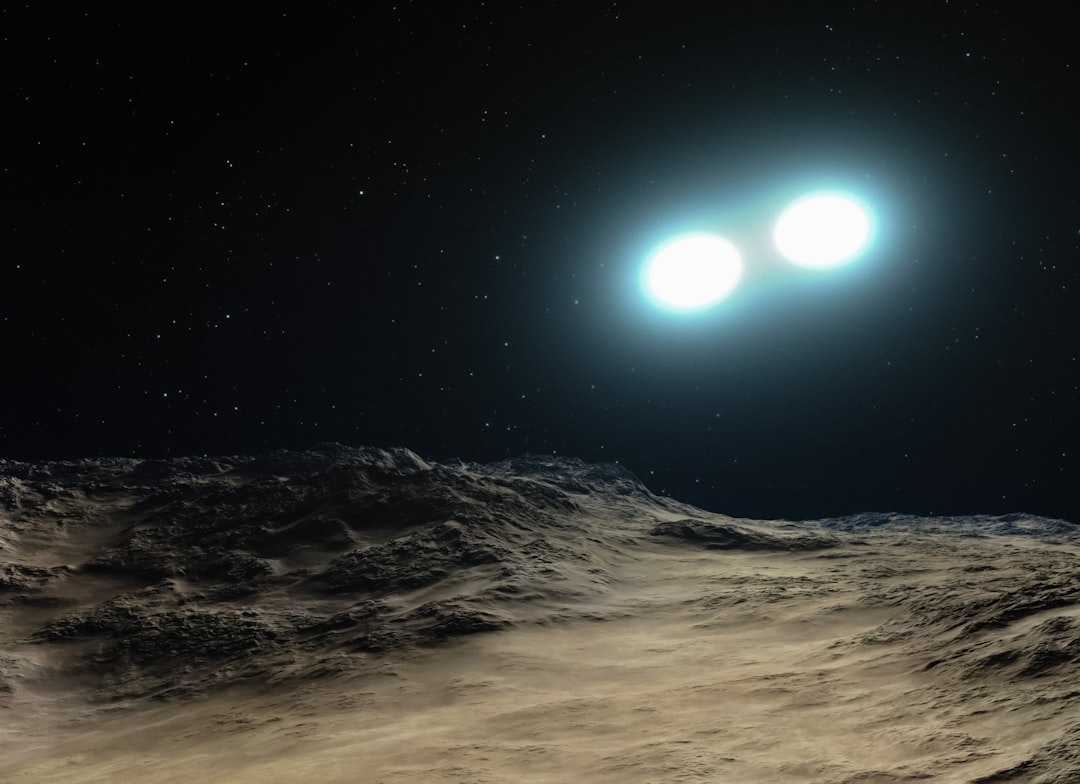
Explore NASA's latest findings on Io, Jupiter's most volcanic moon. Learn about its fiery landscape, mysterious mountains, and unique geology.
Jupiter’s moon Io stands apart as one of the most geologically active worlds in our solar system. Amid an inhospitable environment of extreme cold and relentless radiation, Io's fiery volcanic activity has amazed scientists since it was first observed. Recent close flybys by NASA’s Juno spacecraft have offered unprecedented insights into Io’s chaotic surface. Here’s a closer look at what makes this tiny moon so extraordinary.
Io: A Fiery Moon in the Shadow of Jupiter
Io, one of Jupiter's four Galilean moons, orbits just 350,000 kilometers above Jupiter, roughly the same distance as our moon is from Earth. Though only slightly larger and heavier than the Moon, Io is unique in its composition and behavior. Unlike the icy make-up of other large moons in its vicinity, Io is composed almost entirely of rock and metal, making it the densest moon in the solar system. The water content on Io is abysmally low, even less than that of Mercury, which is the closest planet to the sun.
The Most Volcanically Active Body in the Solar System
One feature sets Io apart: relentless volcanic activity. It holds the title of the most volcanically active body in the solar system, with around 400 known active volcanoes. This activity was first confirmed during the Voyager 1 probe’s flyby in 1979, which captured images of volcanic eruptions from nearly 20,000 kilometers away.
The volcanic landscape on Io operates unlike anything found on Earth. Instead of building towering volcanoes or mountain ranges, Io’s eruptions tend to occur in cracks on its surface. These eruptions release lava and plumes of sulfur gas that can rise tens of kilometers into Io's thin atmosphere. The expelled sulfur creates Io’s distinctive color palette: yellow from crystallized sulfur, white and blue from frozen sulfur dioxide, and red marking areas of recent volcanic activity.
Surface temperatures on Io fluctuate widely. Outside of volcanic zones, the surface averages a frigid -130°C. Yet, near volcanic hotspots, Io’s molten rock reaches extreme temperatures, creating stark contrasts across the terrain.
What Drives Io’s Volcanic Fury?
Io’s remarkable volcanic activity stems from its unique gravitational environment. As the moon orbits Jupiter, it is caught in a tug-of-war between the gas giant’s massive gravity and the lesser—but still significant—pull of its neighboring Galilean moons (Europa, Ganymede, and Callisto). This constant gravitational stretching and releasing distorts Io’s orbit into an oval shape and causes the moon’s rocky surface to bulge by up to 100 meters.
This process, known as tidal heating, generates immense amounts of internal friction and heat, powering Io’s volcanic activity. Unlike Earth, where tectonic plates often drive volcanic activity, Io’s eruptions are the direct result of this endless gravitational flexing.
Lava Lakes and Alien Landscapes
Io’s volcanic activity doesn’t form towering mountains or expansive shield volcanoes like those seen on Earth. Instead, collapsed regions on the moon’s surface fill with molten lava, creating vast lakes. The largest of these, Loki Patera, is 200 kilometers in diameter. At its center, solidified rock islands float on a churning sea of molten rock.
Interestingly, Io’s surface isn’t stable over long periods. Lava lakes and volcanic hotspots evolve quickly, influenced by the moon’s constantly changing shape. Gravity readings collected by probes indicate that Io doesn’t have a global magma ocean like Earth. Instead, localized pockets of magma are distributed beneath the surface, feeding the diverse volcanic activity.
Mysterious Mountains: Steeple and Beyond
Adding to Io’s enigmatic surface are its solitary towering mountains. One of the most prominent peaks, Steeple Mountain, stands between 5 and 7 kilometers tall. Recent high-resolution images captured by NASA’s Juno spacecraft reveal that these spindly, spike-like peaks are scattered randomly across Io. The tallest reaches a staggering 18 kilometers—twice the height of Mount Everest.
Unlike mountain ranges on Earth, Io’s mountains appear to form independently, erupting upward suddenly rather than through gradual geological processes. Scientists believe these mountains are linked to volcanic activity: when parts of Io’s surface collapse into subterranean lava pockets, adjacent rock sections are forced upward, creating isolated peaks.
NASA’s Juno Mission: Unlocking Io’s Secrets
Since its arrival at Jupiter in 2016, NASA’s Juno spacecraft has primarily focused on studying the gas giant’s atmosphere and magnetic field. However, Juno’s mandate expanded to include flybys of Jupiter’s moons, leading to unprecedented observations of Io in late 2023 and early 2024. The spacecraft ventured to within 1,500 kilometers of Io’s surface, capturing detailed images of its fiery volcanic vents and rugged mountains.
These images have reshaped our understanding of Io as a dynamic, ever-evolving world. The surface rises and falls in response to Jupiter’s gravitational pull, experiencing relentless volcanic upheaval unlike any other body in the solar system.
The Future of Io Exploration
Despite its volcanic wonders, Io isn’t a high priority for upcoming space missions. NASA’s Juno spacecraft is nearing the end of its operational life, and the next generation of missions to the Jupiter system—the European Space Agency’s Juice (Jupiter Icy Moons Explorer) and NASA’s Europa Clipper—are focused elsewhere. Juice will study Europa, Ganymede, and Callisto, while Europa Clipper is designed to search for signs of alien life in Europa’s subsurface ocean.
For now, Io remains a mesmerizing yet somewhat isolated puzzle for planetary scientists. While no dedicated Io mission is on the horizon, its dramatic geology ensures it will remain a key subject of study through ongoing data analysis and ground-based observations.
Key Takeaways
- Io, Jupiter’s moon, is the most volcanically active body in the solar system with around 400 active volcanoes.
- The moon’s volcanic activity is driven by tidal heating caused by gravitational interactions with Jupiter and neighboring moons.
- Io’s surface features include vast lava lakes, towering spiky mountains, and a sulfur-rich atmosphere.
- NASA’s Juno mission has provided the most detailed imagery of Io’s surface to date, reshaping our understanding of this fiery world.
Io is a striking reminder of the diversity of celestial bodies in our solar system—a geologically active moon orbiting a planet far from the sun, caught in a cycle of heat and cold, chaos and beauty. If and when a dedicated mission to Io materializes, it promises to deliver even more extraordinary discoveries.
Staff Writer
Emily covers space exploration, physics, and scientific research. Holds a degree in astrophysics.
Comments
Loading comments…


