What NASA Discovered with the James Webb Space Telescope
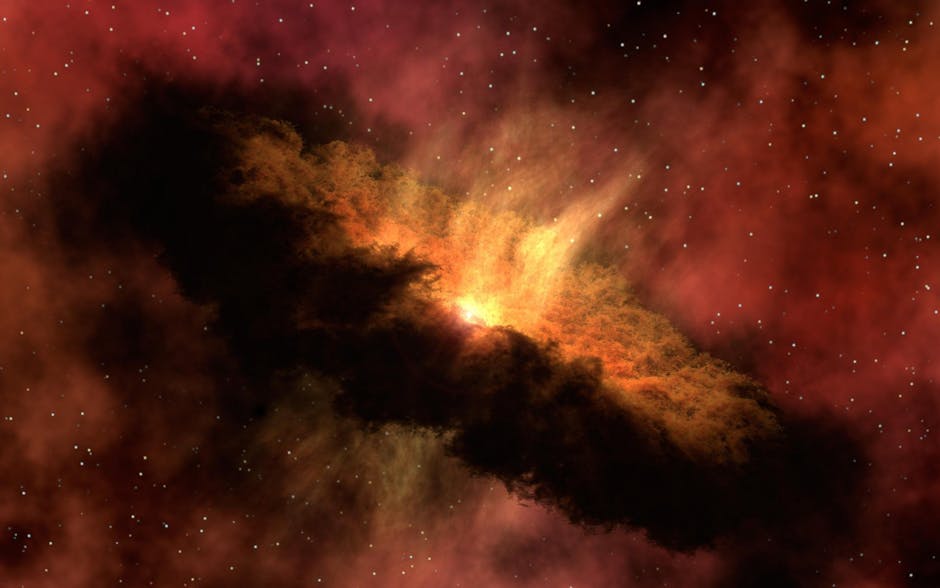
The James Webb Space Telescope unveils the secrets of the universe, offering breathtaking images and critical data on the earliest stars and galaxies.
NASA’s James Webb Space Telescope (JWST) is delivering some of the most detailed and breathtaking insights into the depths of the universe. Designed to observe the earliest galaxies, stars, and nebulae, JWST is helping scientists unravel cosmic mysteries while inspiring awe with its stunning visual capabilities. Launched in December 2021 after decades of development, the $10 billion instrument is already reshaping our understanding of space and time.
The Development and Unique Design of the James Webb Telescope
After years of planning and numerous delays, the James Webb Space Telescope finally launched on December 25, 2021. Originally conceived in the 1990s as a successor to the Hubble Space Telescope, the project was initially supposed to cost $1 billion and launch by 2007. However, engineering challenges pushed the cost to $10 billion and delayed the launch by over a decade.
Standing out among JWST’s innovative design features is its massive 6.5-meter-wide primary mirror, which is six times larger in area than Hubble’s mirror. Coated in gold, the mirror enhances the telescope’s ability to detect faint light from extremely distant sources. Additionally, JWST’s sunshield, which is the size of a tennis court (14 x 21 meters), protects its instruments from solar radiation and allows them to operate at extremely low temperatures. This thermal protection is essential because the telescope observes primarily in the infrared spectrum.
While Hubble excels in visible and ultraviolet light, JWST’s focus on infrared enables it to see objects obscured by interstellar dust. It is particularly adept at capturing the faint, redshifted light from ancient galaxies formed shortly after the Big Bang, offering a complementary perspective to Hubble’s observations.
The Science: Exploring the Edges of the Universe
JWST’s mission is broad and ambitious. It aims to:
- Uncover the formation and evolution of galaxies, stars, and planetary systems.
- Investigate the atmospheres of exoplanets for signs of habitability.
- Study the earliest galaxies, dating back to the universe’s origins over 13 billion years ago.
Let’s explore some of the telescope’s most remarkable early findings.
The Cosmic Cliffs: Star Formation Revealed
One of JWST’s first images is of the Cosmic Cliffs, a region within the Carina Nebula, located 7,600 light-years from Earth. This part of NGC 3324 features towering, light-year-high structures of gas and dust that serve as star-forming regions.
These regions had been challenging to study before, as conventional telescopes could not penetrate the dense dust clouds. With the help of JWST’s Mid-Infrared Instrument (MIRI), scientists can now observe the interior of these dust cocoons and study star formation in unprecedented detail. For example, JWST has revealed clearer images of the processes by which dust collapses into stars, helping scientists answer long-standing questions about stellar birth.
The Southern Ring Nebula: A Closer Look at Star Death
The Southern Ring Nebula (NGC 3132) is another highlight from JWST’s portfolio. This planetary nebula, roughly 2,000 light-years away, is the glowing remnant of a dying star.
Photos taken by JWST’s near-infrared (NIRCam) and mid-infrared (MIRI) cameras show the nebula with remarkable clarity, outshining Hubble's older images. These pictures reveal the intricate patterns created by gravitational interactions between two central stars. Astonishingly, scientists have discovered that contrary to previous assumptions, one of these stars has not yet exploded.
Planetary nebulae like this one provide clues about the chemical composition of cosmic dust, which contributes to future star and planet formation. The increased detail captured by JWST opens up a new era of studying stellar death.
The Tarantula Nebula: A Glimpse of the Universe's Youth
The Tarantula Nebula, located 161,000 light-years from Earth, offers a window into the universe’s most active period of star formation, often referred to as cosmic noon. This era, roughly 1 billion years after the Big Bang, saw the universe’s most prolific star creation.
JWST’s infrared capabilities allow scientists to observe young, forming stars in the nebula, which serve as analogs for stars that existed during the cosmic noon. This ability to peer back into the universe’s past helps researchers understand how galaxies like the Milky Way evolved over time.
Stefan's Quintet: Galactic Interactions
A spectacular image of Stefan’s Quintet highlights the power of JWST’s composite imaging. This group of five galaxies, about 290 million light-years away, includes two galaxies in the process of colliding.
JWST has captured the hot dust expelled by these interactions and illuminated gravitational forces at play. The telescope created this image by combining nearly 1,000 separate exposures, creating an unparalleled high-resolution view of these cosmic structures.
Webb’s First Deep Field: The Edge of the Universe
One of JWST’s most astonishing achievements is the Deep Field Image, which showcases thousands of galaxies in a tiny section of the sky. The field is so small that a grain of sand held at arm's length would cover it.
This image features one of the oldest galaxies ever observed—13.1 billion light-years away. By analyzing the redshift of the light, scientists estimate this galaxy formed just 600 million years after the universe began. Compared to Hubble, which took 10 days to capture a similar image, JWST managed to achieve its result in only half a day, showcasing its immense power and efficiency.
How JWST and Hubble Complement Each Other
While JWST was initially nicknamed Hubble’s successor, the two telescopes are best thought of as complementary tools. Hubble excels at ultraviolet and visible wavelengths, whereas JWST specializes in infrared. Together, they provide a fuller picture of cosmic phenomena.
For example, studying nebulae like the Southern Ring or galaxies like Stefan's Quintet benefits from both telescopes. Hubble captures the sharpness of visible structures, while JWST peers deeper into hidden regions to reveal infrared processes.
Practical Implications of JWST’s Discoveries
The images and data capture our imaginations, but they also have practical applications:
- Exoplanet research: JWST is being used to study the atmospheres of distant planets, searching for chemical signatures that could indicate life.
- Cosmic evolution: By examining the earliest galaxies, scientists gain insight into the universe’s growth and development.
- Star formation knowledge: Understanding stellar birth and death cycles informs models of galactic and planetary formation.
The Future of JWST
As of now, JWST has completed its calibration phase and is operating at full capacity. With an expected lifespan of 5–10 years, time on the telescope is highly in demand among scientists. Research proposals are already being arranged for the study of exoplanet atmospheres, young stars, and galaxies at the universe’s edge.
In less than two years, the James Webb Space Telescope has proven to be one of NASA’s most transformative projects. From revealing the secrets of stellar nurseries to observing galaxies from the dawn of time, JWST reaffirms the vast beauty and complexity of the universe.
Staff Writer
Emily covers space exploration, physics, and scientific research. Holds a degree in astrophysics.
Comments
Loading comments…


