AI breakthroughs accelerate advancements in medicine, robotics, and quantum computing
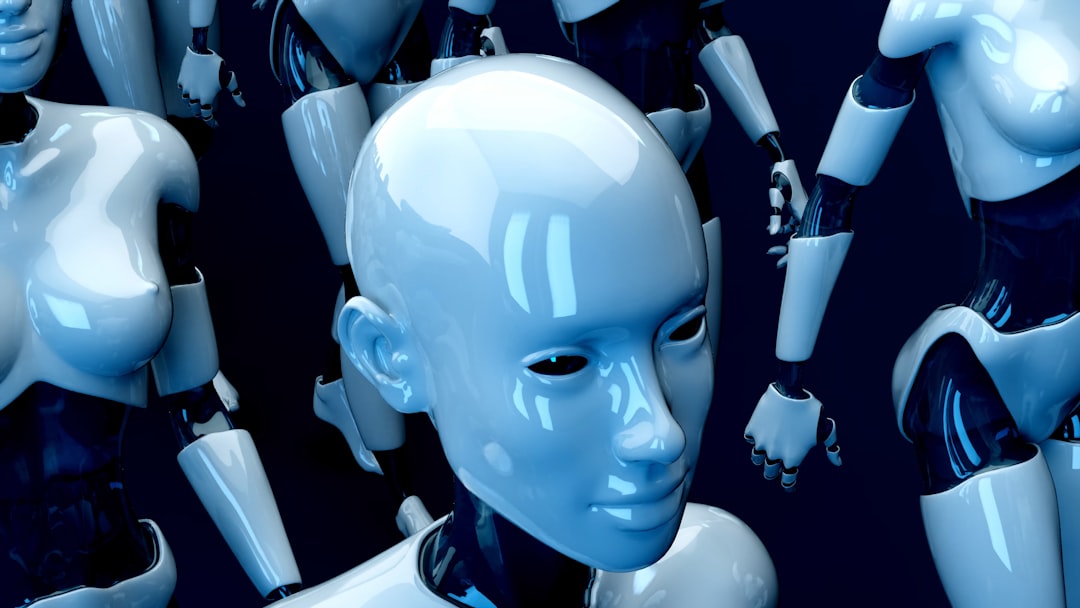
AI is revolutionizing industries from drug development to robotics, with life expectancy increasing and quantum computing posing fresh challenges.
Artificial intelligence (AI) is moving from the realm of theory to real-world application with unprecedented speed, driving transformative changes in industries ranging from healthcare to energy. A recent discussion with a Bank of America Global Research expert highlights the massive breakthroughs AI is delivering today and suggests that we are only scratching the surface of its potential.
Drug development at record speed
One of the clearest examples of AI's impact is in pharmaceutical development. Traditionally, creating a new drug could take years, cost upwards of $5-6 billion, and carry a staggeringly low success rate of 0.01%. This inefficiency has left many promising treatments stuck in development pipelines. However, AI is rewriting that narrative by vastly reducing costs and timelines while improving accuracy.
According to the expert, AI can now produce drugs in as little as 30 days at a cost of around $3 million—million-dollar savings compared to historical methods. Even more striking is the claim of “100% accuracy” in drug development processes when AI is involved, a development that would traditionally be unthinkable in the pharmaceutical world. These improvements mean that life expectancy, which once plateaued in the 70s or 80s for many populations, is projected to rise significantly. Reaching the 90s is expected to become standard, and future generations may even surpass this milestone comfortably.
"We are the generation that will see life expectancy climb past 90," the expert notes. These advancements are not only about producing drugs more efficiently but also about fundamentally transforming access to better, faster healthcare outcomes across the globe.
AI moving beyond the virtual world: robotics and automation
While much public attention focuses on text-based AI models like ChatGPT, a significant share of AI investments is being directed toward physical and generative AI applications. This next wave of AI is about much more than summarizing emails or answering questions—it’s about creating solutions that merge the digital and physical worlds.
The expert explains that AI is stepping into advanced robotics, physical interfaces, and even applications within the human body. "Trillions of dollars are being spent not just to make chatbots," they emphasize, but to develop next-generation technologies that could revolutionize industries like manufacturing, healthcare, and energy. Robots that once existed solely in science fiction are on the verge of breaking into the mainstream, enabling processes that are more efficient and intelligent than ever before.
Applications in chemistry and energy sectors also benefit from this leap. AI's ability to solve complex problems quickly gives it a critical role in optimizing materials, improving energy storage technologies, and reducing waste. With AI penetrating “the physical world,” the boundaries between imagination and practical innovation are dissolving rapidly.
Quantum computing: a double-edged sword
Another area where transformative technologies are emerging fast is quantum computing. Unlike traditional computers, quantum systems use quantum states to process massive amounts of data simultaneously. This power promises to accelerate breakthroughs across industries but also carries serious risks.
The expert outlines an immediate concern: quantum computers are already capable of breaking modern encryption protocols. These encryption systems were designed for traditional computers and would require enormous time and resources to breach—but a quantum computer could accomplish this "before breakfast," as the expert dramatically put it. This raises urgent questions about the future of cybersecurity, blockchain security, and data protection.
Far from being a future concern, the quantum revolution is described as "here and now," with impacts already being felt across sectors. Beyond threats, quantum technology also presents opportunities: it could amplify existing AI capabilities, speeding up discoveries in fields ranging from material science to logistics optimization. The confluence of AI and quantum technology has the potential to usher in a new era of technological progress, one described by the expert as "dimensional growth." Every day, the boundaries of what’s possible shift outward, forcing businesses, governments, and researchers to rethink foundational models and theories.
The private market is leading the way
The expert also points out that innovation in these spaces is being fueled disproportionately by the private sector, where flexibility and rapid adaptation are critical advantages. While public markets have traditionally served as the backbone for commercialization, private investment is increasingly taking the lead in adopting and scaling groundbreaking technologies.
The expert notes that the median age for IPOs (initial public offerings) is rising—companies are remaining private longer to benefit from faster decision-making cycles and reduced regulatory constraints. The number of public companies in the United States has halved within just a decade, with value increasingly concentrating in dynamic, privately held firms.
Exponential growth requires new perspectives
A particularly striking point made by the expert is that our traditional models for evaluating progress—linear thinking—are poorly equipped to handle the pace of change now underway. "We are moving dimensionally," they argue, elaborating that we need to consider exponential growth curves where every new development opens up possibilities we previously couldn’t imagine.
This shift requires not only technological adaptation but also adjustments to economic theories, investment models, and even societal norms. Layered atop all this is a rapidly evolving geopolitical and ethical landscape in which the deployment of AI must navigate issues like privacy, inequality, and job displacement on an unprecedented scale.
Beyond the horizon
Despite the challenges and risks, the tone of the discussion remains unequivocally optimistic. Whether through generative AI, robotics, advances in medicine, or the quantum revolution, the expert sees a world where growth accelerates at a breathtaking rate. If the last decade saw the rise of tech "unicorns," the next stage could bring about entirely new paradigms of innovation and valuation—on a scale not yet seen.
For now, one thing is clear: the AI revolution is no longer the stuff of futuristic speculation. It is here, reshaping reality, and we are only beginning to glimpse its true potential.
Staff Writer
Chris covers artificial intelligence, machine learning, and software development trends.
Comments
Loading comments…


