AI Trends 2026: Multi-Agent Systems, Quantum Computing, and Beyond
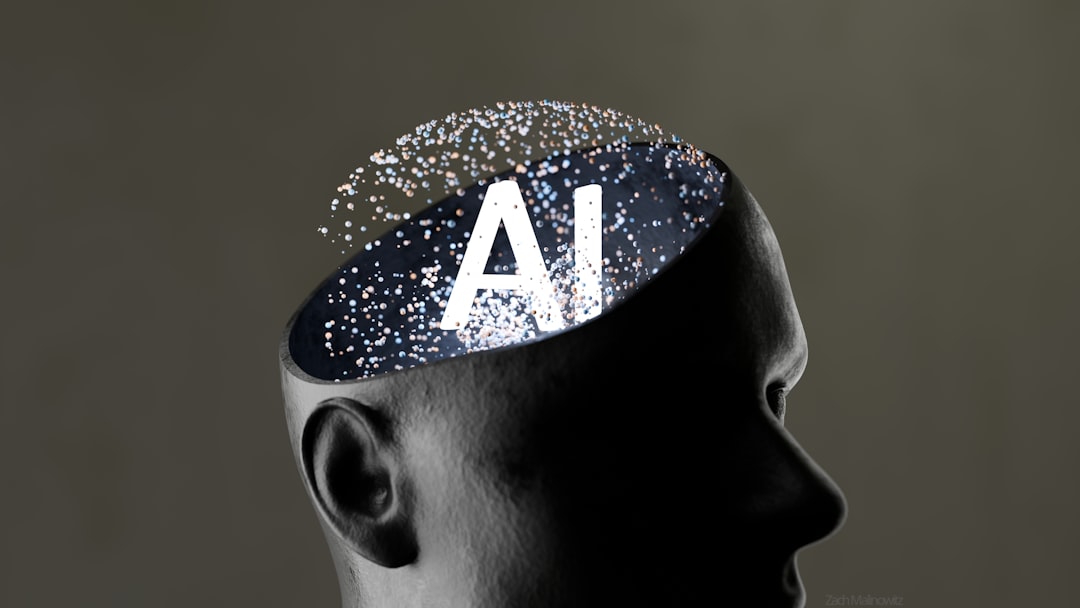
Explore the top AI trends for 2026, from multi-agent orchestration to quantum computing, and how they are shaping the next chapter in technology innovation.
Artificial intelligence (AI) continues to evolve, pushing technological boundaries and redefining possibilities. Looking ahead to 2026, a range of transformative trends stands poised to shape not just the tech sector but also industries like healthcare, manufacturing, and logistics. From multi-agent orchestration to quantum utility, these trends offer a glimpse into a future brimming with potential. Below, we delve into the top eight emerging AI trends for 2026.
Multi-agent orchestration: refined collaboration
2025 saw significant progress with AI agents capable of reasoning, planning, and executing tasks. Yet no single agent excelled at handling all tasks. In 2026, multi-agent orchestration takes center stage, wherein AI agents collaborate to solve complex problems. The framework involves:
- Planner agents: Break down goals into executable steps.
- Worker agents: Specialize in specific tasks such as coding or API integration.
- Critic agents: Review outcomes, flagging issues for iterations and refinements.
These agents operate under a coordinating orchestrator layer, ensuring cross-functional operation and outcome verification. By breaking tasks into smaller, verifiable steps, multi-agent systems will significantly enhance AI efficiency and accuracy across industries.
Digital labor force: autonomous enhancements
The concept of a digital workforce is maturing. AI agents programmed to parse and execute tasks will operate with multimodal inputs spanning text, images, and video. These systems work autonomously or alongside humans using human-in-the-loop AI. Key benefits include:
- Oversight: Human agents supervise AI operations.
- Correction: Systems allow dynamic updates.
- Strategic guidance: Processes ensure that AI remains aligned with predefined objectives.
This fusion offers a force multiplier, amplifying human capabilities and speeding up complex workflows, such as in customer service, logistics, and advanced data analysis.
Physical AI: simulating and acting in 3D space
Most current AI exists in digital environments, generating text or images. Physical AI, however, incorporates AI systems into the physical world, allowing them to perceive and interact with their environment. This innovation leverages world foundation models, which are generative tools trained in simulations to understand motion, gravity, and physical constraints. Practical applications include robotics that can:
- Grasp objects without damaging them.
- Navigate complex physical environments automatically.
- Predict outcomes and take real-world actions with minimal human intervention.
The leap from research labs to commercial production of humanoid robots and other physical AI tools is expected by 2026, paving the way for smarter automation in industries like manufacturing and healthcare.
Verifiable AI: aligning with global standards
With the EU AI Act set to be fully applicable by mid-2026, verifiable AI will take a leading role in ensuring ethical and safe AI deployment. Inspired by GDPR regulation for data privacy, the AI Act emphasizes:
- Auditability: Detailed documentation proving compliance.
- Transparency: Users must know when interacting with AI systems.
- Data lineage: Clear records of training data, including respect for copyright and opt-outs.
This framework isn’t restricted to the EU. It’s likely to influence global markets, ensuring that AI remains trustworthy, accountable, and compliant—particularly when deploying high-risk systems such as healthcare diagnostics or financial models.
Quantum computing utility: redefining problem-solving
Quantum computing, long a distant promise, will make practical strides in 2026. Quantum systems will complement classical computing, aiding in areas like:
- Optimization: Solving logistical challenges faster.
- Simulation: Modeling chemical reactions or meteorological patterns more efficiently.
- Decision-making: Analyzing vast, complex data sets beyond classical capabilities.
With quantum processors (QPUs) integrated into hybrid infrastructure alongside CPUs and GPUs, industries ranging from pharmaceuticals to transportation could see transformative results.
Smarter edge computing: local reasoning unleashed
Edge computing is bypassing centralized data centers, and by 2026, AI will take significant leaps in local reasoning. Small AI models, with just a few billion parameters, will acquire the ability to ‘think’ through problems locally, enabling fast, real-time solutions. Benefits include:
- Privacy: Data remains on the user’s device, safeguarding sensitive information.
- Latency reduction: No need for roundtrip requests to cloud servers.
- Accessibility: Edge reasoning capabilities allow AI deployment on devices with minimal computational power.
Applications will range from wearable technology to IoT devices, embedding smarter, faster decision-making processes directly into everyday technology.
Amorphous hybrid computing: blending AI design and hardware
In 2026, the line between AI topologies and the infrastructure running them will blur. The emerging hybrid computing model will include an integrated architecture where:
- Models combine workflows from transformers and state-space architectures, enabling better adaptability.
- Cloud configurations incorporate CPU, GPU, TPU, QPU, and neuromorphic chips, creating flexible compute environments tailored to diverse workloads.
- Emerging designs automatically optimize compute allocation based on performance needs.
This fluid computing backbone is poised to deliver both efficiency and scalability, setting new operational standards.
Social computing: enabling collective AI intelligence
AI isn’t developing in isolation but within shared spaces connecting humans and machines. Social computing leverages AI’s ability to interact within a fabric of interconnected entities. This involves:
- Intent and context-sharing between human users and AI systems.
- Facilitation of collaboration between AI agents for collective intelligence.
These interconnected systems foster empathetic and responsive technology, capable of jointly solving complex problems, including environmental or societal challenges.
Practical takeaways: what will 2026 look like?
- Multi-agent orchestration will enable specialized, task-oriented teamwork within AI environments, improving the efficiency of complex projects.
- Quantum computing will complement classical systems by solving previously unsolvable problems.
- Physical AI will bring robotics and autonomous systems into real-world settings.
- Verifiable AI is set to become a global benchmark for governance and safety.
- Advances in edge computing and hybrid models will create smarter, faster solutions embedded seamlessly into everyday life.
Conclusion
AI in 2026 will be defined by collaborative systems, practical utility, and greater alignment with ethical and regulatory standards. These trends hold the potential to transform industries and solve challenges previously out of technological reach. As we approach this new era, the implications for businesses, governments, and individuals alike are both profound and exciting.
Staff Writer
Chris covers artificial intelligence, machine learning, and software development trends.
Comments
Loading comments…


