Jensen Huang on NVIDIA's AI Evolution and the Philosophy of Bold Decision Making
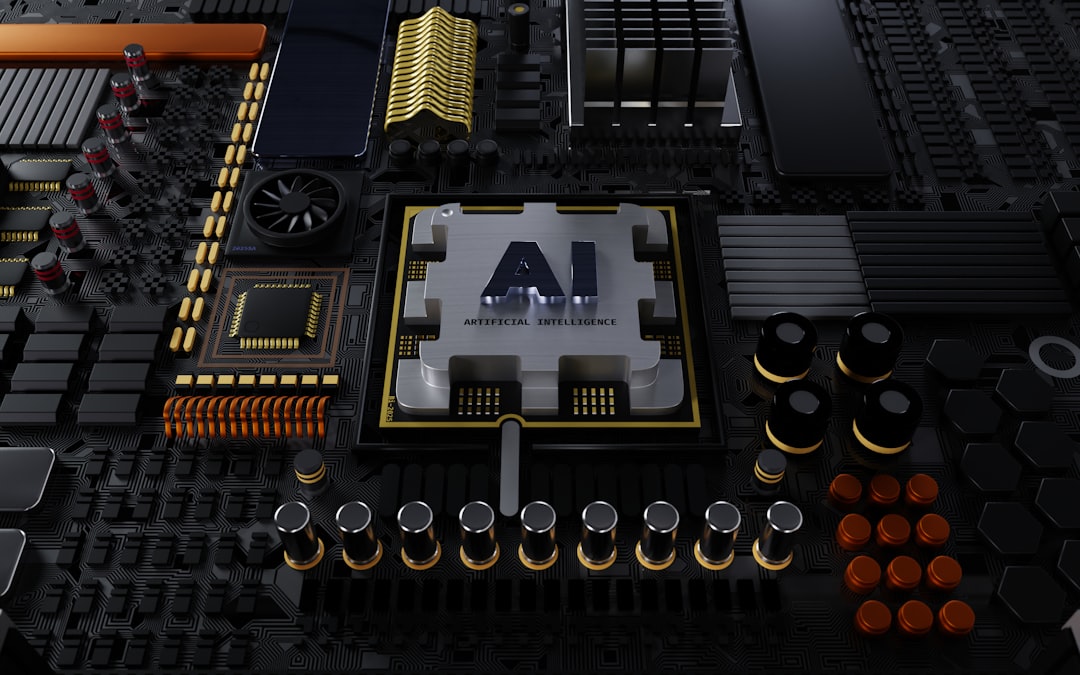
Jensen Huang discusses NVIDIA's evolution from GPUs to AI systems, the importance of co-design, and the bold risks that transformed the company.
NVIDIA, a company worth over $4 trillion and a driving force in artificial intelligence (AI), owes much of its success to the vision and decisions of its CEO, Jensen Huang. Known for his strategic foresight and engineering acumen, Huang has led NVIDIA to expand beyond its origins in graphics processing units (GPUs) for gaming to become an integral player in AI and computing technologies. In his appearance on the Lex Fridman Podcast, Huang detailed NVIDIA’s journey, the philosophy behind its risk-taking, and the groundbreaking concept of extreme co-design.
Extreme Co-Design: A Collaborative Approach to Modern Challenges
Huang describes NVIDIA’s strategic shift from chip-scale design to rack-scale systems. This transformation was driven by the need to solve problems that go beyond the limitations of individual computers. According to Huang, the goal in today’s computing landscape is to achieve performance gains that far outpace linear scaling. For instance, even if you add 10,000 machines, achieving a million-fold improvement requires more than just scaling hardware—it requires reimagining how algorithms, data pipelines, and entire architectures function together.
This is where extreme co-design comes in. At NVIDIA, this means optimizing every layer of the stack, from software to hardware, across components like GPUs, CPUs, high-bandwidth memory, networking, power delivery, and cooling systems. The process involves specialists in disparate fields—such as optics, thermal engineering, and computational algorithms—collaborating intensively. Huang’s leadership philosophy fosters this collaboration by organizing cross-disciplinary meetings where problems are attacked collectively, rather than in siloed one-on-ones.
Overcoming Amdahl’s Law and the Death of Moore’s Law
One of the significant problems NVIDIA tackles with co-design is Amdahl’s Law. This principle underscores that the maximum speedup of a system is limited by the slowest portion of its workload. As NVIDIA scales its systems, Huang emphasizes the importance of distributing algorithms, data, and computing workloads efficiently. Networking, switching, and workload distribution become crucial challenges when developing systems that span thousands of connected devices.
Huang also points to the slowing pace of Moore’s Law and Dennard scaling, traditional frameworks for improving computing power. As these crutches of exponential progression lose steam, NVIDIA relies on innovation in distributed computing and system-wide optimization to redefine the industry’s standards.
CUDA: Transforming GPUs into AI Powerhouses
One of NVIDIA’s boldest and most consequential decisions came with the launch of CUDA, a parallel computing platform. Huang recalled the existential risk the company took by incorporating CUDA into its successful GeForce GPUs. While GeForce was a highly profitable product line aimed at gamers, CUDA was designed for scientific computation and AI applications—a market that was nascent at the time.
Huang explained that the install base of GeForce GPUs was crucial for CUDA’s adoption. By embedding CUDA into every GPU, whether developers used it or not, NVIDIA created a massive foundation for software experimentation. Researchers, scientists, and engineers, many of whom were gamers themselves, discovered and began integrating CUDA into their workflows. Over time, this decision positioned CUDA as an essential tool in AI development.
The cost of this bet was enormous. CUDA increased the production cost of GeForce GPUs by 50%, eroding NVIDIA’s profit margins. The gamble initially shrank the company’s market cap from $8 billion to $1.5 billion. Huang convinced the board and management team to stay the course, believing that the integration of CUDA would ultimately revolutionize computing. Today, CUDA underpins the deep learning infrastructure that powers modern AI.
From GPUs to AI Factories
Huang frames NVIDIA’s evolution as a step-by-step expansion of its computing philosophy. Starting as a specialist in GPUs for gaming, the company broadened its scope by incorporating programmability through pixel shaders and floating-point operations. Each step increased NVIDIA’s reach while maintaining its deep specialization in accelerated computing.
The company now calls itself an “AI factory.” Huang describes NVIDIA’s role as producing the infrastructure that powers AI development, from chips to entire data centers. This shift reflects a broader change in the computing environment and demonstrates NVIDIA’s adaptability. By co-designing systems that anticipate the needs of AI researchers and businesses, the company has become indispensable to industries ranging from healthcare to autonomous vehicles.
Leadership Philosophy: Manifesting the Future
Huang attributes much of NVIDIA’s success to a leadership style that combines curiosity, reasoning, and incremental decision-making. He doesn’t believe in abrupt shifts, such as sweeping reorganizations or rebranding efforts. Instead, he shares evolving ideas with his team consistently, shaping their belief systems over time.
This mindset allowed NVIDIA to make high-risk decisions, such as the development of CUDA, without losing organizational focus. Huang emphasized that important decisions require constant iteration, external validation, and the courage to endure short-term setbacks. "The path to success involves reasoning step by step while staying committed to the end goal," he said.
Practical Takeaways
- Cross-disciplinary collaboration is key: Extreme co-design at NVIDIA integrates expertise across hardware and software disciplines, enabling the creation of highly efficient systems.
- Calculated risks pay off: Embedding CUDA into consumer GPUs risked the company’s financial health but ultimately revolutionized the computing landscape.
- Adaptation requires foresight: NVIDIA’s evolution from GPUs to AI factories demonstrates the importance of identifying and adapting to environmental shifts in technology.
- Leadership through iteration: By iteratively sharing and refining ideas, leaders can align teams around ambitious goals without resorting to drastic upheavals.
Conclusion
NVIDIA’s rise as a leader in AI was not accidental. Under Jensen Huang's leadership, the company embraced bold risks, mastered the nuances of co-design, and continually adapted to a changing landscape. By fostering a culture of innovation and collaboration, Huang has positioned NVIDIA as a cornerstone of modern computing. As AI grows increasingly ubiquitous, NVIDIA’s systems and methodologies will continue to shape the industry.
Staff Writer
Chris covers artificial intelligence, machine learning, and software development trends.
Comments
Loading comments…


