Pompeii victim’s face brought to life by AI after 2,000 years
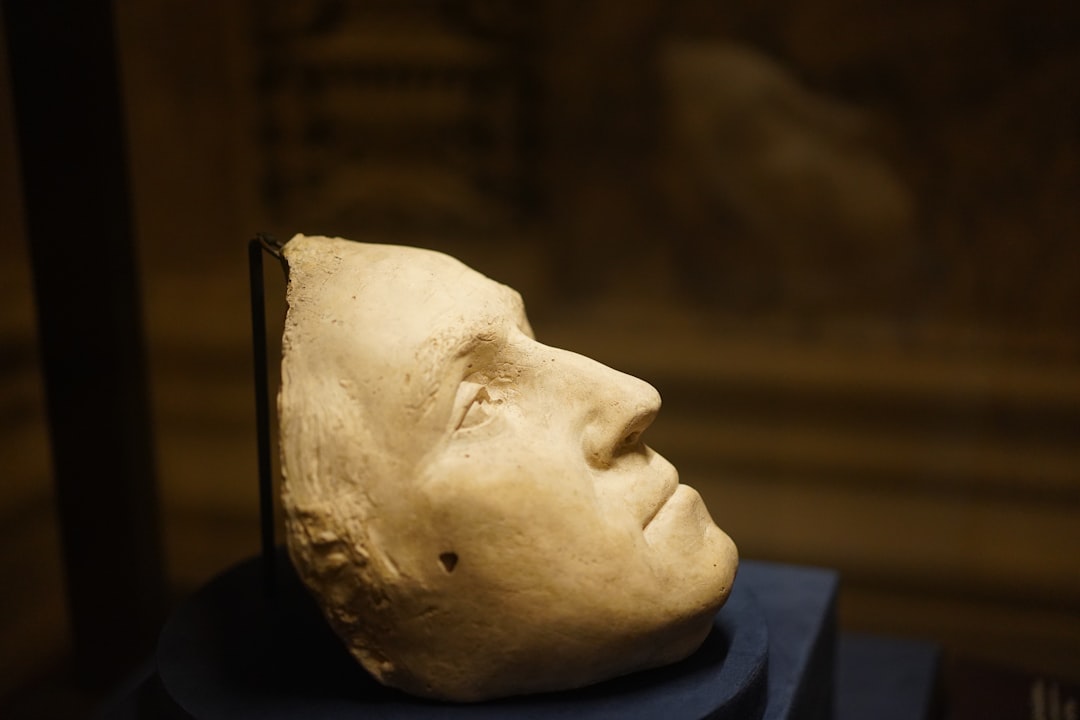
AI reconstructs the face of a man who died in Pompeii’s 79 AD eruption, unveiling history through cutting-edge technology.
In the shadow of Mount Vesuvius, a moment frozen in history has been brought vividly back to life. A man who perished in the infamous eruption of 79 AD has had his face revealed after nearly two millennia, thanks to the meticulous application of artificial intelligence. The eruption of Mount Vesuvius devastated Pompeii, obliterating the city within hours and entombing its residents in ash for centuries. Today, AI offers a rare glimpse into the life—and face—of one of its victims.
The rediscovery of a forgotten life
Archaeological expeditions in Pompeii have uncovered countless remnants of the city's last moments, providing a hauntingly detailed picture of life and death in the Roman Empire. Among these finds was the body of a man discovered near the city gates. He was found with ten bronze coins, evidence of the hurried lives attempting to flee the burning rocks and toxic gases unleashed by Vesuvius. In a poignant detail, the man was holding an object to his head—possibly for protection or as a symbol of some personal significance.
This individual’s remains, like many found in Pompeii, had been encased in volcanic material, which preserved their physical structure remarkably well. Scientists have used these remains to learn about the victim’s life, and now technology has unlocked another layer of identity: his face.
Using AI to reconstruct history
Using advanced AI algorithms, researchers scanned the man’s skull to digitally reconstruct his face. This involved creating a detailed 3D model of the bone structure, which was complemented by AI-based predictions of soft tissue, muscle formation, and other elements necessary for a realistic facial reconstruction. The process combined archaeological findings with modern imaging technology, producing an unexpectedly lifelike visage.
Such reconstructions are not merely for visual interest. They humanize the past, providing a tangible connection between the contemporary viewer and someone who lived thousands of years ago. In this case, the reconstructed face allows us to contemplate the life and personality of an individual who witnessed one of history’s most catastrophic natural disasters.
The broader implications of AI in archaeology
AI is revolutionizing the field of archaeology in profound ways. By interpreting data from historical sites, artificial intelligence is enabling researchers to uncover new details that would take years or decades to analyze manually. In Pompeii alone, AI has already been used to map ruins, analyze artifacts, and even predict which areas may yield the most significant finds.
One of the most exciting aspects of this reconstruction is that it bridges science, art, and history. It gives us the capability to see, with increasing accuracy, what ancient people looked like—an endeavor that is deeply compelling for historians, scientists, and the general public. When paired with DNA analysis and other archaeological methods, AI-powered facial reconstructions could eventually trace familial or regional traits in long-lost civilizations.
Drawing humanity from the ashes
What makes this breakthrough especially poignant is the emotional connection it fosters. Often, the victims of history are reduced to artifacts or datasets, but putting a face to this individual reintroduces the humanity of those who perished. The unnamed man near Pompeii’s gates may have had his own aspirations, struggles, and fears—an entire world unknown to us but now glimpsed through the lens of technology.
Of course, AI is not without its limitations. While the algorithms used here relied on empirical evidence and scientific data, reconstructing a face from a skull still involves a degree of interpretation. Certain features, such as hair color, skin tone, and expressions, cannot be decisively determined. These reconstructions are approximations, albeit increasingly accurate ones.
The promise and ethical complexities of AI-driven history
The use of AI to reconstruct ancient human history raises critical questions beyond technological capability. Whose histories get prioritized? How do we respect the dignity of individuals whose remains are studied? And what responsibilities do scientists have in presenting these reconstructions to the public? As fascinating as such advances are, they require careful ethical considerations to navigate respectfully.
Still, the potential benefits are vast. The ability to reconstruct identities in this way could contribute to a richer understanding of historical migration, cultural exchange, and the shared experiences that unite humanity across millennia. AI tools might even aid in tracing forgotten lineages, providing modern communities with insights into their distant pasts.
The face of the past and the role of the future
Artificial intelligence has brought us face to face with someone from 2,000 years ago—a man who lived, struggled, and perished under the weight of an unforgiving disaster. It is a powerful reminder of both the fragility of human life and the resilience of human storytelling.
As technology continues to evolve, AI promises to reveal even more secrets hidden in the ground, allowing us to not merely learn from history but to see it anew. This face of Pompeii isn't just a scientific achievement; it’s a deeply moving tribute to the lives that came before us.
Staff Writer
Chris covers artificial intelligence, machine learning, and software development trends.
Comments
Loading comments…


