Recursion in coding: breaking down big problems into smaller ones
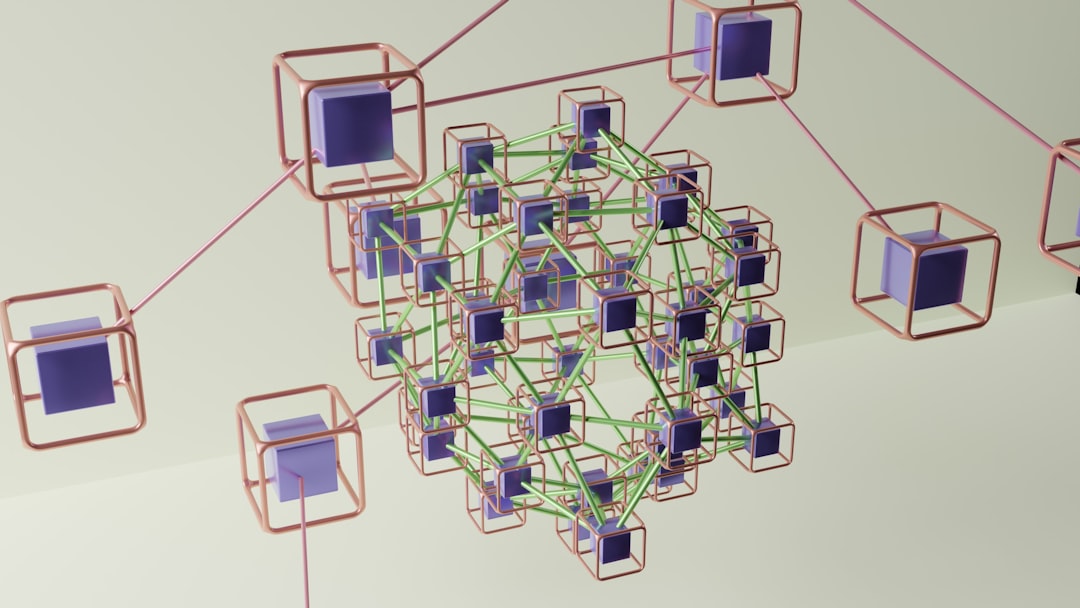
Recursion enables functions to call themselves for solving repetitive logic. Used in JavaScript, factorials are a clear example of how it works.
Recursion is one of those fundamental concepts in programming that introduces both elegance and a touch of complexity. It’s the process in which a function calls itself to solve smaller instances of a problem. While it can seem challenging at first, recursion provides incredible utility for efficiently solving repetitive logic — often with surprisingly concise code. Let’s break down how recursion works and explore it through a practical example in JavaScript.
Recursion explained
The essence of recursion can be captured with a simple analogy: imagine standing between two mirrors. The image you see repeatedly bounces back and forth, getting smaller with each reflection. This is similar to how recursion works in programming. A function performs a task, and as part of that process, it calls itself with a smaller subset of the problem until a stopping condition—a "base case"—is hit.
At its core, recursion involves two essential components:
- The base case: The condition that stops the recursion. Without it, the function would call itself indefinitely, resulting in an infinite loop and eventually crashing the program.
- The recursive step: The logic where the function calls itself, moving closer to the base case.
Understanding recursion with factorial calculation
A classic example of recursion in action is calculating a factorial. In mathematics, the factorial of a number (denoted as n!) is the product of that number and all positive integers below it. For example:
-
The factorial of 3 (3!) is calculated as:
3 * 2 * 1 = 6 -
The factorial of 5 (5!) is calculated as:
5 * 4 * 3 * 2 * 1 = 120
This repetitive pattern makes factorials an excellent candidate for recursion. By leveraging recursion, we can write a reusable function in JavaScript to calculate the factorial of any number.
Here’s how it looks in code:
function factorial(n) {
  // Base case: when n equals 1, stop the recursion
  if (n === 1) {
    return 1;
  }
  // Recursive case: multiply n by the factorial of (n - 1)
  return n * factorial(n - 1);
}
Let’s break this down:
- Recursive case:
return n * factorial(n - 1)calls thefactorialfunction with a value one less than the currentn, gradually simplifying the original problem. - Base case:
if (n === 1)stops the recursion whennis 1, with the function returning 1 as the final result of this branch.
How the recursive function works
If we wanted to calculate factorial(3), here is the step-by-step process:
factorial(3)calls3 * factorial(2).factorial(2)calls2 * factorial(1).factorial(1)hits the base case and returns1.- The results begin unwinding:
- From
factorial(1), we return1. factorial(2)then calculates2 * 1 = 2and returns it.factorial(3)calculates3 * 2 = 6and returns the final result,6.
- From
Why is recursion important?
Recursion is particularly useful for problems that exhibit repetitive logic or have hierarchical structures. Common examples include:
- Mathematical calculations: Factorials, Fibonacci sequences, etc.
- Tree traversal: Navigating hierarchical data structures like JSON or DOM trees.
- Divide-and-conquer algorithms: Techniques like quicksort and mergesort rely heavily on recursion to break large problems into smaller, solvable chunks.
Understanding the risks: infinite recursion
While recursion can simplify code significantly, it comes with one major caveat: ensuring there is a proper base case. If the base case is missing or incorrect, the function will continue to call itself indefinitely, eventually causing a stack overflow error. This is why designing a failsafe base case is critical when implementing recursion.
Iteration vs recursion
It’s worth noting that any task achievable through recursion can, in theory, also be solved using loops (iteration). For instance, calculating the factorial can also be done with a for loop:
function factorialIterative(n) {
  let result = 1;
  for (let i = 1; i <= n; i++) {
    result *= i;
  }
  return result;
}
So, why choose recursion? While iterative methods provide direct solutions, recursion is often cleaner and more aligned with the way certain problems are structured conceptually. Its advantage lies in simplicity and maintainability, particularly for tasks involving nested or repetitive sequences.
Final thoughts
Recursion is a powerful tool in every programmer’s toolkit, offering a way to solve complex problems by breaking them down into smaller, manageable pieces. While learning to use recursion effectively can take time, the payoff is well worth it. By mastering concepts like the base case and recursive logic, you’ll gain the ability to write clear, efficient code for a variety of real-world challenges.
If you’re new to recursion, practice with examples like calculating factorials or traversing simple trees. Over time, recognizing when and how to use recursion will become an intuitive part of writing great code.
Staff Writer
Chris covers artificial intelligence, machine learning, and software development trends.
Comments
Loading comments…


