The Role of AI in Running the Kill Chain in Modern Warfare
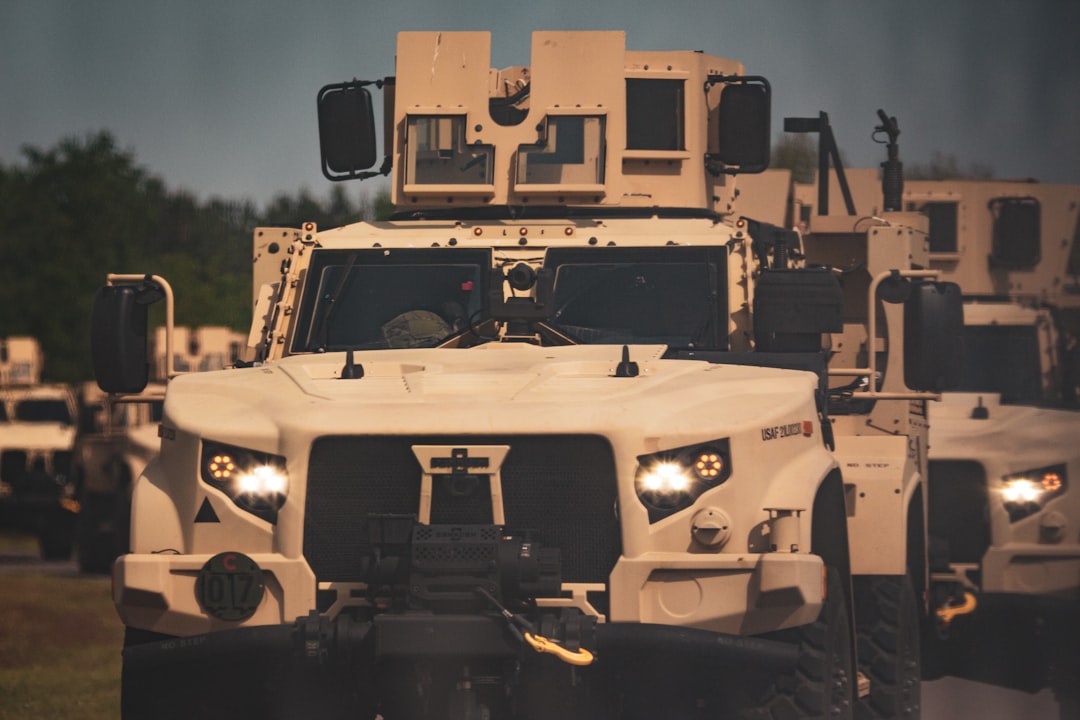
Discover how AI is revolutionizing the military’s kill chain, from finding and tracking targets to collateral damage assessment and decision-making.
Warfare has undergone a technological revolution driven by artificial intelligence, especially in how military targets are identified, pursued, and neutralized. A term central to this process is the "kill chain," a military concept now heavily enhanced by AI. The United States’ recent operations in Iran provide a haunting and intricate example of how this technology operates—and raises difficult questions about the consequences.
Understanding the Kill Chain: From Intelligence to Action
The kill chain encompasses every stage involved in identifying, targeting, and assessing military targets. Its components are often summarized as F2T2EA: find, fix, track, target, engage, and assess. As explained by military insiders, AI now accelerates every step of this process, reshaping how warfare is conducted.
Step 1: Finding the Target
The first stage of the kill chain involves intelligence collection. Three major types of intelligence come into play:
- Human Intelligence (HUMINT): Information from individuals on the ground, often informants or assets.
- Imagery Intelligence (IMINT): Data collected from drones and satellites for visual scanning of potential targets. For instance, MQ-9 Reaper drones have been a staple tool over Iran, though some have been lost in action.
- Signals Intelligence (SIGINT): This involves intercepting phone calls, radio traffic, and electronic communications. Aircraft like the RC-135 reconnaissance planes have played key roles in intercepting these signals.
AI assists in aggregating these vast streams of intelligence and automates detection, classification, and labeling of military assets. Whereas human analysts previously struggled to process this complex data quickly, modern AI platforms can cross-reference and synthesize it in seconds.
Step 2: Fixing the Target’s Exact Location
Fixing involves pinpointing a precise GPS coordinate for the identified target. By processing layers of data, AI compresses what once took hours into mere moments. This high accuracy is critical, especially for guiding precision-guided munitions.
Step 3: Tracking Mobile Targets
Once a target is fixed, it needs to be monitored, particularly if it is mobile. Stationary targets, such as missile batteries or bunkers, are relatively simple to manage. However, mobile command centers or vehicles transporting high-value targets add complexity.
AI enhances this process by offering predictive capabilities. For example, it can forecast the next likely location of a moving target based on historical and real-time data patterns. These tools are especially helpful in tracking time-sensitive targets (TST), such as senior military commanders.
Step 4: Targeting and Moral Considerations
Here, the moral weight of responsibility becomes particularly evident. This stage includes the estimation of collateral damage. AI generates models to predict blast radii, identifies potential casualties, and flags nearby civilian structures, such as schools and hospitals. For example, British forces routinely use AI to calculate collateral damage estimates (CDEs) before approving a strike.
However, even advanced systems are not immune to errors. The school tragedy in Iran’s Minab Province highlighted the consequences of faulty or outdated data. Poorly conducted assessment processes may overlook crucial details, such as the recent presence of civilians, leading to catastrophic outcomes.
Step 5: Engaging the Target
Upon approval, the strike is executed. At this stage, speed plays a critical role. Platforms such as Palantir’s Maven system, which integrates AI tools like the Anthropic Claude AI, streamline this process by automating the selection and execution of courses of action. Decision-makers can shift from spreadsheets and multiple systems to a single cohesive platform for precision operations.
Step 6: Assessing the Strike’s Effectiveness
The final step in the kill chain is bomb damage assessment (BDA). As munitions impact, electro-optical cameras and infrared systems capture real-time footage of the strikes. AI systems analyze these videos to determine whether the mission hit its target, assess collateral effects, and recommend follow-up actions if the desired outcome was not achieved.
The Role of AI in Modern Warfare
The discussion of AI in warfare often focuses on its ability to process immense amounts of data. Military insiders report that unstructured data—collected from thousands of hours of drone footage, satellite imagery, and communications intercepts—would overwhelm human analysts. AI remedies this bottleneck, not just by processing data, but by integrating decision-making capabilities.
Project Maven and Claude AI
Programs like Maven, spearheaded by systems such as Anthropic’s Claude AI, automate much of the targeting process. From analyzing images to generating real-time options for action, these algorithms ensure military decision-makers can act faster than ever before.
However, the limitations of these systems became evident when the Pentagon attempted to phase out Claude AI. Without a suitable replacement, the speed and efficiency of the kill chain would be compromised. This reliance highlights the ethical and logistical challenges posed by AI in warfare.
Ethical Dilemmas and Human Oversight
Although AI accelerates the kill chain, human oversight remains pivotal. Experts argue that AI should act as an assistant to minimize human error, but the capacity for errors still exists. Misidentified data or overlooked information can escalate into devastating civilian casualties.
For instance, the Minab school tragedy resulted from outdated coordinates. AI may, in theory, flag such discrepancies—if properly programmed. This incident underscores the importance of maintaining up-to-date databases and adhering to protocols, such as NATO’s 90-day rule for imagery validity.
Practical Takeaways
- Speed and Efficiency: AI accelerates the kill chain dramatically, particularly in data collection and analysis.
- Vulnerabilities: Errors in collateral damage assessments remain a pressing concern, as illustrated by real-world accidents.
- Human Oversight: Despite its advantages, AI must operate within strict ethical and procedural boundaries. Human operators remain irreplaceable for validating and contextualizing its recommendations.
- Dependence Risks: The U.S. military's reliance on platforms like Maven suggests a lack of contingency planning for failures or system replacements.
Conclusion
Artificial intelligence is redefining how military operations unfold, particularly in the kill chain. By drastically reducing the time needed to process intelligence and make critical decisions, AI empowers faster and more precise action. However, the risks from outdated data or insufficient oversight remind us that even the most advanced tools are fallible. Striking the right balance between automation and human control will remain essential as militaries increasingly integrate AI into their operations.
Staff Writer
Chris covers artificial intelligence, machine learning, and software development trends.
Comments
Loading comments…


