BYD Unveils a Game-Changing 1,500 kW EV Charger, Three Times Faster Than Tesla's Best
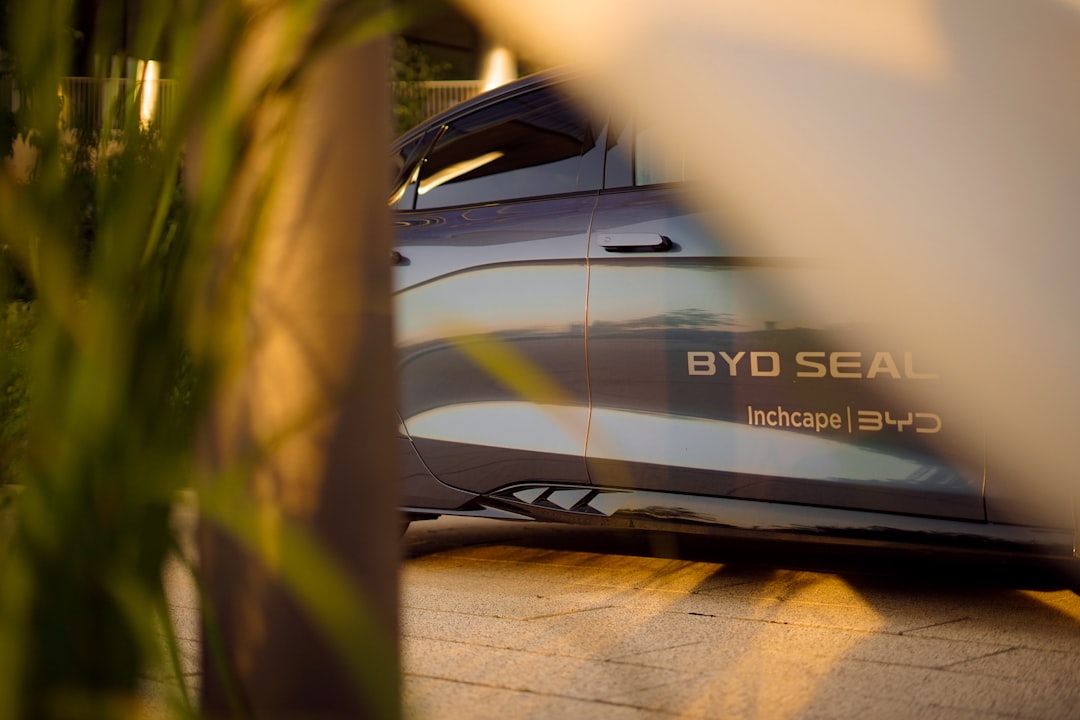
BYD's new Flash Charging system delivers up to 1,500 kW, charging EVs to 97% in just 9 minutes — a massive leap for electric vehicle technology.
Charging an electric vehicle (EV) is about to become dramatically faster, thanks to BYD's groundbreaking Flash Charging system. Revealed in Beijing, this 1,500 kW charging station represents a significant leap in EV technology, delivering speeds up to three times faster than Tesla’s fastest chargers and over four times the capability of what’s widely available in the U.S. today. With the promise of adding significant range to an EV in mere minutes, BYD’s innovation could revolutionize EV usage by removing many of the frustrations associated with current charging standards.
A New Era of Charging Speeds
At the heart of BYD’s charging breakthrough is its second-generation Blade Battery, a re-engineered design tailored to overcome the sluggish charging and safety concerns that plague conventional EV batteries. According to BYD, the Flash Charging system can replenish a vehicle's battery from 10% to 70% in just 5 minutes and reach 97% in a jaw-dropping 9 minutes. To put this into perspective, Tesla’s peak-charging Cybertruck Supercharger delivers around 500 kW, which takes roughly 20-30 minutes to charge from 10% to 80% — a respectable speed that feels sluggish compared to BYD’s innovation.
Imagine this: your EV’s battery drops to 20% on a long road trip. You pull in at a BYD Flash Charger for a quick recharge. By the time you finish your coffee, your car is nearly topped off with up to 300 miles of range added. This could soon become the new normal.
How It Works: BYD's Second-Gen Blade Battery
Unlike other ultra-fast chargers that depend purely on external advancements, BYD has gone a step further by redesigning the battery itself. The second-generation Blade Battery is optimized for charging performance in extreme conditions.
-
Cold Weather Performance: Charging an EV in freezing temperatures has historically been a major challenge, as battery efficiency plummets in the cold. BYD claims their battery can charge from 10% to 97% even at temperatures as low as -30°F, completing this task in just 12 minutes.
-
Enhanced Safety: Safety remains at the forefront of battery design, and BYD hasn’t cut corners. The Blade Battery reportedly passes simultaneous nail penetration and charging safety tests, which are designed to simulate real-world stress scenarios that could lead to thermal runaway in less advanced batteries.
Design Innovations in the Flash Charging System
The Flash Charging system complements the Blade Battery’s advancements with a user-friendly physical design. Unlike traditional chargers that require unwieldy cables lying on the ground, BYD’s stations feature an overhead charging cord mounted on a rail. This allows convenient access from either side of the vehicle, with lightweight handling and straightforward plug functionality. The connector itself supports dual inputs for fast and regular charging, ensuring compatibility across different EV models.
How BYD Compares to the Competition
While existing ultra-fast chargers in the U.S. tend to max out at 350 kW, BYD’s 1,500 kW charger is a clear technological leap. The only comparable option in the market, Tesla’s 500 kW peak charger, offers a fraction of BYD's charging power. The difference in efficiency is stark: BYD’s system is capable of charging three times faster than Tesla's best offering at present.
These advancements make the case for EVs as a practical alternative to traditional gasoline vehicles, not just in terms of cost savings but also convenience. When a quick stop for coffee replaces the hours-long ordeal of a typical road trip charge, the calculus for owning and using an EV fundamentally changes.
Real-World Applications and Rollout Plans
This isn’t a futuristic prototype or a lab-constrained concept. BYD’s Flash Charging system is already operational in its Beijing center, where real users are tapping into this next-gen power. The company plans to roll out 20,000 such charging stations globally by the end of 2026, signaling a rapid push to scale its technology outside of China. If implemented successfully, the Flash Charging network could eliminate ‘range anxiety’ — a key deterrent for potential EV buyers — on a global scale.
Limitations and Wider Industry Context
Despite its impressive features, the wide-scale adoption of BYD's charging system depends on several factors. First, the infrastructure for transmitting such enormous power levels remains limited in many regions. A 1,500 kW charger requires robust power grid support, which might not be viable in areas with aging or underpowered infrastructure.
Second, BYD’s strategy to expand globally could face competitive and regulatory hurdles. Tesla, for instance, continues to dominate Western markets with its Supercharger network. Matching this scale and persuading users to switch to a BYD charging ecosystem will likely take time.
Lastly, the cost of deploying such advanced chargers could be significant. While BYD has not disclosed specific pricing models for charging sessions, the economics of this technology will play a crucial role in its long-term adoption.
Why It Matters
BYD's Flash Charging system isn’t just about speed — it’s about redefining the convenience and practicality of EV usage. By bridging the gap between EVs and gasoline-powered vehicles in terms of charge time, the company is pushing electric transportation closer to mainstream adoption. With plans to globalize this technology, the competition between EV players is poised to heat up, compelling others like Tesla and automakers such as Hyundai and Ford to innovate further.
As BYD works to expand its charging network, the implications are wide-reaching. If successful, the 1,500 kW charger could mark the beginning of the end for long wait times at charging stations. For the drivers of the future, it may be possible to charge faster than it takes to order and drink a coffee.
Staff Writer
Nina writes about new car models, EV infrastructure, and transportation policy.
Comments
Loading comments…


