Elon Musk Announces Texas-Based Tesla and SpaceX Chip Project
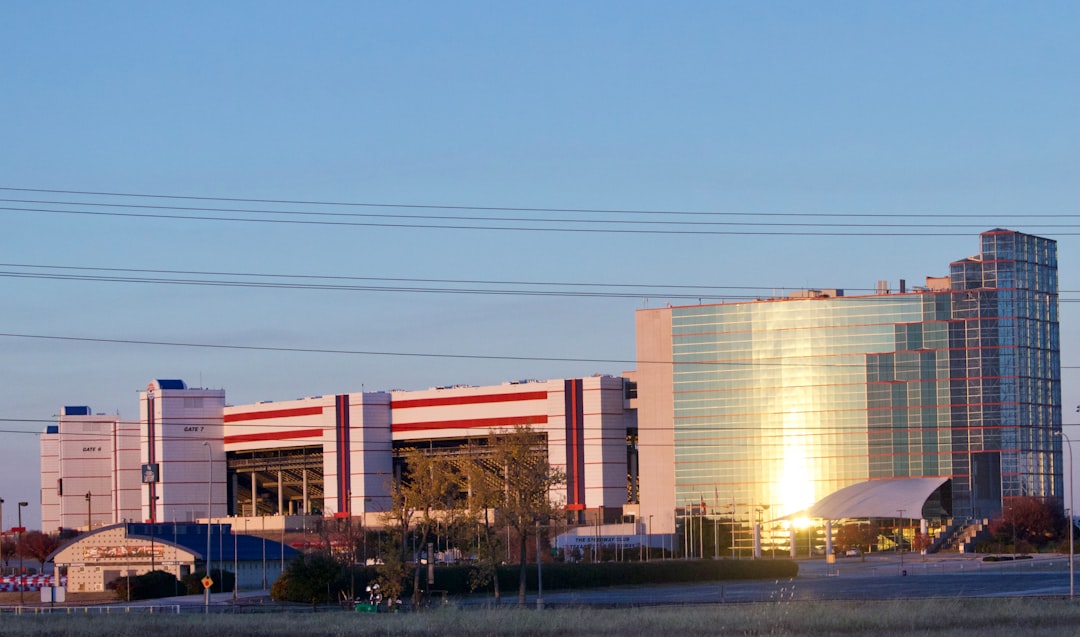
Elon Musk reveals plans for a groundbreaking chip facility in Texas to support SpaceX's orbital data centers and Tesla's technological ecosystem.
Elon Musk has taken another daring step in innovation, announcing a new chip manufacturing facility in Texas. The project aims to combine multiple technological processes under one roof, an approach not yet attempted in the semiconductor industry. This facility will support ambitious objectives, including the production of chips for SpaceX's orbital data centers and their proposed satellite networks, as well as Tesla's sprawling tech ecosystem.
An Integrated Approach to Chip Manufacturing
Unlike current chip production that's segmented across specialists focusing on GPUs, CPUs, memory, and packaging, Musk’s new facility aspires to consolidate all these processes. Industry experts have labeled this approach unprecedented due to the drastically different raw materials and technical demands of each component. The scale is equally ambitious: the facility plans to start producing 100,000 wafers per month—on par with leading global manufacturers—and ultimately scale up to an unparalleled 1,000,000 wafers monthly. To put this in context, this is about 70% of TSMC’s total global output.
However, funding remains an open question. Musk admitted during the announcement that the project will require substantial investment, though specific financing strategies have not yet been disclosed.
The Orbital Data Center Vision
At the heart of this effort is SpaceX’s plan to create an orbital data center powered by solar energy. This initiative aligns closely with efforts to enable a future IPO for SpaceX. The data centers will rely on next-generation GPUs developed at the Texas facility, designed to function efficiently in space. These satellites will incorporate large solar panels to generate the energy required to run computations.
One standout announcement was that SpaceX has filed with the Federal Communications Commission (FCC) for the deployment of up to one million such data center satellites. The satellites are expected to generate and utilize up to 100 kilowatts per unit, supported by nearly continuous solar power in their orbits. Musk envisions this as a cost-effective solution, benefiting from the lack of spatial constraints and the availability of nearly round-the-clock solar energy in certain orbital paths.
Space vs. Earth: Energy Efficiency Considerations
Musk stressed the advantages of space over Earth-based alternatives for housing data centers. On Earth, limitations in land and energy compound costs and operational challenges, especially for growing data requirements. By contrast, the orbital strategy provides abundant room for satellite deployment. Crucially, harnessing solar power in space, where sunlight is available nearly continuously, can generate long-lasting, consistent energy.
While the benefits of scalability and efficiency are apparent, skepticism remains. No direct cost comparison between terrestrial and orbital data centers has been presented to validate claims of cost-effectiveness. So far, Musk's vision is compelling on the surface but leaves room for scrutiny when it comes to feasibility.
Potential IPO and Growth Plans for SpaceX
An essential backdrop to this new venture is SpaceX’s growth trajectory. Analysts predict that SpaceX may need to go public to finance the project's extensive costs. Musk has hinted at a potential SpaceX IPO later this year, though no concrete timeline has been confirmed. If successful, such an IPO could provide the necessary capital to scale both the chip manufacturing facility and the satellite network.
The orbital data center project represents a natural next step in expanding SpaceX’s capabilities and pushing the boundaries of tech innovation. Executing this vision, however, will require overcoming technical, financial, and logistical hurdles.
Key Practical Takeaways
- Integrated chip production: The Texas facility will produce GPUs, CPUs, memory, and packaging, breaking with the industry’s segmented approach.
- Massive production scale: Initial monthly wafer production will hit 100,000, with a target of 1,000,000—a scale unmatched in the current chip industry.
- Orbital advantages: SpaceX satellites aim to leverage 24/7 solar energy and eliminate spatial constraints inherent to Earth-based data centers.
- High-cost project: Funding remains unresolved; a potential SpaceX IPO could address financing needs.
- Skepticism persists: Experts are questioning cost-effectiveness and execution feasibility without detailed supporting data.
Future Outlook
Elon Musk’s announcement underscores his penchant for ambitious, boundary-pushing projects. If successful, the Texas facility could redefine semiconductor manufacturing while SpaceX’s orbital data centers might become a game-changer for data infrastructure. However, significant financial and technical questions must still be addressed.
This innovative convergence of Tesla and SpaceX technologies could pave the way for new applications and an interconnected ecosystem of satellites and electric vehicles. Until funding, timelines, and feasibility receive more clarity, the industry remains cautiously curious about Musk’s Texas chip endeavor.
Staff Writer
Mike covers electric vehicles, autonomous driving, and the automotive industry.
Comments
Loading comments…


