Oil shock could backfire on fossil fuel-loving Trump, ignite green future
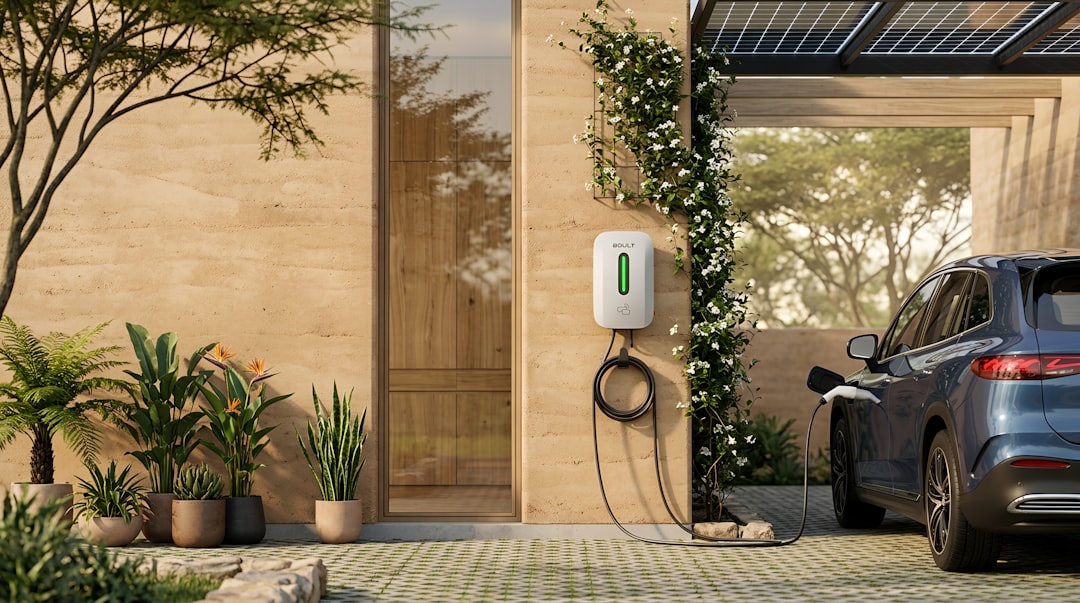
Trump's war on Iran has sent gas prices soaring, but this time there's a ready alternative. EVs and solar are now viable, and the rest of the world is racing ahead.
Two months into Donald Trump's military campaign against Iran, the war is already as unpopular as the Iraq War was at its six-year mark, according to a Washington Post/ABC News/Ipsos poll. 61% of Americans now say using force against Iran was a mistake. And at the pump, they feel it: the average national price of unleaded gas hit $4.39 a gallon today, the biggest one-day jump since a temporary ceasefire began. Regular gas has risen nearly 50% since the start of hostilities.
Trump promised during his campaign that he would cut energy bills in half. Instead, his war has handed oil companies a windfall. Exxon Mobil and Chevron each reported stronger-than-expected quarterly earnings this morning. The president himself posted two weeks into the war: "The United States is the largest oil producer in the world by far, so when oil prices go up, we make a lot of money." That "we" does a lot of work. The oil companies are getting rich — but most Americans are paying the price.
This is an oil shock, like the 1970s energy crisis, but with one critical difference. For the first time, a price-competitive, ready-to-go alternative to fossil fuels exists. Electric vehicles, solar panels, and battery storage have matured to the point where individuals and countries can pivot away from oil. And while Trump is actively undermining clean energy — his administration has paid energy companies hundreds of millions of dollars to stop building wind farms, ended the federal EV tax credit, and rolled back pollution rules — the rest of the world is barreling in the opposite direction.
The numbers don't lie: EVs are taking over globally
Charts showing new car sales by powertrain tell a stark story. In Norway, 98% of all new cars bought are electric. In France, battery-electric vehicles accounted for all of the growth in the new car market in March; without them, sales would have declined. China's transition is accelerating so fast that the red wedge of gasoline cars is shrinking year over year. Germany, the United Kingdom, and much of Asia have reached a tipping point where more people are buying electric cars than gas-powered ones.
The United States is the outlier. EV sales dropped last quarter after Congress, under Trump, scrapped the $7,500 tax credit. But that may not last. The cars getting good overseas are about to land on American shores.
Chinese EVs are shockingly good — and fast-charging
Ford CEO Jim Farley recently admitted that his eyes were opened at a car show in China. "Their cars went from clearly behind us to ahead of us," he said. "Designs were beautiful. They were electric cars." He noted that Chinese automaker Nio had battery-swapping capabilities — pull in, swap packs in minutes.
Then there's BYD. The company started as a cellphone battery manufacturer, then became a carmaker. Its latest vehicles are projected to be cheaper to buy and much cheaper to own than gasoline cars, even in the U.S. And charging speed is no longer a bottleneck. In a recent test, the Yangwang U8L went from 10% to 97% charge in 9 minutes and 7 seconds. Another model hit 60% in about 5 minutes. One reviewer said, "It's faster than fueling my diesel truck." BYD's megawatt charging is real, and it changes the calculus for anyone worried about range anxiety.
Solar is eating the world
Meanwhile, solar installations continue to climb in the U.S. despite the Trump administration's hostility. Globally, the trend is even more dramatic. Pakistan has added enormous amounts of rooftop solar to its grid. Sub-Saharan Africa is leapfrogging centralized power. China is manufacturing panels at scale, driving costs down everywhere.
A viral video shows a man charging his Rivian pickup truck entirely from DIY solar panels in his backyard — no permits, no grid connection. He bought the equipment, set up the inverter, and now gets 70% charge for daily driving, 100% free. That exists right now, off the shelf. It's a glimpse of a future that is already available.
The geopolitical logic of renewables
The lesson from this oil shock, as New York Times contributing writer Robinson Meyer pointed out on Chris Hayes's show, is that countries dependent on imported oil face a strategic vulnerability. The Strait of Hormuz is a single chokepoint controlled by a small number of governments. Every day the war continues, oil stays high, punishing poor countries especially hard. Fatih Birol, head of the International Energy Agency, has said the oil industry will never be the same after this.
China, when designing its energy policy, asked: what if we lose access to seaborne fossil fuels? It went all-in on EVs, solar, wind, and even coal it could mine domestically. It built an energy system that doesn't travel by sea. Many more countries — in Southeast Asia, Africa, Europe — lack domestic oil reserves. For them, the rational choice is to electrify as fast as possible.
Trump's contradictory promises
Trump made two promises: one to voters, one to oil executives. To voters, he said gas would get cheap. To oil executives at a Mar-a-Lago dinner, he said, "Give me a billion dollars because I'm going to make you so much money." Both can't be true. Now we see which one was real. Energy is more expensive than it has been in years, the oil industry has gotten everything it wanted — no pollution rules on existing infrastructure, no limits on carbon from cars and trucks — and Americans are paying more.
His war has also handed the rest of the world an incentive to accelerate the transition. Every day of high oil prices makes solar panels and EVs look better. The technology is ready. The question is whether the U.S. will lead or be dragged along.
What comes next
The U.S. is not yet at a tipping point for EVs, but that could change quickly. Cheap Chinese EVs, fast charging, and falling solar costs will eventually overcome policy headwinds. The federal government can delay, but it cannot stop the price signal. When gas stays above $4, people start looking for alternatives. Some will buy a plug-in hybrid. Some will install solar. Some will trade in their SUV for a BYD.
The oil shock Trump created may end up being the thing that finally breaks America's addiction to oil. The irony is thick: a president who promised to revive fossil fuels may inadvertently ignite the green future he tried to kill.
Robinson Meyer summed it up: "I think the lesson of this whole episode for me is, there are far more countries in the world like China that do not have domestic oil supplies than there are countries like us. And going forward, more and more countries are going to electrify." The fossil fuel industry may never recover. And that might be the one good thing to come out of a reckless war.
The road ahead
None of this means the pain of high gas prices is acceptable. It hurts low-income families the most. But it also creates a window for change. The 1970s oil shocks led to fuel economy standards and the strategic petroleum reserve. This time, the alternatives are already on the shelf. The only thing missing is the political will to embrace them.
Donald Trump's fossil fuel fantasy is running on borrowed time. The rest of the world has already moved on. The question is how many more oil shocks it will take before the United States catches up.
Staff Writer
Nina writes about new car models, EV infrastructure, and transportation policy.
Comments
Loading comments…


