Polestar 4 kills the rear window: Camera mirror and the aerodynamic future
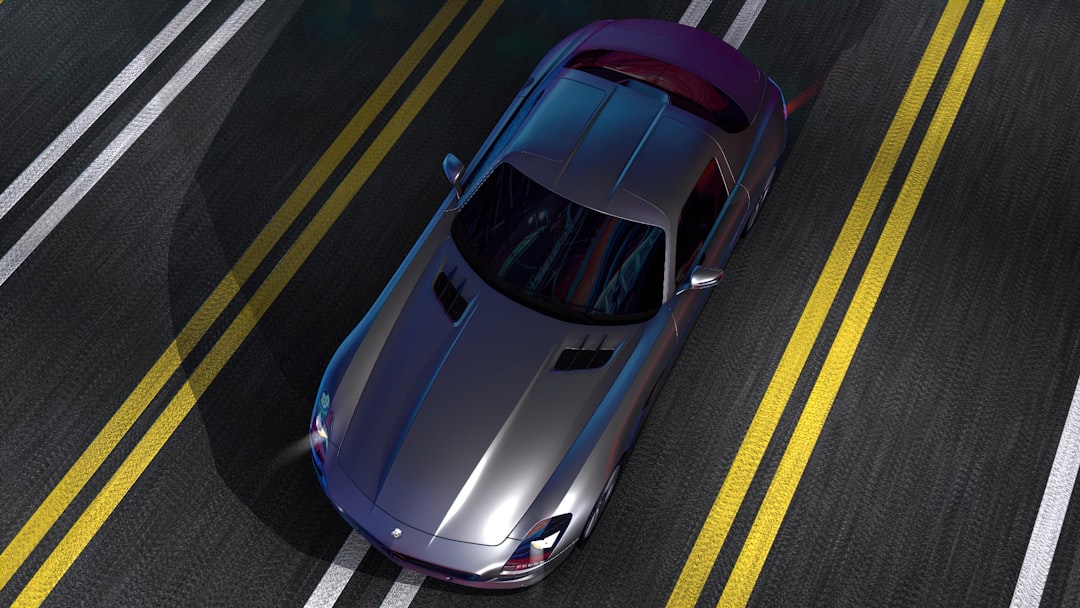
Polestar's new SUV coupe ditches the rear glass entirely, replacing the rearview mirror with a live camera feed. Here is why that matters and what it means for the next generation of car design.
The rear window is one of those car parts you never think about until it is gone. Polestar just took it away. The Swedish electric-vehicle brand, spun off from Volvo, has started delivering the Polestar 4, a coupe-shaped SUV that has no glass in the back. None. Where the rear window would normally sit, there is a solid panel. And the interior rearview mirror? It is a screen, fed by a roof-mounted camera pointed backward.
That is a bold move for a mass-produced car. Every modern vehicle has a rear window, even fastback coupes with notoriously poor visibility. Polestar is betting that a camera delivers a better view than a pane of glass ever could, while freeing up designers to reshape the car for better aerodynamics and more interior space.
What Polestar actually did
According to a recent discussion of the Polestar 4, the company designed the car with a completely closed-off rear end. The traditional rearview mirror is replaced by a high-resolution display that shows a live feed from a camera mounted near the roof line. The driver looks at the same physical position as a conventional mirror, but the image comes from a lens rather than from light bouncing off the rear glass.
The move eliminates the rear window entirely. There is no glass panel between the rear seats and the trunk. The entire tail of the car is a smooth, unbroken surface.
This is not the first time a car has used a camera system for rear visibility. Several automakers offer digital rearview mirrors as an option on trucks and SUVs, including General Motors and Nissan. In those applications, the camera is a supplement to the window. The driver can flip the mirror between a traditional reflection and the camera view. Polestar is removing the option. If you buy a Polestar 4, you have to rely on the camera. There is no rear window to fall back on.
Why kill the rear window?
Aerodynamics is the headline reason. Electric cars have an obsession with drag coefficient. A lower drag number means less energy wasted pushing through air, which translates directly to longer range. The Polestar 4's closed rear end allows the roofline to taper smoothly all the way to the tail, without the abrupt break and turbulence caused by a window recess. The result is a cleaner airflow path that helps the car slice through the air more efficiently.
The source material describes the design goal as making the rear "aerodynamically completely sealed, forming a straight line." That is an engineer's way of saying that surfaces that should be smooth are smooth, and nothing sticks out to create drag. The camera housing is small and integrated, far less disruptive than a glass panel with its edges and seals.
But aerodynamics is only half the story. Removing the rear window also gives designers more freedom with the cabin. Without a window frame dictating the shape of the back of the roof, the rear seats can be pushed farther back. The headliner can be sculpted differently. The D-pillars can be thicker without blocking the driver's view. The source notes that this creates "much freer designs" because the head restraint area no longer needs to avoid blocking the rearward view through the window. The camera becomes the single point of visibility, so the interior can be arranged however the designer wants.
What you gain and what you lose
For the driver, the camera mirror offers some objective advantages over glass. The field of view can be wider. The camera in the Polestar 4 is mounted on the roof, above the rear seat head restraints, so it sees past any tall cargo or passengers. In a normal car, a trunk full of luggage blocks the rear window. In the Polestar 4, the view is unobstructed as long as the camera lens is clean. The image can also be adjusted for brightness at night, and it does not get blinded by headlights from the vehicle behind you in the same way a mirror does.
There are downsides, and they are not trivial. A camera and screen introduce latency. The image is never quite as immediate as a reflection. In low light or bad weather, the camera can struggle. Raindrops, snow, or mud on the lens can completely obliterate the view. The Polestar 4 likely has a water-repellent coating and a cleaning function, but a pane of glass can be wiped by the rear wiper. A camera lens is more vulnerable. If the camera fails entirely, the driver has no way to see directly behind the car. The system will need to be redundant or fail-safe, but the lack of a physical backup is a concern.
There is also the human factor. Many drivers simply prefer a mirror. They are used to turning their head and seeing the road behind them. A screen, even a high-resolution one, feels different. The depth perception is slightly off because the camera is not at the same position as the driver's eyes. The image is flat. For some people, that is disorienting. Over time, the brain may adapt, but the first few drives in a Polestar 4 will be a learning curve.
The bigger trend: digital mirrors everywhere
Polestar is not alone in pushing digital vision systems. Regulations in Europe and North America have recently been updated to allow camera-based side mirrors to replace traditional glass mirrors. Audi, Honda, and others already offer optional camera side mirrors on some models. The Polestar 4 takes the logical next step by digitalizing the rearview mirror as well.
The shift is driven by the same aerodynamic imperative. Side mirrors account for a measurable percentage of a car's drag. Replacing them with tiny cameras cuts that number. A rear window also creates drag because of the wake behind the car. Sealing it up improves the flow. For an electric car fighting for every mile of range, every percentage point of drag reduction matters.
The source material raises the question: if this design catches on, will future cars become completely dependent on cameras? The answer is probably yes, at least for some segments. High-end EVs are already pushing toward full camera coverage for autonomous driving features. The Polestar 4 has a rear camera for the mirror, plus the standard reversing camera and surround-view cameras. As sensor suites become more reliable and redundant, the need for glass becomes purely aesthetic.
What it means for buyers
Polestar has not released official range figures specifically tied to the rear-window deletion, but the overall drag coefficient of the Polestar 4 is among the lowest in its class. The car is built on the same platform as the Volvo EX90 and Polestar 3, but its sleeker shape likely gives it an edge in efficiency.
For someone considering a Polestar 4, the no-window design is not a gimmick. It is a fundamental part of the car's engineering. The decision to buy one involves accepting that the rearview mirror is now a screen, and that the backup visual is software-dependent. Drivers who frequently drive in heavy rain or snow, or who simply prefer the immediacy of a mirror, may want to wait for reviews that test the camera system in real-world conditions.
But the direction is clear. The rear window has been a staple of car design for over a century. The Polestar 4 suggests that its days may be numbered, at least on electric vehicles where every drag reduction counts. The camera mirror is not a replacement for the window. It is a better tool for the job, provided it works reliably. And if it does, the rear window will go the way of the hand crank and the cassette deck: remembered fondly, but no longer necessary.
SysCall News will test the Polestar 4's camera system as soon as we get behind the wheel. Until then, this is a bold bet on the camera-first future of automotive design.
Staff Writer
Mike covers electric vehicles, autonomous driving, and the automotive industry.
Comments
Loading comments…


