Rivian CEO confirms $45,000 R2 EV coming in 2024 with advanced features
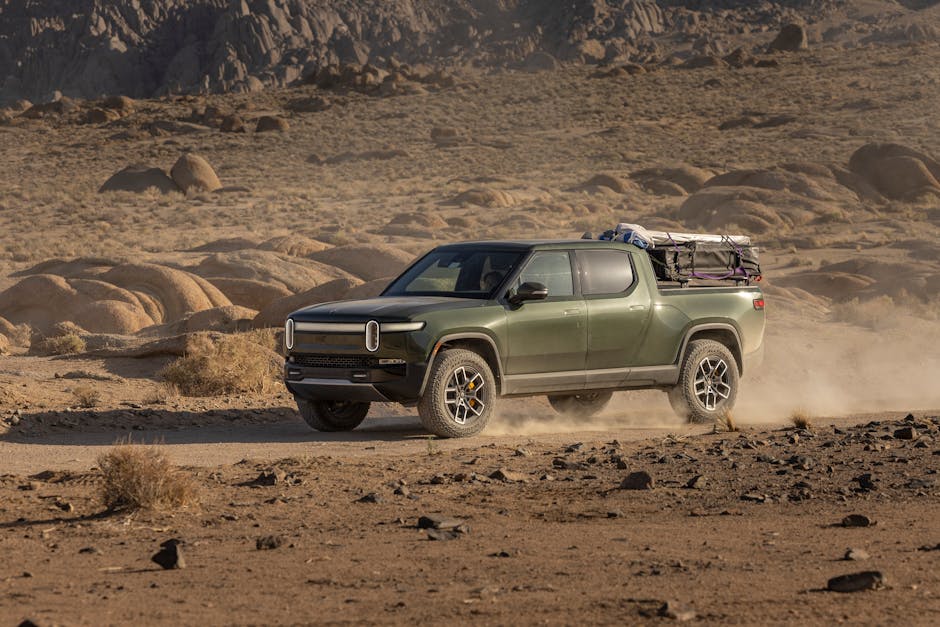
Rivian plans to release an R2 EV priced at $45,000 next year, alongside premium autonomous features and a broadened production strategy.
Rivian CEO RJ Scaringe has officially announced plans to launch a $45,000 version of the company’s upcoming R2 electric vehicle (EV) line next year. This marks a significant step in Rivian's strategy to expand its EV lineup to a broader consumer base while incorporating advanced features and next-level autonomous capabilities.
R2 launch to expand Rivian’s appeal
The company's new R2 platform is designed to balance affordability with high-tech features. According to Scaringe, the R2 series will start at $45,000 for the base model and go up to approximately $57,000 for the high-performance version with premium specifications. This positions the R2 in a competitive price range relative to the $50,000 average price of new cars in the United States.
Initially, Rivian will debut the R2 with a premium launch edition featuring advanced specifications and a higher price point. Over the next year, the company intends to introduce mid-tier and lower-tier configurations, culminating in the $45,000 base variant. This tiered rollout strategy allows Rivian to maximize initial revenue while building momentum for its more affordable offerings.
Technical advancements in the R2
The R2 represents Rivian’s deep learning curve from its R1 platform, with improvements made across multiple aspects. "There’s not a detail in the car that hasn’t been thoughtfully evolved," noted Scaringe. The R2 benefits from enhancements in driveline systems, power electronics, and manufacturing cost efficiency.
Notably, high-end variants of the R2 will feature Rivian’s in-house silicon technology, which boasts 800 TOPS (trillion operations per second) of compute power across two chips. This substantial processing capability will be paired with a range of sensors, including cameras, radar, and LiDAR, offering advanced autonomous functionality. While early versions of the R2 will utilize NVIDIA systems and lack LiDAR, Scaringe confirmed that future variants featuring this complete technological stack will enable higher levels of autonomous driving. Combined, these systems are part of Rivian’s ambitious effort to support Level 3 autonomy, including hands-off, eyes-off driving in specific domains such as highways, beginning rollout next year.
From factory setbacks to resilience
While Rivian looks toward the future, the company recently faced an unforeseen challenge at its plant in Illinois. Late last week, a tornado damaged sections of the factory, including logistics areas that handle material supply chains. Despite this, Scaringe confirmed that production timelines remain on track. "We’re working through it," he said, emphasizing the company’s ability to adapt quickly. Teams have been working around the clock to recover and reconfigure logistics to ensure minimal disruption to production targets. Vehicles continued to roll off the production line, a testament to operational resilience.
Demand, enthusiasm, and competition
Scaringe highlighted strong interest in the R2, particularly during customer events such as a recent showcase in Denver. Long lines of potential buyers eager to explore the vehicle underscore the growing excitement around Rivian’s upcoming model. The company is positioning the R2 to appeal not only to early EV adopters but also to mainstream consumers seeking a balance of affordability and innovation. Rivian hopes to attract buyers away from established automakers in the rapidly growing EV market space, competing with brands such as Tesla, Hyundai, and Ford.
Leveraging software and licensing opportunities
Rivian’s strategy also extends beyond vehicle sales to software and technology licensing. The R2 is expected to play a pivotal role in Rivian's effort to scale its "large driving model," a data-driven system for optimizing autonomous capabilities. By leveraging miles driven by its fleet, Rivian aims to refine its AI systems and enhance the functionality of its vehicles over time.
In addition to using its software stack internally, Rivian is exploring the potential for licensing its technology to other automakers. Building on a previous $5.8 billion software licensing deal with Volkswagen, Scaringe suggested that similar partnerships could be pursued. Such collaborations would allow Rivian to diversify its revenue streams and influence the broader EV ecosystem.
Balancing innovation with affordability
Beyond hardware improvements, the affordability of the R2 could be a deciding factor for many consumers. By offering a $45,000 entry point in an EV laden with features previously associated with luxury models, Rivian aims to capture a slice of the higher-volume EV market. This effort aligns with the long-term industry trend toward more competitively priced electric cars that maintain strong technological offerings.
A step forward in Rivian's vision
The release of the R2 is more than just another product launch—it represents Rivian's attempts to balance innovation, affordability, and production scalability. By combining high-tech autonomous systems with a starting price accessible to a broader market, Rivian is placing itself in a position to expand beyond niche premium segments.
While the automaker still faces manufacturing challenges as evidenced by the recent tornado damage to its facility, its confident timeline for R2's rollout and multi-tiered pricing strategy show its commitment to growth. As details unfold, Rivian’s ability to deliver on its promises for the R2 platform will be crucial, both for its future competitiveness and its role within the expanding EV market.
Staff Writer
Nina writes about new car models, EV infrastructure, and transportation policy.
Comments
Loading comments…


