Bitcoin developer forks the network, targets Satoshi’s coins in controversial upgrade
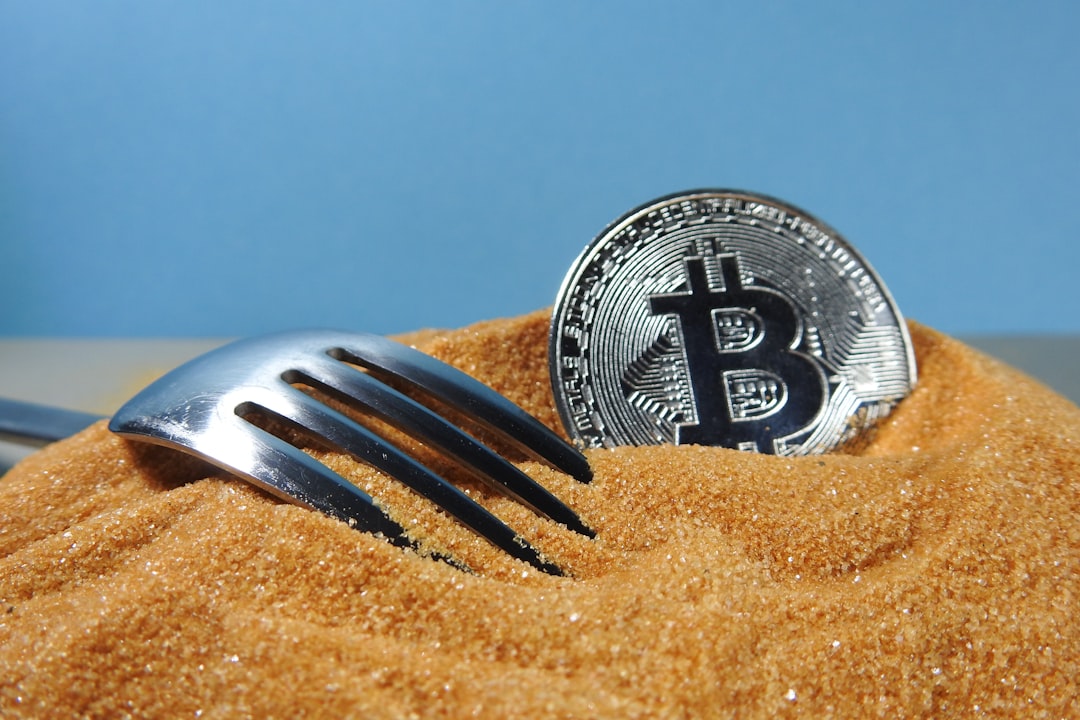
After nearly a decade of rejected proposals, Bitcoin developer Paul Stork is launching ECash, a fork that airdrops coins to all BTC holders but reallocates Satoshi’s unspent stash. The move has ignited a bitter debate over governance, ethics, and security.
For nearly a decade, Paul Stork tried to add side-chain support to Bitcoin Core through the formal BIP 300 and BIP 3001 proposals. He was rejected repeatedly. On April 24, 2026, at the Bitcoin 2026 conference in Las Vegas, he stopped asking for permission. Stork announced ECash, a full fork of Bitcoin scheduled to activate at block 964,000 in August 2026. The new chain will give every Bitcoin holder an equal amount of ECash at that block, but the most incendiary part of the plan reallocates roughly 500,000 Bitcoin traced to the Patoshi pattern -- the coins widely believed to belong to Satoshi Nakamoto -- to early developers and investors.
The announcement instantly polarized the community. Peter McCormack called it stealing. Bitcoin maximalists demanded the project be ignored and shut down. Stork’s supporters called him the most overlooked builder in Bitcoin’s history. Within two days, a post on X announcing the fork accumulated more than 1.5 million views. The ECash story is not a single controversy, however. It is four separate debates -- technical, governance, ethical, and market -- all colliding at once. Understanding each part is essential for anyone holding Bitcoin as block 964,000 approaches.
What ECash actually does (and doesn’t do) to your Bitcoin
ECash is nearly an exact copy of Bitcoin Core. It uses the same SHA-256D mining algorithm. At block 964,000, every address holding Bitcoin will automatically receive the same balance in ECash on the new chain. A coin splitter tool will be released to help users separate their balances. The code will be frozen 30 days before activation, meaning no further changes after that point.
The mechanism that enables the fork is what Stork calls a “core unmodified soft fork.” It is a design that adds side-chain features without requiring a single line of code from the main Bitcoin developers. BIP 300 handles money held by miners for side-chain exits; BIP 3001 allows new mining rules. Both are packaged into this activation method.
Here is the single most important point that much of the coverage has buried: the original Bitcoin blockchain is completely unchanged. No BTC coins are moved. No addresses are modified. No coins are locked or taken on the network where you currently hold your Bitcoin. The controversial coin reassignment happens only on the new ECash chain. The fork copies Bitcoin’s ledger, but then applies its own starting rules to that copied data.
This distinction matters because calling the plan theft conflates two separate questions. One is whether a new chain that takes a snapshot of Bitcoin’s ownership is morally bound to honor that ownership structure perfectly. The other is whether a network can create its own starting rules that happen to use an external list of owners as a reference. They are not the same question, and confusing them has made the social media debate largely unproductive.
The Patoshi pattern and the 500,000 coin question
The coins targeted for redistribution are those attributed to the Patoshi pattern, first identified by cryptographer Sergio Demian Lerner in 2013. By analyzing about 22,000 blocks mined between January 2009 and December 2010, Lerner concluded that a single miner or a very small, well-coordinated group created roughly 1.1 million Bitcoin during that period. That hoard, worth about $85 billion at current prices, has remained untouched for more than 15 years.
Stork’s original plan would have given the addresses linked to Satoshi 600,000 ECash on the new chain. The remaining 500,000 would be reassigned to early developers and investors to fund the new system and avoid what Stork called a “zombie launch.” After a backlash that saw 80-85 percent opposition in an X poll, Stork proposed a second version that would eliminate the coin reassignment entirely. As of now, the final plan is unconfirmed.
But the very ownership record being argued over is not definitive. Bitcoin developer Adam Back has questioned whether the Patoshi attribution is accurate, arguing that chaotic early mining activity makes Lerner’s method a statistical guess rather than proof. Choosing a side in this debate means taking a position on probabilities, not certainties.
The side chains that almost nobody is talking about
ECash will launch with seven side chains, each designed for a specific purpose. They include:
- Truthcoin: a prediction market chain Stork has worked on since 2015.
- Coinshift: a built-in decentralized exchange.
- Photon: a quantum-resistant chain.
- Bitassets: for tokenizing financial assets and NFTs.
- Bitnames: decentralized digital identity.
- A privacy chain similar to Zcash.
- A seventh slot that has not been officially announced.
The Photon chain deserves special attention because of timing. On March 31, 2026, Google Quantum AI released a 57-page paper that dramatically revised the number of physical qubits needed to break Bitcoin’s elliptic curve cryptography. Earlier estimates had pegged the requirement at roughly 9 million physical qubits. The new research suggested fewer than half a million could do the job -- a roughly 20-fold reduction in the gap between current quantum hardware and a genuine threat. Google’s internal goal for moving to quantum-safe systems is now 2029, six years earlier than the original U.S. government target of 2035.
On the same day Stork announced ECash in Las Vegas, an independent researcher cracked a small elliptic curve key using publicly available quantum hardware. Roughly 5.6 million Bitcoin currently sit in addresses where the public key has been exposed, meaning they would be vulnerable in a fully functional quantum future. The Photon side chain is not a random feature; it arrives in a month when the threat level has been reduced by a factor of ten, and the path to adding quantum resistance to the main Bitcoin layer faces the same governance roadblocks that stalled BIP 300 for nine years.
Whether all seven chains will be production-ready by August is a fair question. A 30-day code freeze and a public bug bounty program suggest serious effort, but launching seven entirely new side-chain systems simultaneously is an extremely tight schedule.
The replay attack problem every holder must understand
A new hard fork without strong replay protection is the biggest known danger in this category. The Ethereum-Ethereum Classic split of July 2016 is the cautionary tale: neither chain set up replay protection, and users who moved ETH accidentally moved ETC at the same time until protections were added weeks later.
Bitcoin Cash handled it well in August 2017. BCH developers added a change called SigHash Fork ID, which placed a unique identifier into every transaction signature, making BCH transactions cryptographically invalid on the BTC chain and vice versa.
Bitcoin SV in November 2018 showed what happens when that protection is missing. BSV launched without strong standardized replay protection, and exchanges like Bitrex stopped deposits and refused to recover funds sent to the wrong chain. Individual holders lost money.
Developer Josh Ellithorpe has criticized the ECash design for what he calls insufficient replay protection, describing the fork as harmful and dangerous to users in its current form. Stork has announced a coin splitter tool, but a tool that requires the user to take action is fundamentally less safe than a cryptographic guarantee built into the system itself.
For self-custody holders, the message is clear: do not make any transactions on either chain immediately after the fork until you have clearly separated your coins. The safest method is to use new transaction outputs created after the fork block as the splitting mechanism.
For those keeping coins on an exchange, the situation depends on the exchange’s public policy. As of now, no major exchange has said whether it will support or reject the airdrop. That silence is itself important information. Any exchange that has not made a decision by July should be considered unlikely to support the fork.
The tax trap that could hit every US holder
Under a 2019 IRS rule, receiving cryptocurrency from a hard-fork airdrop counts as ordinary income based on the fair market value at the moment the owner gains full control over the new asset. The critical word is “control.” If your ECash airdrop lands in a wallet address you control, the IRS says you have a taxable event the moment you can transact those coins, whether you want to or not.
If any exchange lists ECash at any price above zero immediately, every US holder who received the airdrop owes ordinary income tax on that price, even if they never touch the new asset. Centralized exchanges are now required to send Form 1099-DA for the 2025 tax year, meaning the income event will be reported whether the holder acknowledges it or not.
Arizona has made airdrops non-taxable at the state level, but every other US state follows the federal rule. The United Kingdom, Canada, Australia, and European Union members each have their own tax complications that holders should investigate before August. ECash forces a taxable event on millions of Bitcoin owners regardless of whether they want anything to do with the new chain.
The governance fight that started all of this
The reason ECash exists at all is a nine-year story about how Bitcoin is managed. The basic idea for side chains predates Stork. A 2014 paper by Blockstream proposed pegged side chains. Stork introduced his own design, called Drivechain, in 2015. He submitted BIP 300 in August 2017 and BIP 3001 in July 2019. His design removed the fraud-proof system from the original Blockstream paper and replaced it with a system where taking money out of a side chain requires about 13,150 approvals from miners gathered over three to six months.
In a well-known criticism from 2023, developer Peter Todd argued that BIP 300 replaces Bitcoin’s established security model, based on cryptography, with what he called blind trust in miners. Regular Bitcoin transactions are protected by digital signatures that even a 51 percent mining attack cannot fake. BIP 300 replaces that cryptographic guarantee with a collection of proof-of-work from miners. Developer Kahl has raised the same concern, arguing that a majority of mining power could work together to steal deposits from side chains.
The “core unmodified soft fork” was Stork’s strategic response to repeated rejection. If the main developers would not add the code, he would design a way to start without their approval. The Bitcoin Core team rejected that mechanism too, arguing that any change affecting the main rules requires broad community agreement. The request to add the code was finally closed in 2024.
Stork is not a random person trying to steal value from Bitcoin. He is a developer who spent almost a decade following the official process. The ECash fork is the result of that process failing to produce any results. Whether you see the Bitcoin Core team’s cautiousness as a strength or an obstacle is the real debate, and it is not solved by simply calling Stork a thief.
What every Bitcoin owner should do before August
The honest position is that Stork is both a developer who has earned the right to be heard through nearly a decade of good-faith involvement and a developer whose design removes cryptographic guarantees that critics call fundamental to Bitcoin’s security model. Both statements are true. The useful debate happens in the space between them.
Block 964,000 will arrive whether holders have made up their minds or not. The questions this proposal has raised -- about how Bitcoin actually changes, who is allowed to suggest changes, and whether the existing system produces the outcomes its owners actually want -- will not disappear once August has passed.
The job for every Bitcoin owner is to understand the mechanics now, decide where you stand on the philosophical questions before social media decides for you, and prepare your coin storage, exchange relationships, and tax documents before the new chain starts. The activation block does not care whether you have made up your mind.
Staff Writer
Priya writes about blockchain technology, DeFi, and digital currency regulation.
Comments
Loading comments…


