A narrower start, a new wave, and a 2028 Chevy Traverse: Inside the IU Health 500 Festival Mini-Marathon's kickoff
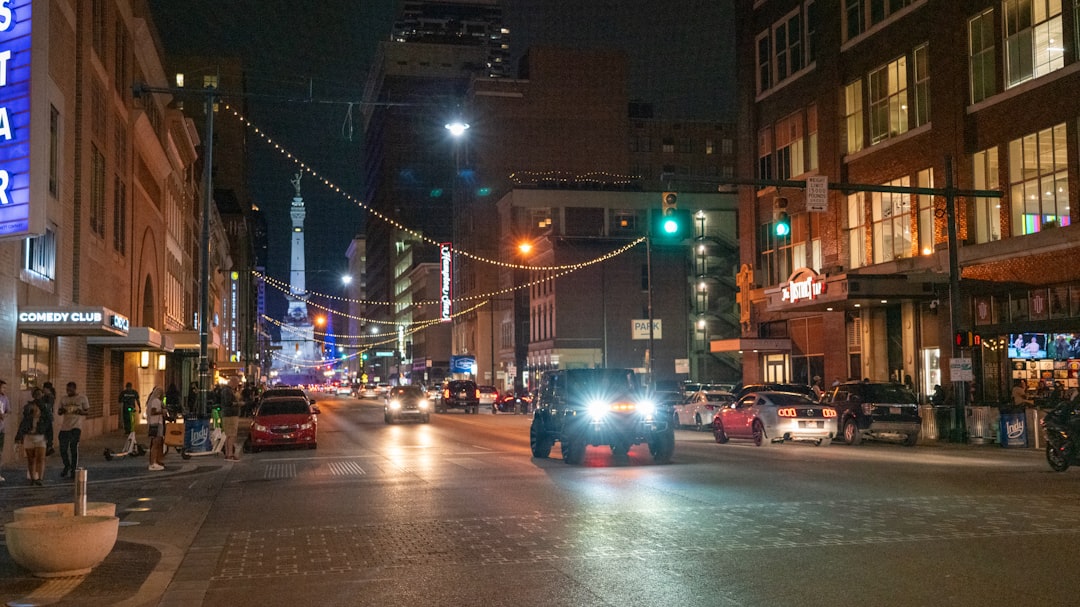
The elite wave of the IU Health 500 Festival Mini-Marathon began in downtown Indianapolis with a narrower start lane, a new wave addition, and a pace car from the future.
The first wave of elite runners took off in downtown Indianapolis this morning, officially kicking off the IU Health 500 Festival Mini-Marathon. For a race that calls itself "the greatest spectacle in running," the opening minutes were a mix of tradition and last-minute adjustments driven by downtown construction and a growing crowd.
Organizers added a new wave this year, pushing the total number of rolling starts higher. The runners are now spaced in 15-minute intervals rather than the previous 10-minute gaps. That change means a longer morning for the start line, with waves continuing until 8:40 AM, but it also gives each group a more defined moment of its own. Each wave still gets the full treatment: a pace car, a countdown, and a burst of noise and movement as the participants head into the course.
Wave one, the elite heat, went off first. The field was led by a 2028 Chevy Traverse driven by Roger Harvey, the 500 Festival vice chair of the board. The choice of vehicle ties the half marathon directly to the Indianapolis 500 tradition of pace cars, though the model year raises questions. Whether the 2028 Traverse is a production-spec vehicle from the near future or a specially built concept, its presence underscores the race's connection to speed and automotive pageantry. Harvey, as vice chair, occupies a role that blends ceremonial duty with organizational oversight.
That spectacle ran into a practical constraint this year. Road construction near the start forced organizers to squeeze the typical three-lane starting corridor into only two lanes. As a result, the start line stretched longer and thinner than in previous years. The runners, thousands of them, were funneled through a narrower funnel before they could hit full stride. The change affects not just the elite wave but every wave that follows. For participants at the back of each group, the extra few seconds to cross the line might add up, though the wider spacing between waves should help reduce overall congestion on the course.
The construction is not unusual for an event that runs through a dense urban core. Indianapolis, like many cities, has seen significant infrastructure work in recent years, and the 500 Festival Mini-Marathon has had to adapt. The narrow start is a reminder that even a well-rehearsed event with decades of history must bend to physical realities. The organizers chose a narrower corridor over other options, such as staggering the start even further or moving the starting line entirely. That decision preserved the visual of a mass start -- albeit a more elongated one -- and kept the ceremony intact.
Harvey's role as the pace car driver also reinforces a deeper tie. The mini-marathon is part of the month-long 500 Festival, a series of events leading up to the Indianapolis 500. The festival's organizers have long drawn parallels between the race on the track and the race on the streets. The phrase "greatest spectacle in running" mirrors the Indy 500's own tagline. The pace car, the countdowns, the multiple waves -- all of it borrows the choreography of auto racing and applies it to a foot race. That hybrid identity appeals to runners who also follow motorsport and to spectators who see the mini-marathon as a walking-scale version of the May tradition.
The addition of an extra wave suggests growing participation or a desire to keep the field safer. More waves mean smaller groups at each start, reducing the crush at the first mile. The longer interval between waves -- 15 minutes instead of 10 -- gives the course more time to clear between groups, which can prevent bottlenecks at early turns and aid stations. For casual runners and walkers, that extra breathing room may improve the experience. For competitive runners, the elite wave still gets the earliest start and the least interference.
What remains unclear is whether the construction-related narrowing will affect the race's overall times. A congested start typically penalizes runners who need to accelerate quickly, but elites at the front of wave one face the shortest delay. The top finishers are likely to post times in line with previous years. The bigger question is whether the narrow start and wider wave spacing will become permanent features. Once a course adapts to construction, returning to the old layout is not automatic. If the two-lane corridor worked well enough, organizers may keep it.
By 8:40 AM, the last wave will have started, and the streets of downtown Indianapolis will fill with runners making their way toward the finish. The 2028 Chevy Traverse will have completed its lap as a pace car, and Roger Harvey will have fulfilled his ceremonial duty. For the thousands of participants, the real work begins once they clear the narrow start and find their rhythm on the course.
The IU Health 500 Festival Mini-Marathon remains a showcase of how a community event can incorporate automotive tradition, respond to urban constraints, and still deliver the spectacle it promises. The narrower start and the extra wave are the kinds of changes that go unnoticed by most spectators but meaningfully shape the race for everyone who runs it.
Staff Writer
Lauren covers medical research, public health policy, and wellness trends.
Comments
Loading comments…


