Alex Lupsasca and the Future of Black Hole Astrophysics
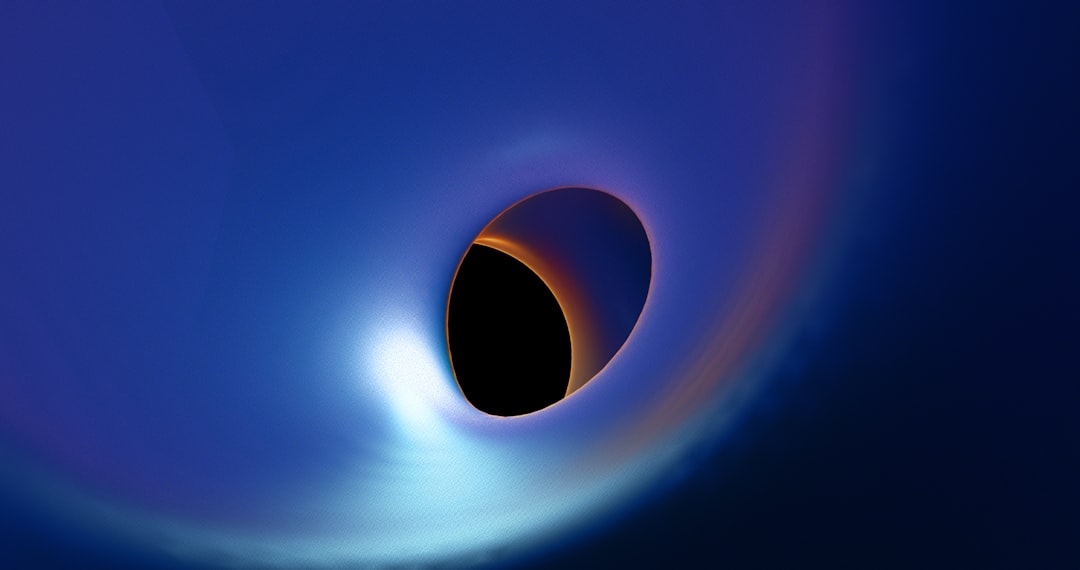
Physicist Alex Lupsasca explores breakthroughs in black hole research, from first images to the proposed Black Hole Explorer mission.
The study of black holes has transitioned from speculative theory to one of the most cutting-edge fields in modern astrophysics, and physicist Alex Lupsasca is among the leading scientists driving this transformation. With recent advancements, from the first detection of gravitational waves to the iconic image of a black hole released in 2019, Lupsasca’s work highlights both how far we’ve come and what lies ahead.
From Theory to Observation: A New Era for Black Hole Science
For much of the 20th century, black holes remained a theoretical curiosity. Even the very existence of these objects was debated. By the late 1980s, indirect evidence began pointing toward their presence in certain galaxies. However, it wasn’t until the last decade that direct interaction with black holes became possible.
In 2015, the Laser Interferometer Gravitational-Wave Observatory (LIGO) detected gravitational waves for the first time—ripples in spacetime caused by the merging of two black holes. This groundbreaking discovery allowed scientists to “hear” black holes through the gravitational waves they produce. Then, in 2019, the Event Horizon Telescope (EHT) released the first-ever image of a black hole, showcasing the shadow of the supermassive black hole at the center of the galaxy M87. Together, these milestones have revolutionized our understanding of black holes, turning what was once an esoteric subject into an experimental science firmly rooted in observation.
The Photon Ring: Probing the Edges of the Universe
A key focus of Lupsasca’s research is the photon ring—a phenomenon predicted by Einstein’s theory of general relativity. When looking at the image of a black hole, two primary features emerge: a dark central region known as the black hole shadow and a thin, bright ring of light called the photon ring.
The shadow is caused by the event horizon, the point of no return, which absorbs all light and matter that crosses it. Surrounding this dark region, the photon ring is made of light particles, or photons, that orbit the black hole multiple times before escaping and reaching our telescopes. Lupsasca explains that only a black hole has the gravitational pull strong enough to bend light to such an extent that it orbits the object. Observing and confirming the photon ring’s existence would provide definitive proof that the object in question is a true black hole as described by general relativity.
Why the Photon Ring Matters
The photon ring acts as a critical tool for studying the geometry of spacetime around a black hole. By tracing the shape of the ring, researchers can encode valuable information about the black hole’s characteristics, including its size, mass, and spin. Lupsasca describes the photon ring as the edge of the visible universe—a phenomenon both scientifically fascinating and visually striking. For physicists, studying the photon ring could not only confirm theoretical predictions but open new doors to understanding the nature of spacetime.
The Black Hole Explorer: Future Advances in High-Resolution Imaging
Looking to the future, Lupsasca shares his excitement about the Black Hole Explorer, a proposed space mission designed to take black hole imaging to the next level. The goal of the mission is to launch a satellite into Earth orbit equipped with advanced observational technology. The Black Hole Explorer promises to produce the sharpest images in the history of astronomy, even creating high-resolution movies of black holes.
One major objective of the mission is to capture and analyze the photon ring with unprecedented detail. By doing so, scientists hope to uncover more about the physics of black holes, including how they generate immense amounts of energy. According to Lupsasca, black holes act as some of the most powerful energy engines in the universe. Understanding the mechanisms behind this energy production, he says, could also help explain the brightest lights in the cosmos.
Exploring the Mysteries of the Universe
Through initiatives like the Black Hole Explorer and ongoing experiments, Lupsasca believes the next few decades will bring remarkable insights into black hole astrophysics. One of the major open questions in the field centers on how black holes convert energy from their surroundings into powerful jets of radiation. Several hypotheses exist, but conclusive evidence remains elusive. Gathering data from closer observations, such as detailed movies of a black hole and the swirling matter around it, could finally provide definitive answers.
As Lupsasca eloquently puts it, understanding these mysteries represents one of the highest callings in science. From detecting gravitational waves to imaging photon rings, each discovery deepens our knowledge—not just of black holes, but of the universe itself. The field is moving quickly, and it’s an exciting time to be working on the frontier of black hole research.
Practical Takeaways
- Black Holes Are Observable: Key advancements like LIGO and the Event Horizon Telescope have transitioned black holes from theoretical constructs to objects we can both see and study.
- Photon Rings: This light phenomenon offers a unique window into the geometry of spacetime and stands as definitive evidence of a black hole’s existence.
- Future Missions: The Black Hole Explorer aims to refine our understanding of black holes by providing ultra-detailed images and videos.
- Energy Questions: Scientists aim to uncover how black holes act as powerful energy engines, which power some of the brightest cosmic events.
FAQ
What is the photon ring?
The photon ring is a thin ring of light surrounding the black hole shadow. It is formed by photons that orbit near the event horizon before escaping. Observing this ring provides critical evidence of the black hole’s properties.
What was the first image of a black hole?
The first image of a black hole was released in 2019 by the Event Horizon Telescope. It shows the shadow of the supermassive black hole at the center of galaxy M87.
What is the Black Hole Explorer?
The Black Hole Explorer is a proposed space mission to capture high-resolution images and movies of black holes. It aims to study phenomena like the photon ring in unprecedented detail.
Why are black holes important to study?
Black holes allow scientists to test theories of general relativity, study extreme physics, and understand the mechanisms behind energy production in the universe.
With tools like the Black Hole Explorer and the ongoing curiosity of scientists like Alex Lupsasca, the boundaries of black hole research are set to expand, unraveling some of the universe’s deepest secrets.
Staff Writer
Daniel reports on biology, climate science, and medical research.
Comments
Loading comments…


