Artemis II Crew Endures Routine 40-Minute Lunar Communication Blackout
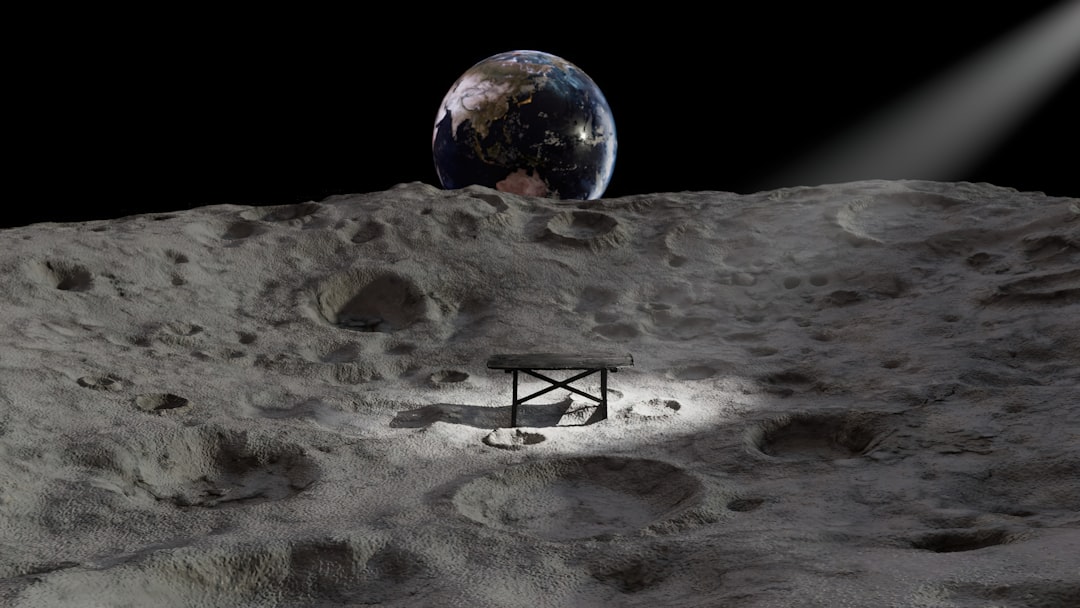
On April 7, 2026, Artemis II astronauts encountered a planned 40-minute communication blackout while orbiting behind the Moon, highlighting lunar mission challenges.
NASA’s Artemis II mission marked another milestone in humanity's return to the Moon on April 7, 2026, as its crew encountered a routine but symbolically profound event: a 40-minute communication blackout. This period of radio silence occurred when the spacecraft was traveling behind the Moon, where the lunar body itself blocked all signals between Earth and the spacecraft.
The Nature of the Communication Blackout
The blackout was no surprise to the mission's planners. Communication disruptions of this nature are a predictable feature of lunar missions, and Artemis II was no exception. The spacecraft reached its furthest point from Earth—approximately 252,756 miles (406,771 kilometers)—when the signal was lost, representing the physical limitations of current communication systems. Such blackouts occur whenever a spacecraft ventures to the Moon’s far side, beyond the reach of direct radio signals from Earth.
During this period, mission control had no way to communicate with the four-person crew. While any interruption in communication might seem alarming, for NASA, such moments are carefully planned and executed as part of their mission protocols. These procedures ensure that astronauts can operate autonomously and maintain safety even when support from Earth is temporarily unavailable.
Reconnection and Relief
Once the spacecraft emerged from behind the Moon and contact was reestablished, astronaut Christina Koch expressed her thoughts to Mission Control: "It feels great to hear from home again." Koch's reaction highlighted how even a brief disconnection from Earth can create challenges for astronauts who rely heavily on constant communication with mission operators.
This moment also underscored the resilience and self-reliance integral to lunar missions. The crew, which includes Koch alongside three other astronauts, was well-trained to manage operations independently during these scheduled periods of isolation.
Why Communication Blackouts Happen
The Artemis II blackout occurred due to the Moon physically blocking the line of sight required for transmitting radio waves. Unlike satellites orbiting Earth, which can benefit from a network of relay stations, lunar missions have no such infrastructure on the Moon's far side. Radio signals sent from and to the spacecraft cannot penetrate the Moon’s mass, leaving the spacecraft temporarily cut off from direct Earth communication.
Future efforts to mitigate such challenges, such as placing satellite relays around the Moon, are being explored. However, for Artemis II, adherence to traditional protocols ensured the mission proceeded without incident.
A Step Toward the Next Lunar Landing
Artemis II serves as a key preparatory mission for NASA’s ambitious Artemis program, which seeks to land astronauts on the lunar surface and eventually establish a sustainable presence on and around the Moon. While Artemis I was an uncrewed test flight of the Space Launch System and Orion spacecraft, Artemis II is the first crewed flight, designed to demonstrate all key systems in preparation for landing missions, such as Artemis III.
Though Artemis II does not feature a lunar landing, it aims to orbit the far side of the Moon and return safely to Earth. The communication blackout is just one of the elements of the mission allowing NASA to test and refine critical operations for future tasks.
How Modern Technology Supports Artemis Missions
Lunar communications have greatly improved since the Apollo era, thanks to advancements in spacecraft design, tracking systems, and mission software. The Artemis program represents decades of technological progress, with enhancements in both reliability and automation. Still, some challenges, such as line-of-sight communication limitations, persist and are integral to planning missions involving lunar or planetary exploration.
Artemis II utilizes the Orion spacecraft, equipped with the latest communication equipment designed to maintain Earth contact whenever possible. However, the lack of direct line-of-sight capabilities remains a limiting factor for periods when a spacecraft travels behind a planetary body such as the Moon.
Building Toward the Future of Exploration
Events like Artemis II’s communication blackout serve as important reminders of the complexities inherent in space exploration, particularly in lunar and deep-space missions. By planning for such contingencies, NASA ensures not only the safety of its crews but also the continued success of its broader mission objectives.
The Artemis program remains central to NASA’s long-term vision of returning humans to the Moon and eventually extending human exploration to Mars. As Artemis II successfully completes its objectives, it brings humanity one step closer to realizing these goals and to building the advanced systems that will make deep-space exploration safer and more efficient in the decades to come.
Staff Writer
Daniel reports on biology, climate science, and medical research.
Comments
Loading comments…


