Artemis II: NASA's First Crewed Lunar Mission in Over 50 Years
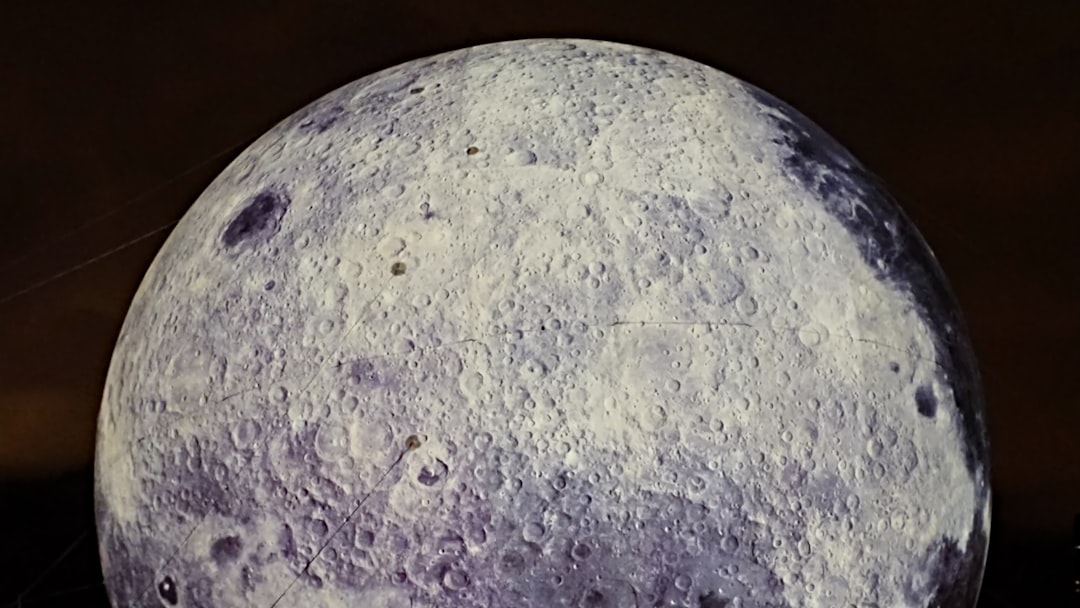
NASA's Artemis II mission will take four astronauts on a 10-day journey around the Moon, marking the first crewed lunar flight since Apollo.
NASA is marking a monumental milestone with Artemis II, its first crewed lunar mission in over half a century. This 10-day mission will send four astronauts around the Moon to test crucial systems and procedures, setting the stage for humanity’s long-term presence on the lunar surface.
Launch Day Preparations
The Artemis II mission begins at NASA's Kennedy Space Center in Florida. The crew will suit up and undergo final system checks, traveling to Launchpad 39B via crew transportation vehicles. There, the Space Launch System (SLS), a 322-foot-tall rocket, stands ready to lift the Orion spacecraft into space. Having completed its 4-mile journey to the launch pad on NASA’s giant crawler-transporter, the SLS is filled with over 700,000 gallons of cryogenic liquid oxygen and liquid hydrogen.
Twelve seconds before liftoff, hydrogen burn-off igniters prepare the engines, and six seconds later, the four RS-25 engines ignite. With 8.8 million pounds of thrust—75% of it generated by two massive solid rocket boosters—the SLS propels the Orion spacecraft into the skies, marking a historic leap towards Moon exploration.
Entering Space: The Journey Begins
Approximately two minutes into flight, the solid rocket boosters detach and fall away. The core stage’s engines continue firing, pushing Orion further into the atmosphere. Around three minutes after launch, protective fairings covering Orion’s service module are ejected to deploy solar arrays for powering the spacecraft.
At the eight-minute mark, the core stage completes its work, and the interim cryogenic propulsion stage (ICPS) separates along with Orion. The ICPS performs critical maneuvers over the next 90 minutes to place Orion in a highly elliptical Earth orbit. Here, the crew conducts initial system checks and familiarizes themselves with their surroundings.
Proximity Operations and System Testing
One of the key test phases begins in high Earth orbit. Orion separates from the ICPS and begins a proximity operations demonstration, which mimics docking and undocking procedures. The astronauts manually pilot Orion, testing the spacecraft’s responsiveness and evaluating its software, hardware, and communication systems. This exercise prepares future crews for critical docking tasks, such as those required to assemble Lunar Gateway or land on the Moon.
During this 24-hour evaluation period, the crew tests life support, navigation, and communication systems, ensuring every element performs optimally before committing to the Moon-bound trajectory.
Translunar Injection and Lunar Flyby
Next, the mission ramps up with the translunar injection (TLI) burn, utilizing Orion’s service module to leave Earth orbit. Over the next four days, the spacecraft will travel a figure-eight path more than 230,000 miles from Earth, making a close lunar flyby.
Artemis II astronauts will become the first humans in over 50 years to witness the Moon’s far side. While there, they will conduct systems evaluation and practice emergency procedures, including using Orion's radiation shelter. During this lunar flyby, a communications blackout is anticipated, lasting while Orion is out of the line of sight from Earth.
The Return Journey to Earth
Once Orion exits the lunar phase, Earth’s gravity pulls it along a free-return trajectory for a fuel-efficient trip home. The spacecraft spends another four days retracing its path before beginning preparations for reentry.
Before entering Earth’s atmosphere, the service module separates from the crew module. Thrusters ensure proper orientation as the spacecraft descends at speeds nearing 25,000 miles per hour. During reentry, Orion’s heat shield withstands temperatures of up to 5,000 degrees Fahrenheit—half as hot as the Sun’s surface. The astronauts briefly experience g-forces four times greater than Earth’s gravity before the parachute deployment sequence begins.
Splashdown and Recovery
At an altitude of 9,000 feet, three sets of parachutes activate, progressively slowing Orion’s descent to less than 20 miles per hour. After a journey spanning over 595,000 nautical miles, the spacecraft splashes down in the Pacific Ocean, approximately 50 nautical miles off the California coast.
A coordinated recovery effort involving NASA, the U.S. Navy, and the U.S. Air Force ensures the crew’s safe return. Divers assist the astronauts aboard an inflatable capsule, where they are later helicoptered to a recovery ship. From there, Orion is transported back to Kennedy Space Center for post-mission analysis.
Key Takeaways and Significance
Artemis II is more than a test flight; it’s a proof-of-concept mission that showcases the viability of deep space exploration with a human crew. By preparing astronauts and systems for the challenges of long-term lunar missions, Artemis II brings us closer to establishing a sustainable lunar presence.
Mission Highlights:
- First crewed lunar mission since Apollo
- 10-day flight around the Moon, covering over 595,000 nautical miles
- Testing Orion spacecraft’s life support, navigation, and emergency systems
- Laying the groundwork for future Moon explorations, including Artemis III and beyond
This milestone mission propels humanity one step closer to unlocking the scientific and exploratory potential of the Moon.
To track updates, visit NASA’s Artemis program page at nasa.gov/Artemis.
Staff Writer
Daniel reports on biology, climate science, and medical research.
Comments
Loading comments…


