Artemis II prepares for historic mission around the Moon
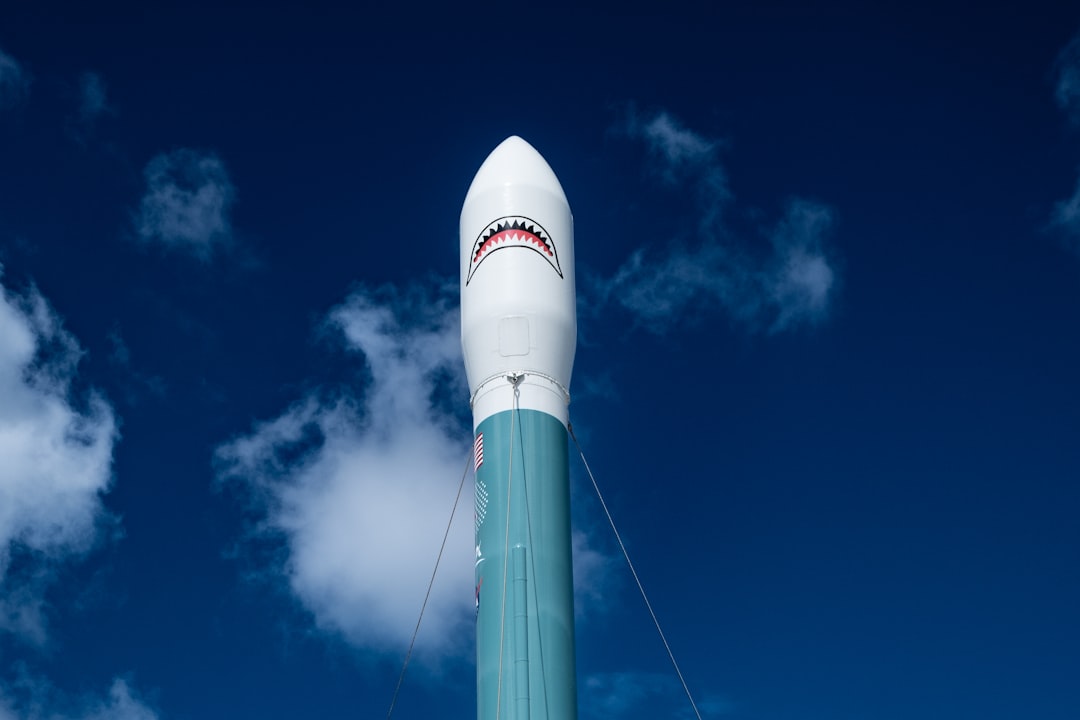
NASA's Artemis II prepares to launch four astronauts on a monumental mission to orbit the Moon, paving the way for future lunar exploration.
NASA’s Artemis II mission is set to take space exploration to new heights as the agency prepares for its first crewed mission to the Moon since the Apollo program. Although Artemis II won’t involve landing on the lunar surface, it marks a crucial step towards humanity’s long-term presence on the Moon and eventual missions to Mars.
A Historic Milestone
Scheduled within a launch window from 6:24 p.m. to 8:24 p.m. Eastern Time, Artemis II marks the next chapter in NASA’s efforts to reclaim leadership in human space exploration. Utilizing the Space Launch System (SLS), the most powerful rocket ever built, and the Orion spacecraft, the mission aims to demonstrate the readiness of NASA’s deep-space systems. Unlike Artemis I, which was uncrewed, this mission will carry four astronauts—three from NASA and one from the Canadian Space Agency—on a 10-day journey around the Moon.
The astronauts will spend the mission testing systems critical for lunar survival, including life-support controls and radiation mitigation strategies. As NASA Administrator Bill Nelson stated, missions like Artemis II are key to laying the foundation for sustainable lunar exploration and humanity’s broader ambitions in space.
Meeting the Crew: A Diverse Team
The Artemis II crew includes Commander Reid Wiseman, Pilot Victor Glover, Mission Specialist Christina Koch, and Jeremy Hansen, the first Canadian astronaut to participate in a lunar mission.
-
Reid Wiseman (Commander): A veteran astronaut and former Chief of NASA’s Astronaut Office, Wiseman brings extensive experience to Artemis II. During his previous mission aboard the International Space Station (ISS) in 2014, he participated in over 300 scientific experiments and played a pivotal role in advancing astrophysics and Earth science research. With a long career in aviation and leadership, Wiseman was a natural choice to lead this historic mission.
-
Victor Glover (Pilot): A U.S. Navy captain and skilled test pilot with over 3,500 flight hours, Glover previously served as the pilot on NASA’s SpaceX Crew-1 mission. Known for his energy and enthusiasm, Glover is committed to inspiring the next generation of scientists and explorers. He balances his demanding career with a vibrant family life, being a father of four.
-
Christina Koch (Mission Specialist): Koch is no stranger to breaking boundaries. She holds the record for the longest continuous spaceflight by a woman (328 days) and participated in the first all-female spacewalk. Her scientific and technical background makes her an invaluable member of the team.
-
Jeremy Hansen (Mission Specialist): Representing the Canadian Space Agency, Hansen is the first non-American astronaut to participate in a lunar mission. His career includes roles as CAPCOM for other NASA astronauts and time spent in remote training environments designed to simulate space exploration.
Technical Innovations and Preparations
The Artemis II mission incorporates the Orion spacecraft equipped with the Orion Crew Survival Suits (OCS), designed to protect astronauts during launch, reentry, and any possible high-risk emergencies. These suits include multiple layers that regulate temperature and provide pressure in case of environmental changes, such as a loss of atmospheric pressure inside the capsule. Innovations come from lessons learned through decades of NASA missions, ensuring the safety and functionality of every component.
The astronauts already completed suit checks, including crucial "leak tests" to ensure the suits maintain proper pressure. The suits are also equipped with emergency features like oxygen bottles and survival gear in case of an unplanned egress or challenging recovery scenarios.
Mission Goals: Setting the Stage for Lunar Landings
One of Artemis II’s key objectives is reaffirming the readiness of the SLS rocket and Orion spacecraft to support human exploration. Astronauts will engage in tests critical to verifying spacecraft habitability, such as sleeping in orbit and using environmental control systems. The data gathered will inform future missions, including Artemis III, where humans are expected to land on the lunar surface.
The trajectory itself will follow a "free-return" trajectory, taking astronauts around the far side of the Moon before bringing them back safely to Earth. In addition to offering breathtaking views of the lunar surface, the mission allows scientists to evaluate radiation levels, human response to prolonged exposure in deep space, and the functionality of Orion’s systems.
While Artemis II does not include a direct landing, it serves as a precursor to future missions. Astronauts aboard will scout potential Moon landing sites for Artemis III and beyond, providing essential context to enhance the scientific and operational objectives of lunar surface missions.
A 10-Day Journey
The Artemis II timeline includes:
- Initial launch and orbital systems checks near Earth.
- Multiple orbits to build speed and test critical spacecraft systems.
- A trans-lunar injection to escape Earth’s orbit and travel towards the Moon.
- A loop around the far side of the Moon, where astronauts will record visual data and assess radiation environments.
- A four-day return journey, concluding with reentry through Earth’s atmosphere and splashdown.
The total mission duration is estimated to be 10 days.
Weather and Launch Readiness
NASA has reported a high likelihood of favorable weather for the launch, citing an 80% chance of acceptable conditions within the two-hour window. Tank loading is complete, with the SLS fully stocked with more than an Olympic-sized pool’s worth of liquid hydrogen and oxygen. NASA’s launch team is closely monitoring for potentially disruptive weather events, such as isolated showers, that could temporarily delay liftoff.
Why This Mission Matters
Artemis II is not merely another rocket launch; it symbolizes humanity’s determination to push its boundaries. It builds international collaboration, with Canada playing a direct role, and it encourages the next generation to see science and exploration as pathways for progress. With its focus on incremental steps—testing systems, building confidence, and advancing technological capabilities—the mission embodies NASA’s "go slow to go fast" approach.
The Artemis program represents an investment in the future. As humans prepare to one day live and work on the Moon, every incremental mission brings clarity and readiness. Artemis II is no exception. Soon, this crew will pave the way not just for the return to the Moon, but for sustainable human presence in deep space.
As the countdown to launch grows closer, anticipation builds—not just for the liftoff, but for the new era of exploration it represents.
Staff Writer
Emily covers space exploration, physics, and scientific research. Holds a degree in astrophysics.
Comments
Loading comments…


