Embry-Riddle Team Develops AETHER System for Space Oxygen Recovery
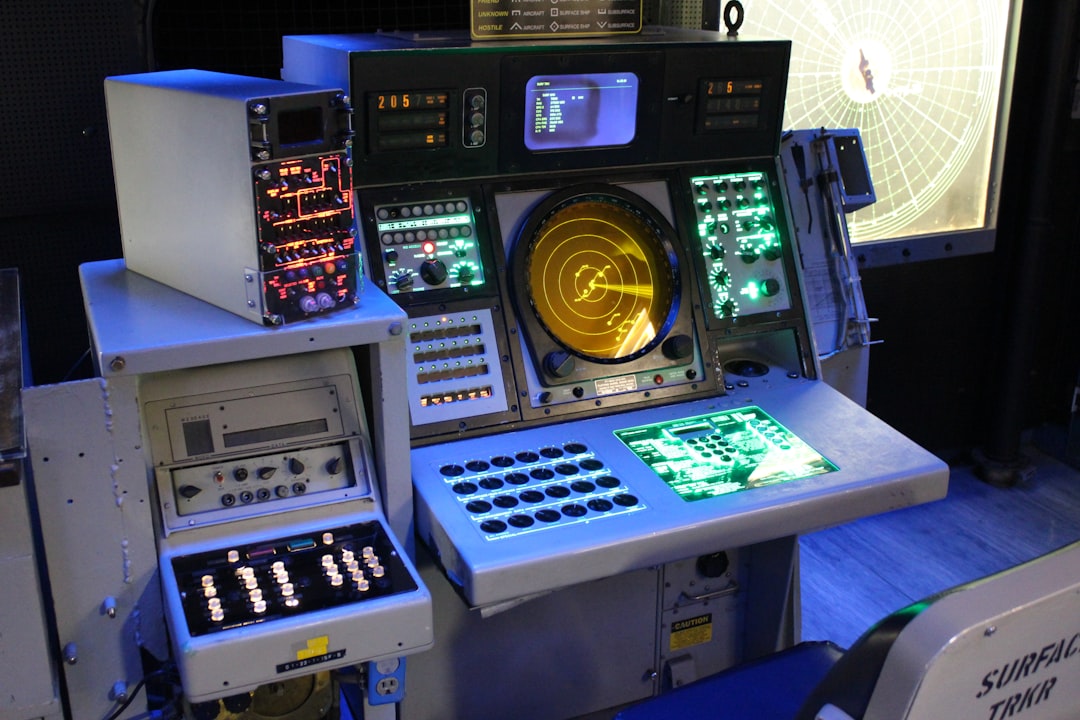
Embry-Riddle engineers propose AETHER, a near-closed loop oxygen recovery system, with 94.7% efficiency for deep space missions.
Innovative life support systems are critical as we explore deeper into space. Embry-Riddle Aeronautical University’s Parseek team is tackling one of the most persistent challenges in space exploration: oxygen recovery efficiency. Through their AETHER system, the team proposes a near-closed loop solution to significantly improve upon existing oxygen production technologies aboard spacecraft.
What is AETHER?
AETHER, which stands for Atmospheric Electrochemical Transformation for Habitat and Environmental Regeneration, is a modular system developed by undergraduate engineers at Embry-Riddle. Its purpose is to enhance oxygen reclamation in spacecraft by providing an efficient and scalable solution. Leveraging electrochemistry, the system is designed to generate oxygen from carbon dioxide at a theoretical efficiency of 94.7%, far surpassing the current International Space Station (ISS) system’s efficiency of 47%.
The Limitations of Current Oxygen Systems
The ISS currently uses a system that produces oxygen by splitting water and reducing carbon dioxide. This process, however, has significant drawbacks, including a modest yield of 47%, a reliance on water, frequent failures, and problematic byproducts. These issues compound as missions venture further from Earth, where resupply becomes increasingly difficult.
AETHER offers a solution by eliminating the need for water or other consumable compounds. Instead, it uses innovative electrochemical processes to regenerate oxygen, achieving near-closed loop performance and improving reliability, simplicity, and scalability.
How AETHER Works
AETHER is constructed around three electrochemical discs, each playing a critical role in converting carbon dioxide into oxygen. Here’s what makes the system work:
- Key Components: The system uses cobalt and lithium-based discs as the cathode and anode, respectively, with an electrolyte separator in between.
- Electrochemical Process: When voltage is applied, the system reduces carbon dioxide to form lithium carbonate. This then undergoes further reductions to lithium oxide and solid carbon. Finally, lithium oxide decomposes, releasing oxygen. With this structure, AETHER achieves a high theoretical production yield of 94.7%.
- Modular Design: AETHER's canister design contains multiple cells and is easily replaceable or scalable for various spacecraft sizes and specific mission needs.
With its lack of moving parts, AETHER minimizes points of failure, making it particularly suitable for long-duration missions. Damaged or degraded canisters can be replaced individually without compromising the entire system.
Testing the AETHER System
To assess its feasibility and confirm its efficiency, Parseek has outlined a meticulous three-stage testing plan for AETHER:
-
Primary System Test: A scaled-down single-cell setup will be tested in an isolated environment. This phase aims to validate the oxygen recovery efficiency under controlled conditions.
-
Passive System Test: Following the single-cell validation, the team plans to simulate conditions similar to those on spacecraft. This phase will demonstrate AETHER’s potential role aboard current and future deep-space vehicles.
-
Full-Scale Implementation Design: After the smaller tests, Parseek intends to finalize a full-scale design of AETHER capable of integration with the Artemis program and other mission architectures. These developments will culminate in generating data for technical review and submission.
Why AETHER Matters for Space Exploration
The ambitious goals of programs like Artemis, which aim to establish a sustained presence on the Moon and prepare for eventual Mars missions, demand innovations in human life support systems. Oxygen is one of the most critical components for survival, and improving its reclamation is necessary for reducing dependency on resupply missions from Earth.
AETHER addresses these challenges with several advantages:
- Efficiency: A 94.7% oxygen recovery rate means less reliance on additional resources.
- Scalability: Its modular design allows for use across various spacecraft and habitats, from small EVA suits to large modules.
- Reliability: The absence of moving parts reduces the risk of mechanical failure, an essential factor for long-duration missions.
The Road Ahead
The team at Embry-Riddle plans to integrate their findings into the broader space exploration effort. With promising early results from their prototypes, Parseek is looking to collaborate with the Artemis program, providing a crucial supplement to existing life support systems. Following the conclusion of their tests, the team will submit their final technical paper detailing the results and implementation considerations to advance the technology further.
By reducing mass, power consumption, and reliance on consumables, AETHER positions itself as a step forward for sustainable human presence beyond Earth’s orbit. The innovative approach of the Parseek team highlights the importance of next-generation engineering in overcoming the unique challenges of deep-space exploration.
Comments
Loading comments…


