Exploring the Frontier: Challenges and Possibilities of Interstellar Travel
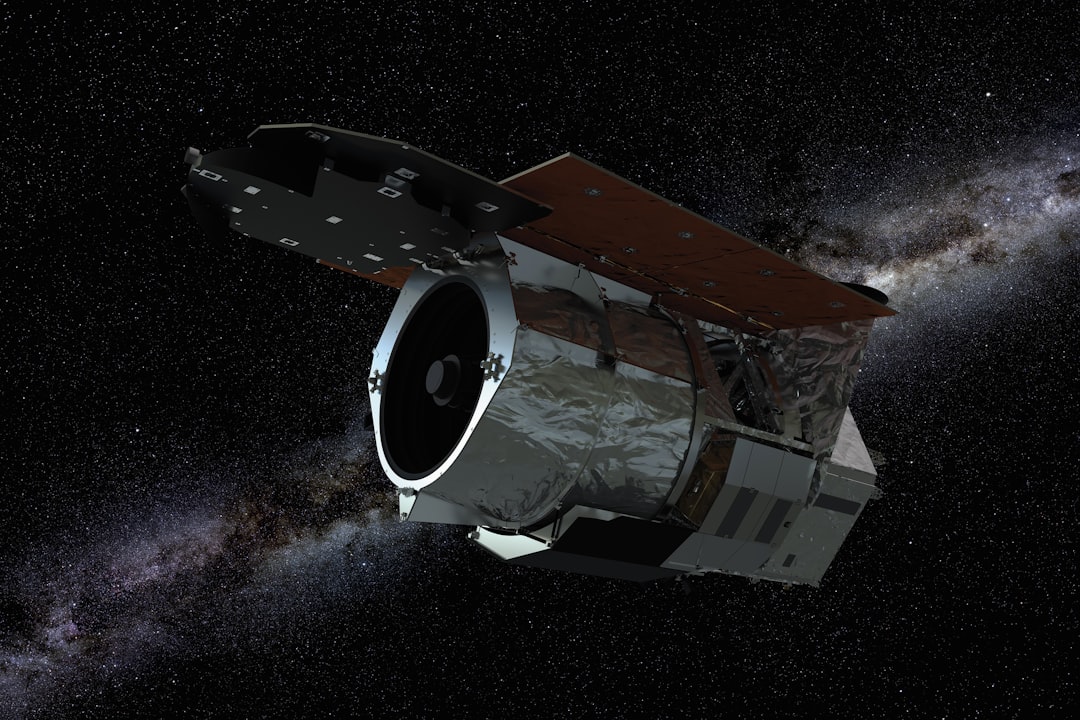
Interstellar travel poses immense challenges in technology, energy, time, and human adaptability, but innovative research offers hope for the future.
Humanity has always been driven by curiosity and a desire to push the boundaries of the unknown. Interstellar travel, the dream of journeying beyond our solar system, represents the pinnacle of that quest. However, the immense distances, technological limitations, and human challenges make this an extraordinarily complex ambition. From critical propulsion breakthroughs to rethinking human adaptability, the road to interstellar exploration may redefine what it means to be human.
Understanding the Vast Distances
The closest star to our solar system, Proxima Centauri, lies 4.2 light years away. This staggering distance highlights the immense challenges of interstellar travel. At its current speed, NASA's Voyager 1 probe, which left Earth in 1977, would take 75,000 years to reach this star. Such figures underscore the need for revolutionary advancements in propulsion systems.
The Heliosphere and Beyond
Our solar system is encased in the heliosphere, a protective bubble formed by solar wind, which interacts with interstellar particles. Its boundary, the heliopause, marks the edge of the sun’s influence. When Voyager 1 crossed the heliopause in 2012, it entered a zone of dense plasma and encountered unexpected magnetic fields. These discoveries revealed the complexity of breaching even our solar system's immediate periphery.
Beyond the heliopause lies the Kuiper Belt and the Oort Cloud, regions of icy bodies and rocky fragments. The Oort Cloud, in particular, stretches to almost a quarter of the distance to the nearest star and presents its own scientific and technical challenges. Light from the sun can take thousands of years to reach its outer edges. Yet understanding this vast space is a crucial step in preparing for journeys beyond.
Propulsion Challenges
Current propulsion systems are woefully inadequate for interstellar travel. Chemical rockets, though sufficient for lunar and solar system missions, lack the energy capacity for deep space exploration. To move beyond the confines of current technology, scientists are exploring advanced propulsion systems such as:
- Ion engines: These systems provide efficient, steady thrust but have low power output, limiting their use to short-range missions.
- Nuclear fusion propulsion: By harnessing the energy of fusing atomic nuclei, this method could deliver extraordinary velocities. However, controlling fusion on Earth remains an unresolved scientific challenge, let alone miniaturizing the process for spacecraft.
- Warp drives: A theoretical concept, warp drives aim to bend spacetime to achieve faster-than-light travel. While this idea captivates the imagination, it remains deeply speculative and dependent on unproven physics.
Another technique currently used is gravity assist, where spacecraft gain speed by utilizing a planet’s gravitational force. While effective within the solar system, this method adds only limited velocity, nowhere near the requirements for interstellar distances.
Overcoming Cosmic Radiation and Material Barriers
Interstellar space presents a hostile environment filled with cosmic radiation and energetic particles. Outside the protective heliosphere, spacecraft and their occupants would be exposed to harmful radiation capable of piercing spacecraft hulls, damaging electronics, and endangering human health. Radiation-related risks include heightened cancer rates and DNA damage.
To address these dangers, researchers are exploring cutting-edge materials that could shield spacecraft effectively. Innovations like self-healing materials or ultra-durable alloys will be key to sustaining long-duration missions. Additionally, spacecraft will need protection against high-speed impacts with microparticles, which can act as destructive projectiles at interstellar velocities.
Human Challenges: Adapting to Deep Space
Technology alone will not suffice—human adaptability is equally crucial. Long-term space travel brings intense psychological and physiological challenges. Prolonged exposure to microgravity degrades muscles and bones, raising the question of physical adaptation over generations.
Genetic Engineering and Evolution
Advances in genetics suggest that humanity could adapt to extreme space conditions through genetic modifications. Technologies such as CRISPR could enable astronauts to resist radiation, regenerate damaged cells, or even develop physical traits tailored to deep space survival. For instance:
- Enhanced DNA repair mechanisms to counteract radiation damage
- Biological adjustments for low-gravity environments, such as lighter bone structures
Ethical and philosophical considerations abound when discussing altering human genetics. Would such modifications leave us fundamentally human?
The Concept of Generation Ships
One potential solution for interstellar travel is the generation ship—a massive spacecraft designed to sustain human life over multiple generations. These vessels would require self-contained ecosystems capable of recycling water, air, and food.
Experiments like Biosphere 2 in Arizona have attempted to simulate closed-loop ecological systems, though significant challenges remain. Maintaining such systems over centuries is fraught with risks like technical failures or resource depletion, which could have catastrophic consequences for the inhabitants.
Psychological and Social Challenges
Intergenerational missions would test human endurance in unprecedented ways. Isolation, confined spaces, and the absence of natural environments could lead to psychological issues like depression, anxiety, and interpersonal conflicts. Research on Antarctic expeditions and shorter spaceflights provides some insights but remains insufficient for addressing missions that would span decades or centuries.
Emerging Ideas: Breakthrough Starshot and Beyond
Among the promising initiatives in interstellar exploration is the Breakthrough Starshot project. This concept envisions a fleet of tiny spacecraft equipped with light sails. Powerful lasers from Earth would propel these probes to 20% the speed of light, allowing them to reach Proxima Centauri in just 20 years. These probes, carrying cameras and sensors, could transmit valuable data back to Earth. Challenges for this project include stabilizing the sails and sustaining communication across vast distances.
The speculative realm of science fiction offers even bolder ideas, such as wormholes and warp drives. Wormholes, theoretical shortcuts through spacetime, remain entirely hypothetical, requiring conditions that are yet to be observed.
The Philosophical Quest for Identity
Beyond technology, interstellar travel raises profound questions about identity and humanity’s future. If we transform ourselves—through genetic engineering, becoming cyborgs, or even merging with AI—what remains of our humanity? Machines could eventually replace humans for interstellar exploration, as they do not require food, water, or oxygen and can withstand extreme environments. However, this introduces deeper questions about consciousness, purpose, and what it means to explore as humans.
Conclusion
Interstellar travel represents humanity’s ultimate frontier, combining immense technological hurdles, biological adaptation, and philosophical dilemmas. While solutions like generation ships, advanced propulsion, and genetic engineering offer hope, they also demand ethical reflection and collective effort. Moving beyond the solar system is not merely a matter of science; it embodies our eternal quest for meaning, our need to discover, and the boundless drive to transcend limitations.
Staff Writer
Emily covers space exploration, physics, and scientific research. Holds a degree in astrophysics.
Comments
Loading comments…


