How U.S. Space Technology Played a Role in Operation Epic Fury Against Iran
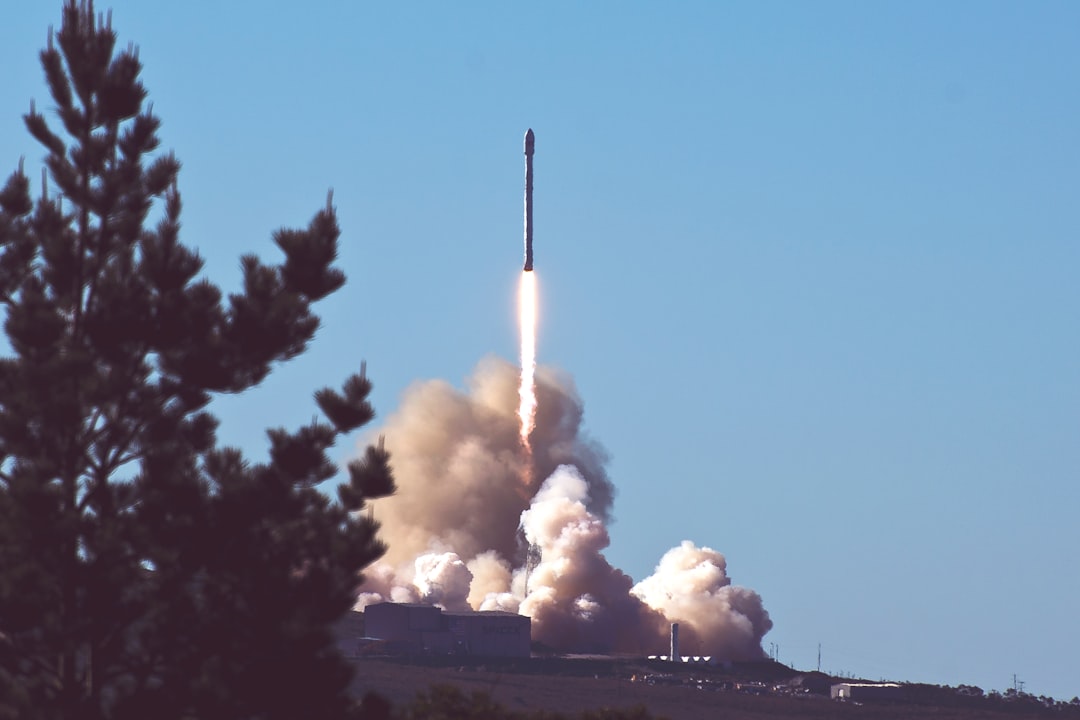
The U.S. employed advanced space technology during ‘Operation Epic Fury’ to neutralize Iranian threats, showcasing the growing role of space in modern warfare.
The Strategic Role of Space Technology in Modern Warfare
Operation Epic Fury, the U.S.-led mission targeting Iran's missile infrastructure, signaled a noteworthy shift in modern combat. American space technology was crucial in identifying and neutralizing hostile missile systems. President Trump’s establishment of the Space Force and initiatives like the Artemis program have solidified space as the ultimate high ground—impacting military strategy, national security, and future interplanetary exploration.
The Role of Space-Based Systems in Operation Epic Fury
During Operation Epic Fury, American forces utilized advanced space capabilities to destroy Iranian missile launchpads and intercept retaliatory missiles. According to the New York Post, the U.S. leveraged a sophisticated network of satellites to track missile launches based on heat signatures. These satellites worked in tandem with ground radar systems to calculate real-time trajectories, enabling precise countermeasures. Powerful lasers, similar to directed energy weapons, played a critical role in intercepting these threats before they could pose significant harm.
The integration of space assets into military operations has provided the U.S. a clear edge. NASA Administrator Jared Isaacman emphasized how observing and communicating via these assets enables American forces to act efficiently in high-stakes scenarios.
Protecting U.S. Satellites: A Growing Concern
As space assets become integral to defense systems, they also become targets for adversaries. Isaacman noted that nations like China and Russia are working on capabilities aimed at disrupting or damaging U.S. satellites. These vulnerabilities underscore the need for continued U.S. investment in satellite defense, including counter-cyber and kinetic measures. This focus reflects the Space Force’s mandate to safeguard America’s high-value space-based infrastructure.
“America’s satellites are not invincible,” Isaacman warned. “Adversaries understand their strategic importance and will continue to challenge them.” This reality has shaped the U.S. strategy to develop more robust constellations in geostationary orbit, which are less vulnerable than their low Earth orbit counterparts.
The Artemis Program: Beyond Military Applications
While the military value of space dominates headlines, NASA’s Artemis program highlights the forward-looking vision for space exploration. Isaacman outlined how Artemis represents more than a return to the Moon. The program, which aims to establish a permanent lunar base, will serve as a proving ground for sustainable technologies that could eventually enable missions to Mars.
Artemis II, the next step in America’s Moon exploration efforts, is set to launch soon with four astronauts aboard. The eventual goal is to conduct recurring Moon missions, ramping up to a monthly cadence by the 2030s. This accelerated pace ensures that the U.S. remains a leader in space exploration—important for both scientific innovation and national security.
The New Space Race: U.S. vs. China
Isaacman also discussed the intense competition with China, which is actively pursuing its own lunar ambitions. Chinese and Russian teams have announced plans to build a nuclear-powered research station on the Moon’s far side. Isaacman described this race as crucial, stating that success or failure will now be measured in months, not years.
If China establishes a Moon base first, it could secure strategic locations like the Moon’s South Pole, a site rich in resources. “We can’t afford to lose this race,” he said. America has ramped up its cadence of lunar launches to stay ahead, working with private firms like SpaceX and Blue Origin.
| Comparison of U.S. vs. China’s Lunar Strategies | |-------------------------|--------------------------| | Key Focus | U.S.: Permanent Moon base by 2028. China: Resource-heavy research station. | | Collaborations | U.S.: Private companies like SpaceX. China: Government-driven projects with Russia. | | Timeline | U.S.: Monthly missions by 2030. China: Fully operational base by mid-2030s. |
Leveraging Nuclear Propulsion
Isaacman stressed the importance of nuclear propulsion technologies in future space exploration and national defense. Traditional chemical rockets only enable one-way journeys to distant planets. Nuclear-powered systems, however, could allow for massive interplanetary transit. This innovation has implications not just for future Mars missions but also for economic and security objectives in cislunar space.
With nuclear systems, astronauts could travel efficiently, build long-term settlements, and even facilitate the manufacturing of resources on the Moon and Mars. These advancements ensure the U.S. retains its competitive edge in space.
Space as the Final Battlefield: Are We Ready?
Isaacman candidly acknowledged that space is already a contested battlefield. Both peaceful exploration and militarized space efforts are underway, often led by the same nations. This dual reality has redefined space policy as an essential component of U.S. national strategy, as exemplified by Trump’s creation of both the Space Force and Artemis accords.
America’s competitive edge stems from its private space industry. Companies like SpaceX provide reusable rocket systems that reduce costs and expand capabilities, ensuring the U.S. leads in satellite launches and strategic placements. Without these collaborations, the race for orbital dominance could shift in favor of adversaries like China.
Takeaways for the Future
- Space technology is no longer limited to exploration—it is now vital to national security, demonstrated during Operation Epic Fury.
- The creation of the Space Force has positioned the U.S. to counter threats to critical satellite infrastructure.
- The Artemis program extends beyond the Moon, providing the foundation for future Mars missions and a broader U.S. presence in space.
- Continued investment in space, including nuclear propulsion and reusable rocket technology, is crucial to maintaining America’s leadership against rising competition from China and Russia.
Conclusion
The U.S. has set the stage for a new era where space is integral to defense, policy, and innovation. Jared Isaacman’s remarks highlight the urgency of American space leadership as global rivals ramp up their own ambitions. Whether protecting satellites essential for communication or establishing the first Moon base, success in space is non-negotiable in modern geopolitics.
As space transitions from the new frontier to the ultimate battlefield, consistent focus, investment, and innovation ensure that American leadership remains a driving force in this high-stakes domain.
Staff Writer
Emily covers space exploration, physics, and scientific research. Holds a degree in astrophysics.
Comments
Loading comments…


