India's Major Space Missions Slated for 2026–2028
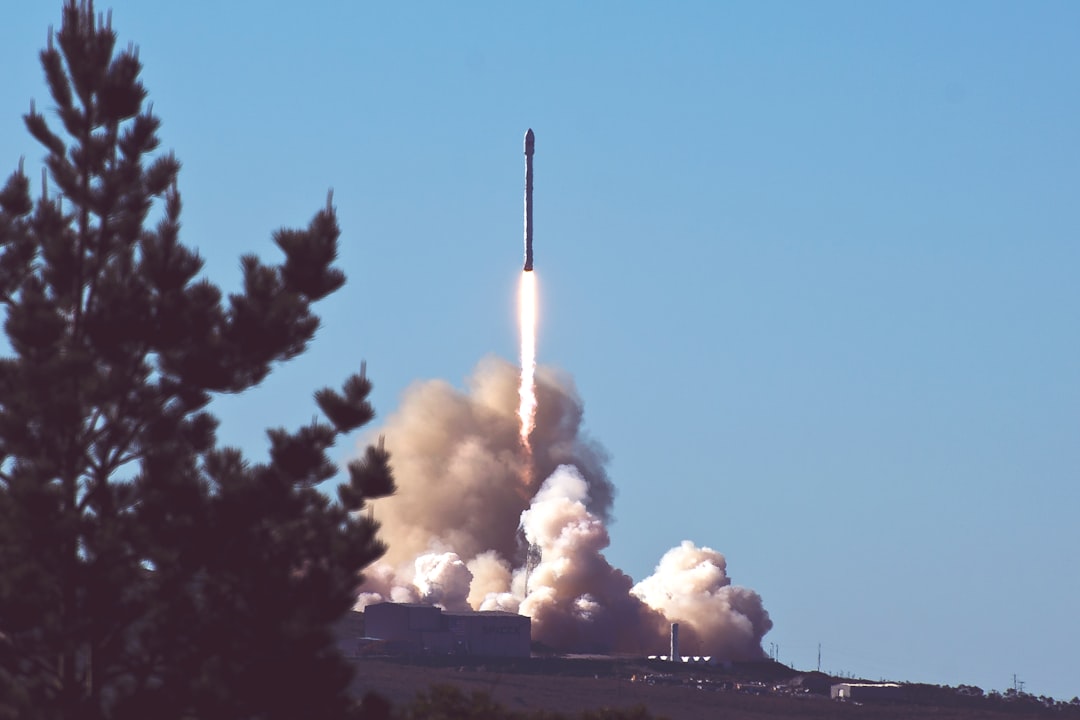
ISRO's upcoming missions include the Gaganyaan human spaceflight, Chandrayaan-4's lunar sample return, and Shukrayaan-1's Venus exploration.
The Indian Space Research Organisation (ISRO), known for its impressive strides in space exploration, is preparing for some of its most ambitious missions between 2026 and 2028. From India’s first human spaceflight to a Venus exploration mission, ISRO's plans underscore the nation’s growing prominence in the field of space science. Here's what to expect from ISRO in the coming years.
Gaganyaan: India’s First Human Spaceflight
ISRO’s Gaganyaan program is set to make history as India’s first human spaceflight mission. The initiative aims to send Indian astronauts, or Gagannauts, into low Earth orbit (LEO). Preparations for Gaganyaan began several years ago, with an emphasis on both technological development and astronaut training.
- Uncrewed Test Flights: Three uncrewed missions are scheduled for 2026 to test the safety and reliability of the spacecraft. A humanoid robot named 'Vyommitra' will play a key role in these trials, simulating various tasks to ensure system functionality.
- Crewed Mission: Pending the success of these tests, the first crewed mission will follow. This will mark a significant milestone for India as it enters the elite group of nations capable of human space exploration alongside Russia, the US, and China.
Chandrayaan-4: Lunar Sample Return Mission
India’s lunar exploration program has already made significant achievements. Chandrayaan-1, launched in 2008, was the first mission to confirm the presence of water molecules on the Moon. More recently, Chandrayaan-3 achieved a historic landing near the Moon's south pole in 2023.
The upcoming Chandrayaan-4, planned for 2027–2028, aims to build on these successes by bringing lunar soil and rock samples back to Earth. If successful, India will join the select few countries, including the United States, the Soviet Union, and China, that have accomplished this feat.
- Scientific Goals: The samples will be studied to gain deeper insights into the Moon’s composition and history.
- Global Collaboration: This mission enhances India’s reputation as a key player in global space exploration efforts.
Shukrayaan-1: India’s First Mission to Venus
Venus, often referred to as Earth’s twin due to its similar size, has intrigued scientists for decades. However, its harsh conditions—temperatures exceeding 450°C and intense atmospheric pressure—make it a challenging destination for exploration. ISRO’s Shukrayaan-1 mission, tentatively scheduled for 2028, aims to tackle these challenges.
- Focus Areas: Shukrayaan-1 will study Venus’s surface, its thick atmosphere, and the phenomenon of ‘super-rotation,’ where high-speed winds circulate the planet’s atmosphere much faster than its rotation.
- Technological Significance: This mission will pave the way for advanced planetary exploration technologies.
Aditya-L1: A Foundation for Future Solar Studies
While the primary focus is on the upcoming missions to the Moon, Venus, and manned spaceflight, ISRO’s ongoing Aditya-L1 mission, launched in 2023, continues to provide key data about the Sun. Positioned at the first Lagrangian point, it studies the solar corona, solar wind, and other phenomena, laying the groundwork for future solar missions.
Comparison of Upcoming Missions
| Mission | Timeline | Objective | Key Feature |
|---|---|---|---|
| Gaganyaan | 2026 (tests), TBD | Human spaceflight to low Earth orbit | First Indian human space mission |
| Chandrayaan-4 | 2027–2028 | Lunar sample return | Moon soil and rock studies |
| Shukrayaan-1 | 2028 | Study of Venus’s surface and atmosphere | Focus on super-rotation |
What These Missions Mean for India
ISRO’s upcoming missions underscore the organization’s steady progress in space exploration. By focusing on advanced technologies, scientific discovery, and international collaboration, India is firmly positioning itself as a global leader in space research.
- Technological Development: The missions demand advancements in propulsion, robotics, and spacecraft systems.
- Scientific Impact: Findings from these missions will contribute to our understanding of the Earth-Moon system, the Sun, and Venus.
- Global Standing: Successfully executing these missions will elevate India’s stature on the world stage.
Looking Ahead
ISRO’s ambitious plans for 2026–2028 are a continuation of its long history of achievements, from the 1975 launch of Aryabhata to the historic landing of Chandrayaan-3. With the Gaganyaan, Chandrayaan-4, and Shukrayaan-1 missions on the horizon, ISRO is set to redefine the boundaries of India's space exploration capabilities.
As these missions unfold, they will not only push the frontier of science but also inspire a new generation of Indians to look to the stars. Whether it’s collecting lunar samples, studying Venus, or sending astronauts to space, ISRO’s upcoming projects are shaping a future where India's presence in space exploration is undeniably significant.
Staff Writer
Daniel reports on biology, climate science, and medical research.
Comments
Loading comments…


