India's Mars Mission: Success on the First Attempt at an Unprecedented Cost
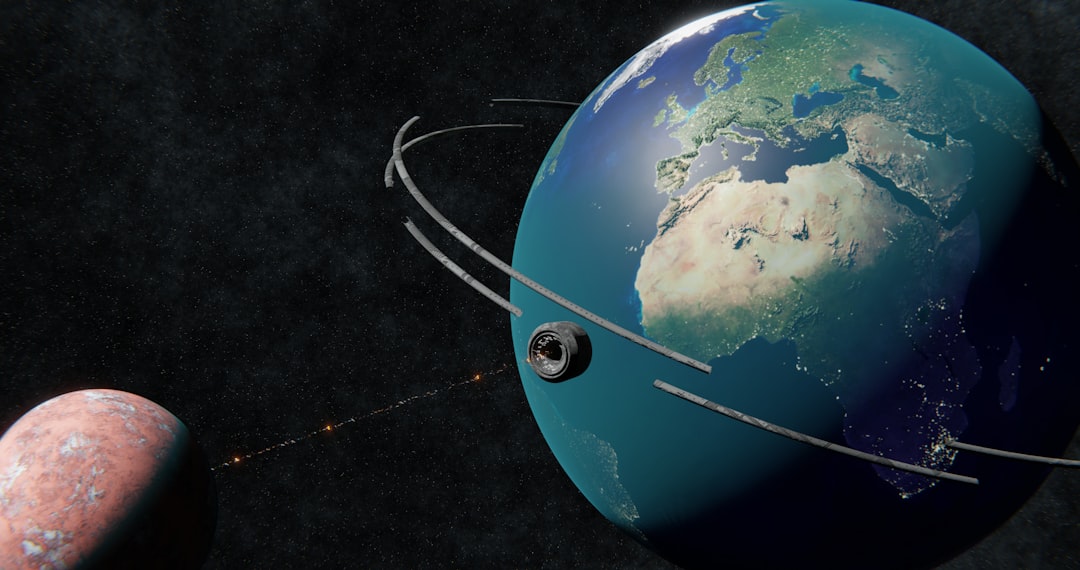
India's ISRO achieved a historic Mars mission on its first try, costing less than a Hollywood blockbuster. Learn about this incredible feat.
India achieved an extraordinary feat in its space exploration journey when its Mars Orbiter Mission (MOM), also called Mangalyaan, successfully reached Mars on its very first attempt. This accomplishment not only marked India's entry into an elite club of Mars explorers but did so in a manner that stunned the world—at an astonishingly low cost.
ISRO: The Agency Behind the Achievement
The Indian Space Research Organisation (ISRO), India’s national space agency, managed to achieve what few other countries have been able to do: launch a spacecraft that successfully entered Mars' orbit on its first try. This ranks ISRO among the most efficient and skillful space agencies globally. Other notable space agencies, such as NASA and Russia's Roscosmos, achieved Mars orbit entries after multiple attempts. This makes India’s success even more remarkable.
More impressively, ISRO's success was accomplished with a relatively limited budget compared to its international counterparts. The total expenditure for the Mars Orbiter Mission was approximately $74 million—less than the production budget of Hollywood blockbuster films such as Interstellar.
The Cost Efficiency of Mangalyaan
One of the most widely discussed aspects of India's Mars mission was its cost-effectiveness. At $74 million (or ₹450 crore in Indian currency), the Mars Orbiter Mission is one of the most affordable interplanetary missions ever undertaken. To put this into perspective:
- The film Gravity, a Hollywood sci-fi spectacle, had a production cost of $100 million.
- NASA’s Mars Maven mission, launched around the same time, cost approximately $671 million.
Achieving such efficiency was not only a demonstration of ingenuity but also reflected ISRO's ability to innovate within tight financial constraints. Techniques such as modular spacecraft design, rigorous testing protocols, and reliance on indigenously developed technology were key contributors to keeping costs under control.
The Success on India's First Attempt
Several countries, including the United States and Russia, have made pioneering advances in missions to Mars. Yet, the challenges of interplanetary exploration are immense, and many of these missions faced setbacks in their initial attempts. ISRO broke that pattern by succeeding on the first try—an accomplishment that showcases India's scientific and technical capabilities.
The main goal of the Mars Orbiter Mission was to demonstrate ISRO's ability to design, plan, and execute an interplanetary mission. Key objectives included entering the Mars orbit and conducting scientific experiments to gather valuable data on the Martian surface and atmosphere. The spacecraft continues to send back data, contributing to the global understanding of the Red Planet.
Comparing MOM with Other Mars Missions
Here’s a brief comparison of India’s Mars Orbiter Mission (Mangalyaan) with some other high-profile Mars missions:
| Mission | Year | Country/Agency | Budget | Success on First Attempt |
|---|---|---|---|---|
| Mars Orbiter Mission (MOM) | 2014 | India/ISRO | $74 million | Yes |
| Mars Maven | 2014 | USA/NASA | $671 million | No |
| Mars 2 | 1971 | USSR/Roscosmos | Approx. not stated | No |
This table highlights how MOM stands out as a low-cost and high-efficiency endeavor, particularly when compared to other missions to Mars.
How Did ISRO Achieve This Feat?
There are key reasons why ISRO managed to accomplish the Mars Orbiter Mission so cost-effectively:
- Indigenous Technology: ISRO relied heavily on homegrown technology, which reduced the need for expensive imports or collaborations.
- Efficient Design: The spacecraft was designed with a modular structure, simplifying assembly and lowering costs.
- Rigorous Planning: Every detail, from the launch trajectory to orbital insertion, was meticulously calculated to ensure maximum efficiency.
- Team Size: With a lean but expert workforce, ISRO minimized operational costs while maintaining high productivity.
- Testing Practices: A multi-tiered, risk-managed testing approach allowed engineers to preemptively solve potential issues without incurring unnecessary delays or expenses.
The Global Impact of Mangalyaan
India’s Mars Orbiter Mission received global accolades for its precision, cost-effectiveness, and success on its maiden attempt. It set a benchmark for developing nations looking to expand their presence in space exploration. With its accomplishment, India joined the United States, Russia, and the European Space Agency (ESA) as one of the few entities to reach Mars.
Beyond the technical and financial success, MOM served other vital purposes for India. It bolstered India's reputation in the global space community and demonstrated the viability of low-cost approaches in advanced space sciences. Additionally, it has inspired generations of Indian scientists, engineers, and dreamers to pursue careers in space exploration.
Practical Takeaways
- Low Costs Are Possible: ISRO showed the world that efficiency does not have to come at the expense of effectiveness. Nations with smaller budgets can still achieve extraordinary goals through careful planning and resource management.
- Innovation Matters: Indigenous design and innovation proved vital to MOM’s success, emphasizing the importance of developing core technical expertise.
- Persistence Pays Off: Achieving success on the first attempt is extremely challenging, particularly for Mars missions. India's success underscores the importance of discipline and preparedness.
Conclusion
India's Mars Orbiter Mission was not just a milestone for the country; it was a giant leap for humanity’s exploration of the cosmos. By accomplishing this at an unprecedented cost and on its very first try, ISRO showed the world what determination, skill, and creativity can achieve. The mission remains a symbol of India’s growing presence in space exploration and paves the way for future achievements on even greater scales.
Staff Writer
Emily covers space exploration, physics, and scientific research. Holds a degree in astrophysics.
Comments
Loading comments…


