James Webb Space Telescope: 2026 Discoveries Transform Our Cosmic Understanding
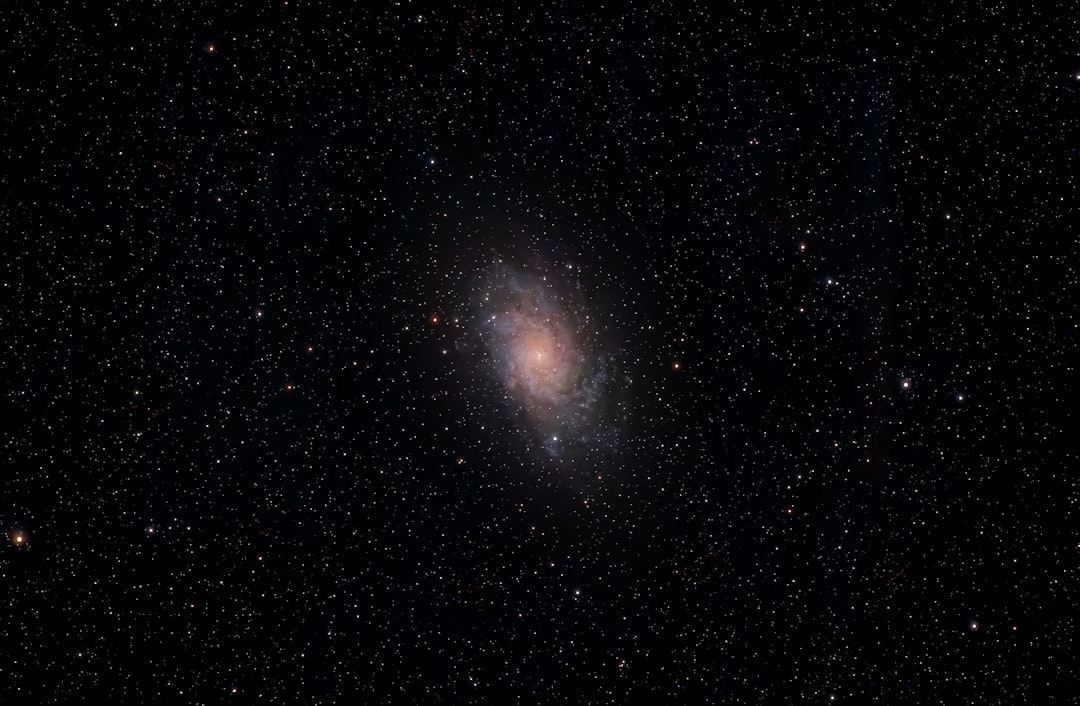
In 2026, the James Webb Space Telescope unveiled early galaxies, black hole growth, dark matter maps, and stellar death insights reshaping cosmic theories.
James Webb Space Telescope's Transformative 2026 Discoveries
The James Webb Space Telescope (JWST) has already changed the course of astronomy, but its 2026 findings have pushed the boundaries of our understanding even further. This year brought revelations about the early universe, the origins of supermassive black holes, dark matter distributions, and stellar death processes, challenging long-held cosmological models. What sets 2026 apart is the unprecedented detail and depth of the data, forcing astronomers to rethink timelines and mechanisms that shape the universe. Here’s a closer look at the major breakthroughs.
Early Galaxies: Structures in the Young Universe
One of the most groundbreaking discoveries in 2026 was the confirmation of a galaxy with a redshift exceeding 14. This means its light has been traveling for over 13.5 billion years, showing us a snapshot of the universe just 280 million years after the Big Bang. Spectroscopic analysis verified that this galaxy displayed structured star formation, measurable metallicity, and even internal dynamics indicative of sustained stellar processes.
These findings defy previous models that imagined the early universe as a chaotic, unorganized fog of hydrogen. Instead, galaxies were forming stars and enriching their environments faster than expected. Perhaps most surprisingly, some galaxies showed chemical traces of heavier elements like oxygen, carbon, and nitrogen. This suggests that at least one generation of stars had already formed, undergone supernova explosions, and chemically seeded the cosmos within this incredibly brief period. This accelerates our understanding of stellar life cycles and challenges models of star formation in the early universe.
The Rapid Growth of Supermassive Black Holes
The JWST also provided new insights into the growth of supermassive black holes during the universe’s infancy. Observations revealed faint active galactic nuclei within early galaxies that were previously thought to be dormant. These embedded black holes lacked the dramatic brightness of traditional quasars but were massive enough—millions of times the Sun’s mass—to defy conventional growth models.
Instead of slow accretion over billions of years, these black holes appear to have formed either from direct gas collapse or from massive primordial stars that accelerated their growth in the young universe. This discovery calls into question the gradual growth pathways long assumed by astrophysicists and suggests that black hole formation was a far more dynamic and rapid process.
Mapping Dark Matter: A Cosmic Skeleton
In 2026, the JWST achieved unprecedented precision in mapping dark matter distributions through gravitational lensing. The telescope observed galaxy clusters bending light from background objects, allowing astronomers to reconstruct detailed dark matter maps. These maps revealed substructures—clumps and filaments—that refine our understanding of dark matter’s role in the universe’s framework.
While the findings generally align with cold dark matter theory, the intricate granularity challenges certain alternative models and constrains the properties scientists can attribute to dark matter particles. Though invisible, dark matter’s gravitational scaffolding becomes increasingly “visible” through such observations, offering clues about its elusive nature.
Unveiling Stellar Death: Supernovae and Planetary Nebulae
The telescope’s ability to observe stars at different phases of their life cycles brought clarity to various stellar death processes in 2026. For instance, Webb captured infrared imaging of a supernova’s progenitor star both before and after its explosion. These observations revealed thick envelopes of circumstellar dust undetectable by optical telescopes. This new data helps explain why certain supernovae deviate in brightness and refines models of mass loss in aging stars.
Another major finding came from observing planetary nebulae, where dying stars shed their outer layers. Infrared imaging revealed nested gas shells and episodic ejections rather than smooth, uniform expansion. These asymmetrical structures suggest pulsational instabilities and magnetic influences in late-stage stellar evolution, providing new insights into how stars transform in their final phases.
Chemical Complexity in the Cosmos
Webb’s observations in 2026 extended far beyond galaxies, uncovering complex organic molecules in regions once thought hostile to their formation. Dense galactic nuclei and intense radiation fields showed spectra containing carbon-based molecules like polycyclic aromatic hydrocarbons. While these findings do not imply the presence of life, they indicate that the precursors of life’s building blocks might be more resilient and widespread than previously assumed.
This suggests that chemical sophistication in the universe’s early stages may not be rare but rather a routine aspect of galactic evolution. The implications for our understanding of prebiotic chemistry and the conditions for life’s emergence are profound.
Solar System Insights
Closer to Earth, the JWST’s observations of our own solar system continued to provide high-resolution data on the outer planets. The telescope tracked atmospheric processes such as seasonal changes, temperature gradients, and auroral activity with infrared spectroscopy. By monitoring methane, ethane, and other trace gases on these distant worlds, Webb contributed valuable data to test planetary circulation models under extreme conditions.
Revisiting Star Formation Limits
Perhaps the most perplexing finding of 2026 centers on an emerging tension between observed galaxy luminosities and theoretical star formation limits. Some early galaxies appear brighter and more massive than expected, suggesting deviations in initial mass functions or significantly enhanced gas inflow rates during galaxy assembly. These discrepancies may require revisions to feedback mechanisms, dark matter halo growth models, or even fundamental cosmological parameters.
Practical Takeaways from the 2026 Discoveries
- Accelerated Galaxy Formation: Webb’s data compress the timeline for star and galaxy formation. Chemical enrichment occurred earlier and faster than expected.
- Black Hole Growth: Observations challenge the notion of slow black hole growth, pointing to rapid formation mechanisms in the early universe.
- Dark Matter Mapping: Webb produced sharper constraints on dark matter particle properties, advancing our understanding of the universe’s structure.
- Stellar Death Processes: Infrared imaging refined models for supernova brightness calibration and late stellar mass loss dynamics.
- Organic Chemistry: Complex molecules may persist in environments thought to be too hostile, broadening the scope for prebiotic processes across the cosmos.
Conclusion
The 2026 discoveries by the James Webb Space Telescope have reshaped our understanding of early cosmic evolution, from the rapid assembly of galaxies and black holes to the intricate dance of dark matter. Webb continues to prove indispensable for challenging and refining the models astronomers have relied on for decades. The insights gained this year underscore that the universe’s infancy was far more dynamic, intricate, and chemically mature than previously imagined, setting the stage for even deeper revelations in the years to come.
Staff Writer
Emily covers space exploration, physics, and scientific research. Holds a degree in astrophysics.
Comments
Loading comments…


